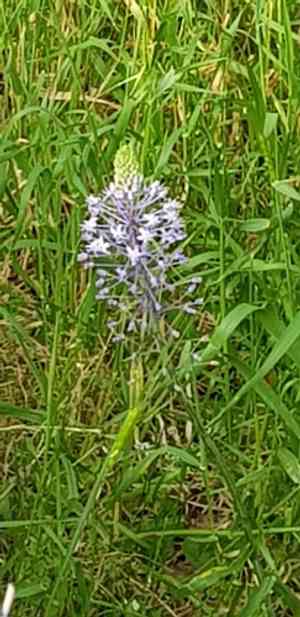
Hyacinth bluebell (Scilla hyacinthoides)
Hyacinth bluebell is a tall, hardy bulbous perennial wildflower that naturally grows in woodlands and forests and is known for its hundreds of small, star-shaped flowers. It is frequently planted as a garden ornamental which heralds the onset of spring when it flowers. Hyacinth bluebell is considered an environmental weed in parts of Australia.
In This Article
Attributes of Hyacinth bluebell
Lifespan
Perennial
Plant Type
Herb
Plant Height
70 cm
Spread
20 cm
Leaf Color
Green
Flower Size
61 cm to 91 cm
Flower Color
Blue Purple White
Images of Hyacinth bluebell
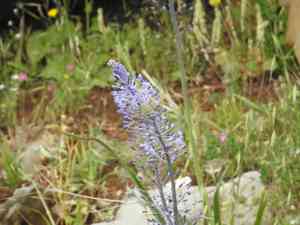
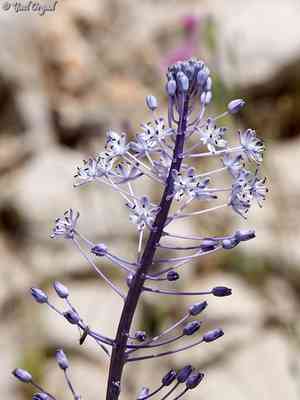
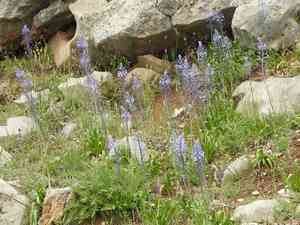
Quickly Identify Hyacinth bluebell
1
Lanceolate leaves, 1-1.5 feet (30-45 cm) long and 1 inch (2.5 cm) wide.
2
Tall spike-like racemes, 2-3 feet (60-90 cm) in height with blue star-shaped flowers.
3
White bracts framing each blue flower on the racemes.
4
Thrives in well-drained stony soil, prefers full sunlight in cooler coastal regions.
5
Prefers partial shade in hotter inland areas.
Scientific Classification of Hyacinth bluebell
Phylum
Vascular plants
Class
Monocotyledons
Order
Asparagales
Family
Asparagus
Genus
Squills
Species
Hyacinth bluebell
Planting and Growing of Hyacinth bluebell
Care Difficulty
Easy
Watering Schedule
Every 2 days
Sunlight Requirements
Partial sun
Sunshine Duration
6-10 hours
Ideal Temperature
65-75℉
Soil Type
Potting Mix, Peat Mix
Soil pH
6.5-7.5
Fertilizer Type
Balanced
Pruning Season
Spring, Summer
Pruning Area
Branches, Leaves
Pruning Frequency
2 times a year
Repotting Season
Spring
Pot Type
Plastic, Ceramic
 How to Water Hyacinth bluebell?
Scilla hyacinthoides prefers consistent moisture, but it is vital to ensure that the soil is well-draining. A general rule is to water thoroughly until the excess drains out from the bottom. This ensures the entire root ball gets moisture without allowing water to stagnate.
What are the symptoms of an underwatered Hyacinth bluebell?
›
What should I do if my Hyacinth bluebell is not getting enough water?
›
What are the symptoms of an overwatered Hyacinth bluebell?
›
How to save an overwatered Hyacinth bluebell?
›
 What Are the Sunlight Requirements for Hyacinth bluebell?
Scilla hyacinthoides thrives in partial sunlight, benefiting from consistent exposure without intense heat. The optimal light range encourages healthy foliage and vibrant blooms while reducing stress.
More About Sunlight Requirements Techniques→
Optimal Location
›
Preventing Sunburn
›
Indoor Placement
›
 What Is the Ideal Temperature Range for Hyacinth bluebell?
The ideal temperature range for Scilla hyacinthoides is between 65°F and 75°F. This range ensures optimal growth and flowering, allowing the plant to thrive in a stable, warm environment. Consistently maintaining these temperatures can lead to healthier, lush foliage and vibrant blooms.
 What Soil is Best for Hyacinth bluebell?
Scilla hyacinthoides thrives in well-draining soil that prevents waterlogging. This is vital for its bulbous roots, which can rot if they are left sitting in wet conditions. A well-draining mixture of loam and sand ensures proper aeration and moisture levels, promoting healthy growth and vibrant blooms. A nutrient-rich soil is essential for Scilla hyacinthoides to produce lush foliage and an abundance of flowers. Incorporating organic matter, such as compost or well-rotted manure, can enhance the soil's fertility, ensuring that the plant receives the necessary nutrients to flourish. While Scilla hyacinthoides can tolerate a range of pH levels, it tends to prefer slightly alkaline conditions. This environment supports optimal nutrient absorption, which can lead to a more robust plant and prolonged flowering period.
 How to Fertilize Hyacinth bluebell?
For Scilla hyacinthoides, it is important to ensure that the application rate is moderate. Use a balanced fertilizer diluted to half-strength. For liquid fertilizers, apply approximately 5ml of fertilizer per liter of water every two weeks during the growing season.
 How to Prune Hyacinth bluebell?
Use a pair of clean and sharp pruning shears to ensure precise cuts and minimize damage. A clean cut helps prevent disease transmission and makes healing faster for the plant. Before pruning, carefully inspect the plant to identify and remove any dead or discolored leaves. This will enhance the plant's appearance and direct energy to new growth. Prune just above a node, where new growth tends to emerge. This encourages branching and helps the plant maintain a more compact and lush form. Always make clean cuts at an angle. Once the flowers have faded, cut the flower stalks down to the base. This prevents the plant from expending energy on seed production and instead focuses on foliage and root growth.
More About Pruning Techniques→
 How to Propagate Hyacinth bluebell plant?
1
Start by preparing a well-draining soil mix suitable for Scilla hyacinthoides. Adding some organic matter can improve the soil's fertility and texture, providing a better environment for seeds or divisions to grow.
2
Sow the seeds of Scilla hyacinthoides on the surface of the prepared seed tray soil. Gently press the seeds into the soil but do not cover them entirely as they require light for germination.
3
When performing division, carefully extract the plant from the ground and separate its bulbs by gently pulling them apart or using a trowel. Replant the divisions immediately to prevent them from drying out.
 How to Repot Hyacinth bluebell plant?
1
Scilla hyacinthoides should be considered for repotting when you notice overcrowded roots bursting from the drainage holes, or when the soil becomes compacted and less absorbent. Additionally, if the plant's foliage appears limp despite adequate watering, it’s a sign that the root system is struggling, and repotting might be necessary.
2
Selecting the correct pot is crucial for Scilla hyacinthoides. Opt for a pot that is just one size larger than the current one to encourage healthy growth without the risk of over-watering that a pot too large might cause. Terra cotta is a great material as it provides good aeration, preventing root rot.
3
For Scilla hyacinthoides, a well-draining sandy mix is ideal. This mix replicates the plant’s natural habitat, allowing water to pass through easily, thus preventing root rot. A combination of half potting soil and half sand or perlite works well, promoting healthy root growth and nutrient access.
Toxicity
Ingestion
WARNING
The judgment on toxicity and danger is for reference only. We DO NOT GUARANTEE any accuracy of such judgment. Therefore, you SHALL NOT rely on such judgment. It is IMPORTANT TO SEEK PROFESSIONAL ADVICE in advance when necessary.
Learn More About Hyacinth bluebell Diseases
Anthracnose
Bacterial Leaf Spot
Bacterial Soft Rot
Crown Gall
Cyst Nematode
Damping-off
Downy Mildew
Drought Stress
Fusarium Wilt
Gray Mold
Leaf Spot
Mosaic
Nutrient Deficiency
Nutrient Toxicity
Powdery Mildew
Root Rot
Root-knot Nematode
Rusts
Sooty Mold
Spider Mites
Temperature Stress
Thrips Damage
White Mold



