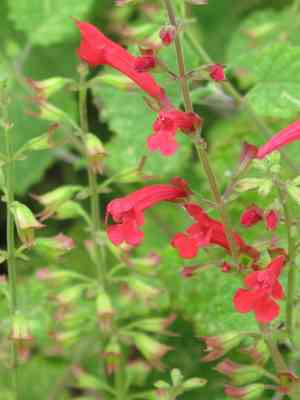
Cedar sage (Salvia roemeriana)
Also known as: Cedar Sage
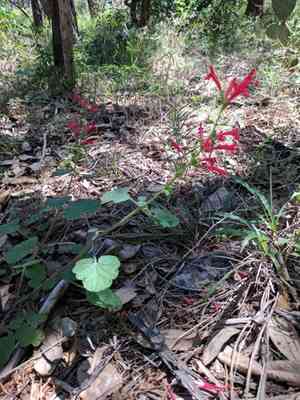
**Cedar Sage (Salvia roemeriana)** is a perennial herb native to Texas, flourishing under the canopy of junipers and cedars. In early spring, it produces striking crimson flowers that attract hummingbirds and bees. These blooms are plentiful for a few months but become scarce during the summer. Notably, the flowers are edible, sweet, and can be used as a garnish.
In This Article
Attributes of Cedar sage
Lifespan
Perennial
Plant Type
Herb
Plant Height
60 cm
Spread
50 cm
Leaf Color
Green
Flower Size
1.3 cm to 1.8 cm
Flower Color
Red
Images of Cedar sage
Quickly Identify Cedar sage
1
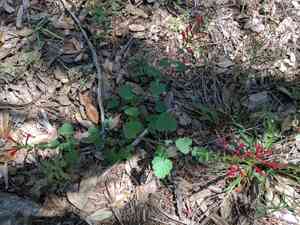
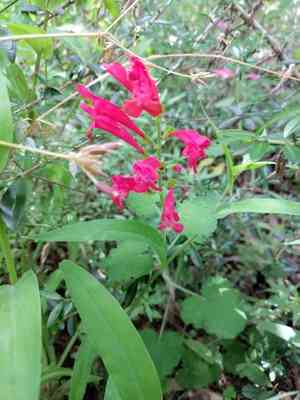
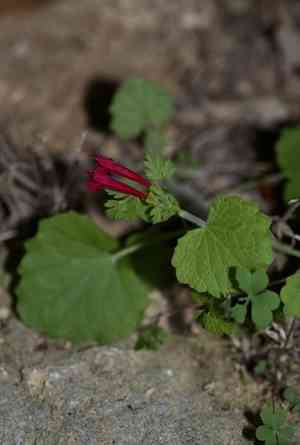
Salvia roemeriana can be identified by its distinctive bright red flowers which are tubular and attractive to hummingbirds. The leaves are heart-shaped with serrated edges, and the plant generally has a compact growth habit.
Scientific Classification of Cedar sage
Phylum
Vascular plants
Class
Dicotyledons
Order
Lamiales
Family
Mint
Genus
Sages
Species
Cedar sage
Planting and Growing of Cedar sage
Care Difficulty
Easy
Watering Schedule
Every 3 days
Sunlight Requirements
Full sun
Sunshine Duration
4-8 hours
Ideal Temperature
65-75℉
Soil Type
Potting Mix, Peat Mix
Soil pH
6.5-7.5
Fertilizer Type
Balanced
Pruning Season
Spring, Summer
Pruning Area
Branches, Leaves
Pruning Frequency
2 times a year
Repotting Season
Spring
Pot Type
Terracotta, Plastic
 How to Water Cedar sage?
For Salvia roemeriana, each watering should be thorough, ensuring the soil is moistened evenly but not waterlogged. The key is to allow the top inch of the soil to dry out between waterings. This approach mimics its natural environment where it thrives with minimal water retention.
What are the symptoms of an underwatered Cedar sage?
›
What should I do if my Cedar sage is not getting enough water?
›
What are the symptoms of an overwatered Cedar sage?
›
How to save an overwatered Cedar sage?
›
 What Are the Sunlight Requirements for Cedar sage?
Salvia roemeriana prefers a light range that includes both full sun and partial shade, as these conditions support robust flowering and healthy foliage, contributing to its overall vigor and resilience.
More About Sunlight Requirements Techniques→
What is the best location for Salvia roemeriana?
›
How can I achieve the ideal lighting conditions indoors?
›
What benefits does Salvia roemeriana gain from ideal lighting?
›
 What Is the Ideal Temperature Range for Cedar sage?
For Salvia roemeriana, the ideal growing temperature is between 65°F and 75°F. This temperature range supports optimal metabolic processes, photosynthesis, and nutrient uptake, ensuring healthy growth and vibrant foliage.
 What Soil is Best for Cedar sage?
Salvia roemeriana thrives in well-drained soil, which prevents waterlogging and root rot. This type of soil allows for adequate air circulation around the roots, vital for healthy growth and blooming. The plant benefits from a nutrient-rich substrate. Incorporating organic matter like compost can enhance the soil's fertility, promoting vigorous foliage and abundant flowering. Keeping the soil pH within the 6.5 to 7.5 range is crucial for optimal nutrient uptake. This balance ensures that essential minerals are readily available to the plant, supporting its overall health and resilience.
 How to Fertilize Cedar sage?
Salvia roemeriana thrives when given a balanced fertilizer but in moderation. Use a water-soluble fertilizer diluted to half strength; apply it around the base of the plant, as this concentration is safe and effective. Avoid over-saturating the soil.
 How to Prune Cedar sage?
Begin by identifying and removing any dead or diseased stems. These can be identified by their brown or discolored appearance. Cut them back to the base of the plant or to a point where healthy growth is observed. Gently shape the plant by trimming back any overly long stems to encourage a bushier growth pattern. Thin the plant by selectively removing some interior branches if it becomes too dense, allowing for better air circulation. To encourage fuller growth, pinch back the tips of the stems. This means removing just the top portion of each stem after the plant has finished blooming, which encourages branching. After pruning, water the Salvia thoroughly to help it recover. Keep an eye on the growth, and make sure to continue regular monthly checks and light pruning as needed throughout the growing seasons.
More About Pruning Techniques→
 How to Propagate Cedar sage plant?
1
Gather seeds from mature Salvia roemeriana plants in late summer or early autumn. Ensure seeds are fully ripened by waiting until they are easily removed from the plant.
2
Select healthy stems and cut pieces about 4 to 6 inches long. Remove the leaves from the lower half to prevent rot during the rooting process.
3
After sowing seeds or planting cuttings, water them gently but thoroughly. Ensure they remain in a protected, humid environment to stimulate root development.
 How to Repot Cedar sage plant?
1
Salvia roemeriana typically requires repotting when you notice that the roots begin to emerge from the drainage holes or the plant seems to be growing slower than usual. These signs often indicate that the plant has outgrown its current container, necessitating fresh soil and adequate space for continued growth.
2
Opt for a pot that is one size larger than the current one, ensuring it has adequate drainage holes to prevent water logging. A terracotta pot can be beneficial as it allows the roots to breathe, reducing the risk of overwatering and promoting healthy root development.
3
Select a well-draining potting mix containing perlite or sand to enhance drainage. This kind of soil mimics the natural conditions of Salvia roemeriana, reducing the risk of root rot and providing a supportive environment for new root growth.
Learn More About Cedar sage Diseases
Anthracnose
Bacterial Leaf Spot
Bacterial Wilt
Chemical Injury
Crown Gall
Cyst Nematode
Damping-off
Downy Mildew
Drought Stress
Fusarium Wilt
Gray Mold
Leaf Curl
Leaf Spot
Mosaic
Nutrient Deficiency
Nutrient Toxicity
Powdery Mildew
Root Rot
Root-knot Nematode
Rusts
Sooty Mold
Spider Mites
Temperature Stress
Thrips Damage
White Mold



