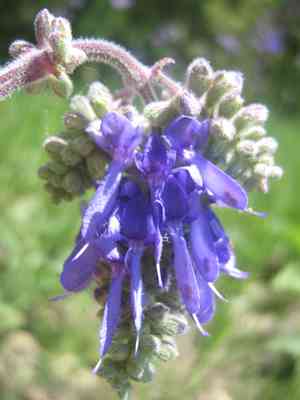
Nodding sage (Salvia nutans)
Also known as: None
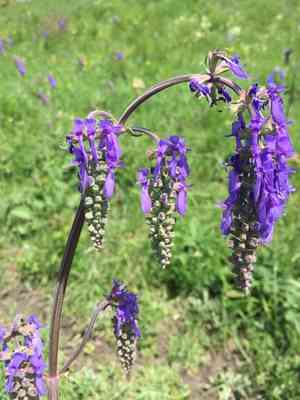
Nodding sage is a perennial herb characterized by its elegant, drooping clusters of violet-blue flowers. These blooms gently sway, creating a delicate and graceful look. The plant features lance-shaped leaves arranged in opposite pairs, offering a rich green contrast to the vibrant flowers. It flourishes in well-drained soil and prefers full sun, making it suitable for meadows and garden landscapes. The nectar-rich tubular flowers are particularly effective in attracting pollinators such as bees and butterflies.
In This Article
Attributes of Nodding sage
Lifespan
Perennial
Plant Type
Herb
Plant Height
30-60 cm
Spread
30 cm
Leaf Color
Green
Flower Size
1-2 cm
Flower Color
Blue or violet
Images of Nodding sage
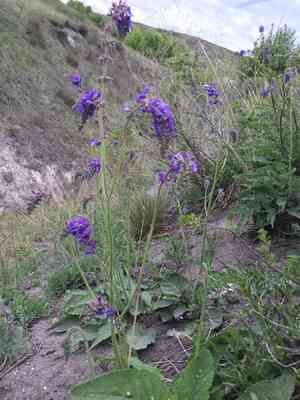
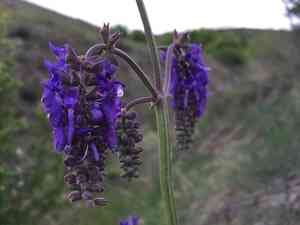
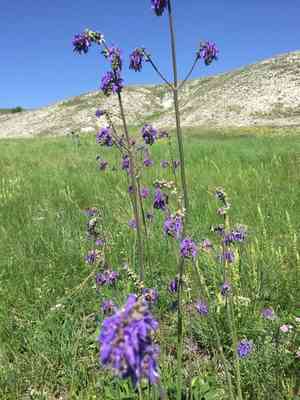
Quickly Identify Nodding sage
1
Identifiable by its nodding, tubular flowers and lance-shaped leaves. The plant typically has a square stem, which is characteristic of the mint family.
Scientific Classification of Nodding sage
Phylum
Vascular plants
Class
Dicotyledons
Order
Lamiales
Family
Mint
Genus
Sages
Species
Nodding sage
Planting and Growing of Nodding sage
Care Difficulty
Easy
Watering Schedule
Every 2 days
Sunlight Requirements
Partial sun
Sunshine Duration
6-10 hours
Ideal Temperature
60-75℉
Soil Type
Potting Mix, Peat Mix
Soil pH
6.5-7.5
Fertilizer Type
Balanced
Pruning Season
Spring, Summer
Pruning Area
Branches, Leaves
Pruning Frequency
2 times a year
Repotting Season
Spring
Pot Type
Plastic, Ceramic
 How to Water Nodding sage?
For Salvia nutans, a watering amount of 500 ml is adequate to keep the soil moist but not waterlogged. It's important to ensure that the water reaches the root zone, which encourages a healthy root system. The soil should feel damp to touch but not overly saturated.
What are the symptoms of an underwatered Nodding sage?
›
What should I do if my Nodding sage is not getting enough water?
›
What are the symptoms of an overwatered Nodding sage?
›
How to save an overwatered Nodding sage?
›
 What Are the Sunlight Requirements for Nodding sage?
For Salvia nutans, partial sun—specifically 4 to 6 hours of light—is ideal. This range supports healthy growth cycles and bloom production, fostering an optimal environment for the plant’s flourishing.
Optimal Light Conditions
›
Solutions for Ideal Light
›
Benefits of Ideal Light
›
 What Is the Ideal Temperature Range for Nodding sage?
For optimal growth of Salvia nutans, maintaining a temperature range between 60°F and 75°F is ideal. This range supports healthy foliage and flowering. Temperatures within this range ensure that the plant's physiological processes, such as photosynthesis and respiration, occur efficiently, promoting robust growth and development.
 What Soil is Best for Nodding sage?
Salvia nutans thrives in well-drained soil that prevents waterlogging. This quality helps protect its roots from rot and promotes robust growth, ensuring the plant absorbs nutrients efficiently. This plant requires soil enriched with organic matter. A nutrient-rich environment provides essential nutrients, fostering healthier leaves and more vibrant blooms. While not drought-tolerant, Salvia nutans prefers soil that maintains moderate moisture. This balance prevents stress from dehydration while avoiding root rot from excess water.
 How to Fertilize Nodding sage?
For Salvia nutans, applying a balanced fertilizer with a ratio such as 10-10-10 is recommended. Use approximately 1 tablespoon per gallon of water for liquid fertilizers. Solid fertilizers should be applied sparsely around the base, with around 2-3 tablespoons per plant, ensuring that the fertilizer does not touch the stem to avoid burning.
 How to Prune Nodding sage?
Begin by identifying older growth that appears woody or has reduced flowering. Cut these stems back to base level to encourage new growth. Trim the plant into your desired shape, focusing on maintaining an open center to allow sunlight and air to penetrate. Regularly inspect the plant for dead or diseased stems and remove them promptly to prevent any potential spread of disease.
More About Pruning Techniques→
 How to Propagate Nodding sage plant?
1
Ensure the soil is well-drained and enriched with organic matter to provide an optimal growing environment for Salvia nutans seedlings or cuttings.
2
Select healthy, non-flowering stems of the plant, make a clean cut with pruning shears just below a node, and remove lower leaves.
3
Sow seeds in seed trays filled with a light, well-drained potting mix, keeping them moist until germination begins.
 How to Repot Nodding sage plant?
1
Observe for signs such as roots growing out of the drainage holes or a decrease in plant vitality, which indicate it's time for repotting. Salvia nutans usually benefits from repotting during periods of active growth, typically in spring or autumn.
2
Select a pot that is one size larger than the current one, with good drainage holes. This choice prevents waterlogging, promotes healthy root growth, and prevents the plant from becoming root-bound.
3
Use a well-draining potting mix with good aeration and organic matter. This ensures that Salvia nutans receives adequate nutrients, avoids water retention, and reduces the risk of root rot.
Learn More About Nodding sage Diseases
Anthracnose
Bacterial Leaf Spot
Bacterial Soft Rot
Bacterial Wilt
Black Spot
Chemical Injury
Crown Gall
Damping-off
Downy Mildew
Drought Stress
Fusarium Wilt
Gray Mold
Leaf Curl
Leaf Spot
Mosaic
Nutrient Deficiency
Nutrient Toxicity
Powdery Mildew
Root Rot
Root-knot Nematode
Rusts
Sooty Mold
Spider Mites
Temperature Stress
Thrips Damage
White Mold



