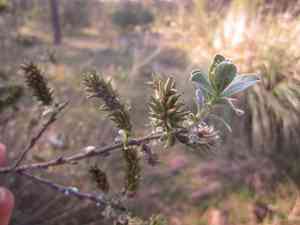
Creeping willow (Salix repens)
Also known as: Creeping willow, Dwarf willow
These polymorphic species can be found in environments like woodlands, grasslands, and coastal regions in the UK. They exhibit a broad spectrum of variations, from small, ground-hugging, smooth plants to taller, upright, or ascending shrubs with silky leaves. The significant diversity in their forms has led to the existence of numerous synonyms.
In This Article
Attributes of Creeping willow
Lifespan
Perennial
Plant Type
Shrub
Plant Height
60 cm
Spread
1.5 m
Leaf Color
Green, often silvery on the underside
Flower Size
1-2 cm (catkins)
Flower Color
Yellow-green (catkins)
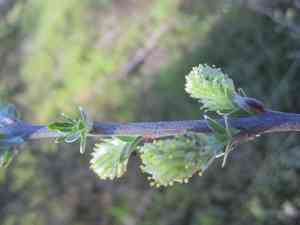
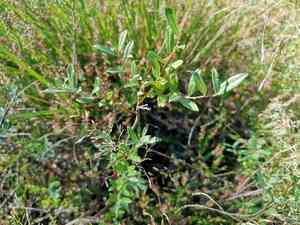
Images of Creeping willow


Quickly Identify Creeping willow
1
Salix repens can be identified by its low-growing, creeping habit and small, glossy, oval leaves that are often silvery on the underside. The plant produces small catkins in the spring, which are characteristic of willows.
Scientific Classification of Creeping willow
Phylum
Vascular plants
Class
Dicotyledons
Order
Malpighiales
Family
Willow
Genus
Willows
Species
Creeping willow
Planting and Growing of Creeping willow
Care Difficulty
Easy
Watering Schedule
Every 2 days
Sunlight Requirements
Partial sun
Sunshine Duration
6-8 hours
Ideal Temperature
50-68℉
Soil Type
Potting Mix, Peat Mix
Soil pH
5-7.5
Fertilizer Type
Balanced
Pruning Season
Spring, Summer
Pruning Area
Branches, Leaves
Pruning Frequency
2 times a year
Repotting Season
Spring
Pot Type
Plastic, Ceramic
 How to Water Creeping willow?
Watering for Salix repens should ideally ensure that the soil remains consistently moist but not waterlogged. Each watering session should involve 250 milliliters, with water distributed evenly around the plant base to ensure all roots are adequately hydrated.
What are the symptoms of an underwatered Creeping willow?
›
What should I do if my Creeping willow is not getting enough water?
›
What are the symptoms of an overwatered Creeping willow?
›
How to save an overwatered Creeping willow?
›
 What Are the Sunlight Requirements for Creeping willow?
The ideal light range for Salix repens includes partial sun and potentially full sun in cooler climates. This range supports vibrant growth, improved stress tolerance, and overall plant health.
What is the ideal lighting for Salix repens?
›
How does Salix repens react to its ideal light conditions?
›
How can I achieve ideal lighting for Salix repens?
›
 What Is the Ideal Temperature Range for Creeping willow?
Salix repens thrives best in a temperature range of 50 to 68°F. This range supports healthy photosynthesis and metabolic processes essential for vigorous growth and development.
 What Soil is Best for Creeping willow?
Salix repens thrives best in soil that retains moisture well, as it prefers damp conditions. This moisture helps the plant maintain its lush foliage and supports healthy growth, especially in drier seasons. A nutrient-rich soil is essential for Salix repens, as it promotes robust root development. Nutrients like nitrogen, phosphorous, and potassium contribute to the plant's vibrant growth, flower production, and disease resistance. While Salix repens enjoys moisture, it's equally important that the soil offers good drainage to prevent waterlogging. Excessive water can lead to root rot, so a balance is crucial for optimal health.
 How to Fertilize Creeping willow?
For Salix repens, use a balanced fertilizer at a concentration of roughly 10-10-10 or 20-20-20. When applying liquid fertilizers, dilute to half the strength recommended for general use. This ensures the plant receives adequate nutrients without risk of over-fertilization.
 How to Prune Creeping willow?
Begin by evaluating the overall shape and health of the Salix repens. Identify areas that require attention, such as overgrown, old, or diseased branches, to plan your pruning strategy effectively. Start from the base and work your way up. Trim any branches that cross over each other, as they can cause structural issues. Remove deadwood and shape the plant to be more aesthetic but based on its natural form. Spend time shaping the plant to enhance its natural charm. This may involve gentle trimming to encourage new growth and maintain a balanced look. Remember, the goal is to highlight its natural structure while preventing it from becoming unruly.
More About Pruning Techniques→
 How to Propagate Creeping willow plant?
1
Choose healthy, non-flowering stems for cutting. Aim for those with at least three to five leaves, and make sure to cut just below a leaf node to encourage root development.
2
Remove the lower leaves of the cuttings to expose the nodes and allow rooting. Dip the cut end in rooting hormone, tapping off the excess before planting in the potting mix.
3
Insert the prepared cuttings into a pot filled with moist potting mix, ensuring adequate space between them. Firm the soil around the cuttings to support upright growth and minimize air pockets.
 How to Repot Creeping willow plant?
1
Repot Salix repens when you observe it becoming root-bound or when the soil becomes less absorbent. Spring is ideal as the plant is in its growth phase. Look for roots emerging from drainage holes or if the water sits on the surface without soaking in.
2
Select a pot that provides ample space for roots to expand, ideally 2-3 inches larger in diameter than the current one. It should have good drainage to prevent waterlogging and root rot. A well-chosen pot allows for better air circulation and root growth.
3
Choose a well-draining loamy soil to ensure effective water and nutrient retention without being overly wet. This type of soil prevents root rot and allows the right balance of moisture and aeration for healthy plant growth.
Learn More About Creeping willow Diseases
Anthracnose
Bacterial Leaf Spot
Crown Gall
Cyst Nematode
Damping-off
Downy Mildew
Drought Stress
Fusarium Wilt
Gray Mold
Leaf Curl
Leaf Spot
Mosaic
Nutrient Deficiency
Nutrient Toxicity
Powdery Mildew
Root Rot
Root-knot Nematode
Rusts
Sooty Mold
Spider Mites
Temperature Stress
Thrips Damage
White Mold



