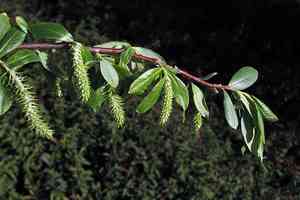
Red Willow (Salix laevigata)
Also known as: Smooth Willow, Polished Willow
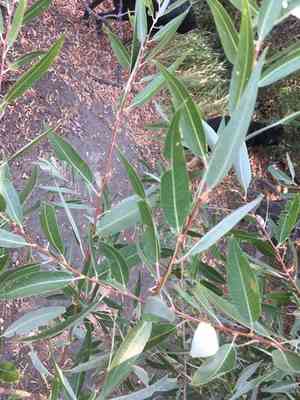
The Red Willow (Salix laevigata) is a deciduous tree that typically grows between 8 to 17 meters tall, with a canopy spreading about 4.5 to 11 meters wide. Its bark starts off smooth and reddish-brown, becoming more furrowed as it ages. The tree blooms from spring through fall, showcasing yellow catkins that are not very conspicuous. The leaves turn from green to gold in the autumn. During the summer, it produces brown capsule-like fruits that ripen by fall. This tree attracts a variety of wildlife, including birds that eat its seeds, and pollinators such as bees and butterflies that visit its flowers.
In This Article
Attributes of Red Willow
Lifespan
Perennial
Plant Type
Tree
Plant Height
14 m
Spread
11 m to 12 m
Leaf Color
Green
Flower Size
0.1-0.2 centimeters
Flower Color
Yellow Green
Images of Red Willow
Quickly Identify Red Willow
1
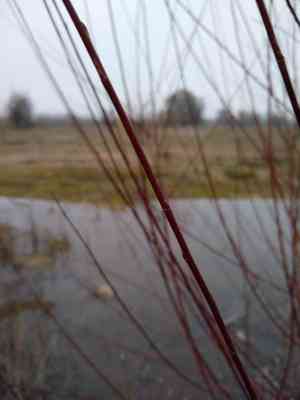
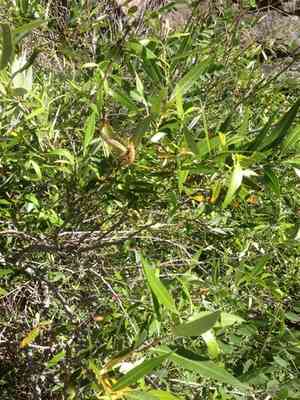
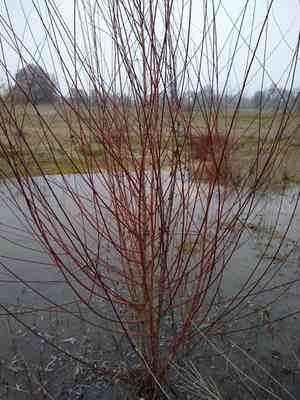
Salix laevigata can be identified by its smooth, shiny leaves and its distinctive yellow-green twigs. The bark is generally grayish and smooth on younger branches but becomes furrowed with age. The catkins (flower clusters) appear in early spring.
Scientific Classification of Red Willow
Phylum
Vascular plants
Class
Dicotyledons
Order
Malpighiales
Family
Willow
Genus
Willows
Species
Red Willow
Planting and Growing of Red Willow
Care Difficulty
Easy
Watering Schedule
Every 4 days
Sunlight Requirements
Full sun
Sunshine Duration
6-10 hours
Ideal Temperature
50-80℉
Soil Type
Potting Mix, Peat Mix
Soil pH
6.5-7.5
Fertilizer Type
Balanced
Pruning Season
Spring, Summer
Pruning Area
Branches, Leaves
Pruning Frequency
2 times a year
Repotting Season
Spring
Pot Type
Plastic, Ceramic
 How to Water Red Willow?
Salix laevigata, commonly known as the red willow, prefers to have consistently moist soil. Therefore, aim to water thoroughly until the soil is evenly dampened but not waterlogged. Typically, about 500 ml of water should be enough to reach an effective moisture level. Make sure the excess water drains properly.
What are the symptoms of an underwatered Red Willow?
›
What should I do if my Red Willow is not getting enough water?
›
What are the symptoms of an overwatered Red Willow?
›
How to save an overwatered Red Willow?
›
 What Are the Sunlight Requirements for Red Willow?
Salix laevigata prefers full to partial sun, ideally around 6 to 8 hours. Adequate light facilitates strong growth, healthy foliage, and robust structural development.
More About Sunlight Requirements Techniques→
What is the ideal sunlight for Salix laevigata?
›
How can you achieve optimal lighting for Salix laevigata?
›
What are the benefits of ideal lighting for Salix laevigata?
›
 What Is the Ideal Temperature Range for Red Willow?
Salix laevigata, commonly known as the red willow, thrives best in a temperature range of 50°F to 80°F. Maintaining this temperature range ensures optimal growth and development, as it closely simulates the typical conditions of its native habitats in riparian zones.
 What Soil is Best for Red Willow?
Salix laevigata thrives best in soils that can hold adequate moisture. This ensures the plant receives consistent water supply between irrigation sessions, vital for its growth and development. This willow species benefits significantly from soils that are rich in essential nutrients. Such soils support robust growth, vibrant foliage, and resilience against pests and diseases. Well-aerated soil promotes healthy root development for Salix laevigata. Proper aeration prevents root rot and encourages efficient nutrient uptake, crucial for the plant's overall health.
 How to Fertilize Red Willow?
When fertilizing Salix laevigata, it's essential to keep the amounts balanced. For liquid fertilizers, mix at a concentration suitable for general-use plant fertilizers, typically following the label's lowest dilution rate. For slow-release fertilizers, use around 1 cup per square yard of the planting area. Adjust based on plant size and health.
 How to Prune Red Willow?
Before you start pruning, it's crucial to understand the natural growth habit of Salix laevigata. This deciduous tree has a wispy, graceful structure, so when pruning, aim to preserve its natural elegance. Begin by identifying dead or damaged branches, as removing them will foster a healthier plant. To shape your Salix laevigata, target the longest branches that disrupt the tree's natural flow. Cut just above a leaf node or a branching point at a slight angle to encourage new growth that will follow the tree's elegance. A dense canopy can hinder air circulation and sunlight penetration. Thin out branches that are crowded or crossing each other to reduce disease risk and ensure the entire tree receives adequate light.
More About Pruning Techniques→
 How to Propagate Red Willow plant?
1
Gather seeds from mature Salix laevigata plants in late summer when fruits are ripe. Ensure they are fully dried and viable before planting.
2
Select healthy stems from the parent plant during early spring. Cut segments of about 6 inches in a clean manner to ensure propagation success.
3
Divide plant clumps during early spring when they are sprouting. Make clean cuts through the root ball and replant immediately in moistened soil.
 How to Repot Red Willow plant?
1
Repotting is needed when Salix laevigata shows signs of being root-bound, such as roots growing out of the drainage holes, slow growth, or water sitting on the surface for too long. These are indicators that it's time to give your willow tree more space to thrive.
2
Select a pot that's 2 inches larger in diameter than the current one. Ensure it has sufficient drainage holes to prevent waterlogging, which can lead to root rot. A ceramic or clay pot is ideal as it provides stability and air exchange, supporting healthy root development.
3
Opt for a well-draining soil mix enriched with organic matter. This supports Salix laevigata's growth by providing essential nutrients while ensuring effective drainage, thus preventing root decay and promoting robust root health.



