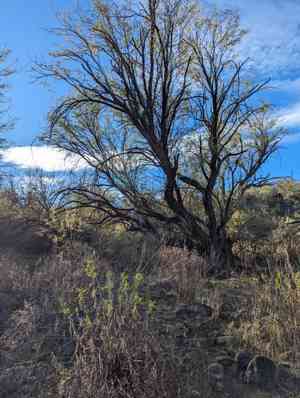
Velvet mesquite(Prosopis velutina)

Velvet mesquite (Prosopis velutina)

Also known as: Algaroba, Quilpie Algaroba

The Velvet mesquite (Prosopis velutina) is a deciduous tree found in regions like Mexico, Texas, and Arizona. It produces edible fruits and has a lifespan of 50 to 150 years. Interestingly, its leaves fold up at night to conserve water. However, outside its native habitat, it can become quite invasive.

Attributes of Velvet mesquite

Lifespan
Perennial
Plant Type
Tree, Shrub
Plant Height
9 m to 15 m
Spread
11 m
Leaf Color
Green Gray
Flower Size
1 to 2 centimeters (0.4 to 0.8 inches)
Flower Color
Yellow Green

ForwardPlant - Identify plants with a snap

Identify and diagnose plants, get toxicity alerts, and explore safety guides for all types of fungi.

Try for Free

Images of Velvet mesquite

Velvet mesquite(Prosopis velutina)

Quickly Identify Velvet mesquite

1
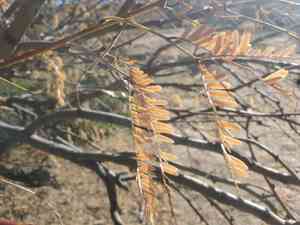
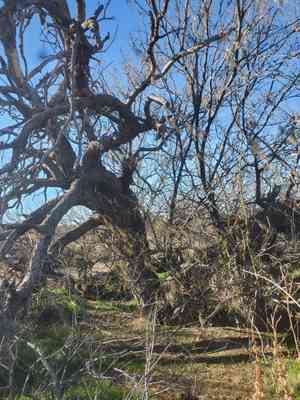
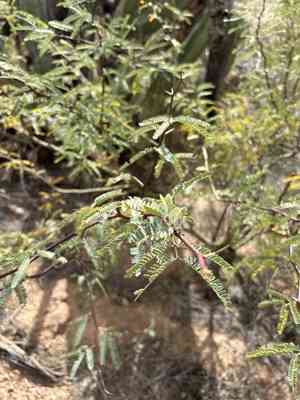
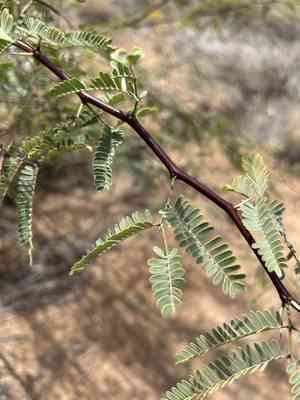
Identification skills for Prosopis velutina include looking for a multi-stemmed tree with a rough, dark brown bark. The leaves are bipinnate with small leaflets, and the tree produces creamy white to yellow flowers in hanging clusters.

Scientific Classification of Velvet mesquite

Phylum
Vascular plants
Class
Dicotyledons
Order
Fabales
Family
Legume
Genus
Prosopis
Species
Velvet mesquite

Planting and Growing of Velvet mesquite

Care Difficulty
Easy
Watering Schedule
Every 2 days
Sunlight Requirements
Full sun
Sunshine Duration
4-8 hours
Ideal Temperature
75-95℉
Soil Type
Potting Mix, Peat Mix
Soil pH
6.5-7.5
Fertilizer Type
Balanced
Pruning Season
Spring, Summer
Pruning Area
Branches, Leaves
Pruning Frequency
2 times a year
Repotting Season
Spring
Pot Type
Plastic, Ceramic

water icon How to Water Velvet mesquite?

For Prosopis velutina, water until the soil is thoroughly moistened but not saturated. Aim for approximately 500ml per watering, ensuring it reaches down to the root zone but allowing excess to drain away, mimicking the natural brief, heavy rains it receives in its native habitat.
What are the symptoms of an underwatered Velvet mesquite? ›
What should I do if my Velvet mesquite is not getting enough water? ›
What are the symptoms of an overwatered Velvet mesquite? ›
How to save an overwatered Velvet mesquite? ›

sunlight icon What Are the Sunlight Requirements for Velvet mesquite?

Sunlight Requirements: Full sun, Partial sun
Duration of light: 6 to 8 hours
Prosopis velutina ideally thrives in full sun to partial sun environments. Adequate light facilitates vigorous growth, robust health, and a strong flowering capability, essential for its ecological roles.
What is the ideal amount of light for Prosopis velutina? ›
How can you achieve the ideal lighting conditions for Prosopis velutina? ›
What are the benefits of Prosopis velutina receiving ideal lighting? ›
More About Sunlight Requirements Techniques→

temperature icon What Is the Ideal Temperature Range for Velvet mesquite?

Ideal Temperature: 75 ~ 95℉
Prosopis velutina thrives in environments with temperatures ranging from 75°F to 95°F. In this temperature range, the plant experiences optimal growth and photosynthetic rates. These temperatures mimic the natural desert habitats where this species is commonly found, ensuring it can carry out normal physiological functions efficiently.

soil icon What Soil is Best for Velvet mesquite?

Soil type: Sandy loam, Loam, Sandy soil
Soil PH: 6.5 ~ 7.5
Prosopis velutina thrives in loose soil structures that allow roots to spread with ease. This enhances the plant's ability to access nutrients and moisture, promoting robust growth and resilience to drought. The plant favors well-draining soil to prevent waterlogged roots which can lead to root rot. This soil property helps in maintaining an optimal moisture balance, crucial for plant health in arid environments. Prosopis velutina benefits from soil rich in nutrients, particularly nitrogen. Healthy soil supports the plant's growth and photosynthesis, leading to vibrant foliage and more efficient nutrient cycling.

fertilize icon How to Fertilize Velvet mesquite?

Fertilizer type: Balanced
For Prosopis velutina, it is recommended to apply a balanced liquid fertilizer with a ratio like 10-10-10. Use about 1 tablespoon per gallon of water, ensuring the soil is moist before application to prevent root burn.

prune icon How to Prune Velvet mesquite?

Pruning Time: Spring, Summer, Autumn
Prosopis velutina has sharp spines, so it's essential to wear protective gloves and clothing to avoid injury during pruning. While pruning can be done in several seasons, avoid making cuts during peak summer. High temperatures can stress the plant. When pruning, aim to maintain the tree's natural shape, removing any branches that grow in awkward or disruptive directions without altering its natural form significantly. More About Pruning Techniques→

propagate icon How to Propagate Velvet mesquite plant?

Propagate Time: Early spring, Spring, Late spring
1
Soak Prosopis velutina seeds in warm water for 12-24 hours to soften the seed coat. This helps in breaking dormancy and speeds up germination. Ensure the water is changed regularly to keep it oxygenated.
2
Fill the seed tray with a good quality seed-starting mix, and plant the soaked seeds about 1/4 inch deep. Lightly cover with soil and water gently to avoid displacing the seeds.
3
Choose healthy stems and cut a section about 4-6 inches long. Dip the cut end in rooting hormone and plant it in a well-draining potting mix. Keep the soil slightly moist until roots develop.
More About Propagating Techniques→

repot icon How to Repot Velvet mesquite plant?

Repotting frequency: Every 2-3 years
1
Repot Prosopis velutina when growth seems stunted or the roots start protruding from the drainage holes. Spring and early Autumn are optimal times as the plant is preparing for a growth phase. These periods enable the plant to establish roots before heading into more dormancy-prone seasons.
2
Select a pot that is about one size larger than the current one, has plenty of drainage holes, and is made of breathable material like terracotta. This choice prevents root rot by aiding evaporation and oxygen exchange, crucial for the velvety mesquite’s health.
3
Opt for a well-draining cactus mix with added perlite or sand to enhance aeration. This type of soil mimics desert conditions, preventing waterlogged roots and ensuring the plant’s usual habitat needs are met, promoting healthy growth and resilience.

ForwardPlant - Identify plants with a snap

Find the best spots for them to optimize their health, simply using your phone.

Try for Free

Toxicity of Velvet mesquite

Is Velvet mesquite toxic to humans?

Velvet mesquite presents a significant concern for human health. When cultivated in pristine soil, it poses merely a potential allergen, as its pollen can be highly irritating for some individuals. However, when situated in urban soil or environments contaminated with heavy metals, this plant becomes hazardous to both humans and animals. It effectively bio-accumulates heavy metals such as copper and cadmium in all of its tissues with minimal impact on its growth. Additionally, the plant emits a delightful fragrance, and its seed pods are notably sweet, creating a lure that could endanger children and those with cognitive impairments. Consuming sufficient amounts of velvet mesquite sourced from polluted soil may lead to heavy metal poisoning. The manifestation of copper poisoning can include symptoms like nausea, vomiting, diarrhea, abdominal pain, and jaundice, while cadmium poisoning may present with nausea, vomiting, diarrhea, an unrelenting urge to defecate even in a fasting state, abdominal cramping, ultimately culminating in kidney and liver damage. It is crucial to ensure that children and other vulnerable individuals are kept away from this potentially dangerous plant.

Identify toxic plants for your safety

Learn which plants are harmful to you and your pets, and make informed choices for a safer home!

Try for Free
WARNING
The judgment on toxicity and danger is for reference only. We DO NOT GUARANTEE any accuracy of such judgment. Therefore, you SHALL NOT rely on such judgment. It is IMPORTANT TO SEEK PROFESSIONAL ADVICE in advance when necessary.
More About Toxic Techniques→