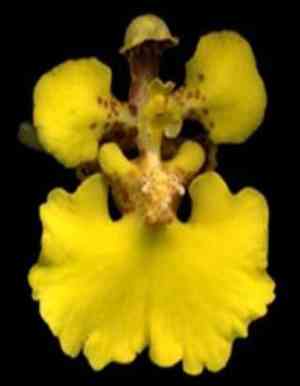
Yellow Fringed Orchid (Platanthera ciliaris)
Also known as: Orange Plume, Orange Fringed Bog Orchid
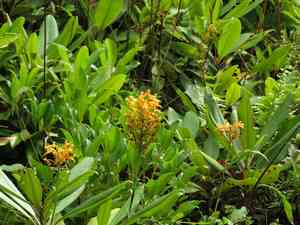
The Yellow Fringed Orchid (Platanthera ciliaris), also known as the orange plume or orange-fringed orchid, is native to the eastern and south-central regions of the United States. Its striking orange flowers primarily attract large butterflies, especially swallowtails, which serve as its main pollinators.
In This Article
Attributes of Yellow Fringed Orchid
Lifespan
Perennial
Plant Type
Herb
Plant Height
30 cm to 91 cm
Spread
30 cm to 38 cm
Leaf Color
Green
Flower Size
15 cm
Flower Color
Orange Yellow Gold
Images of Yellow Fringed Orchid
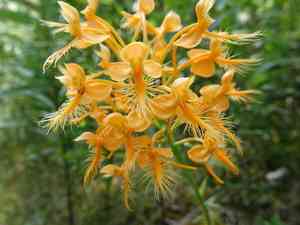
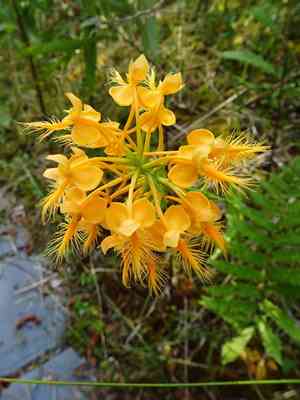
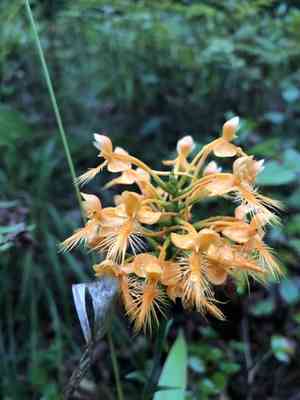
Quickly Identify Yellow Fringed Orchid
1
Bright orange blooms with fringed lower petal
2
Leaves lance-shaped, creating contrast with flowers
3
Terminal raceme arrangement of flowers
4
Dry capsule fruit, split open upon maturation
5
Prominent ridges on stem, green to reddish-green color
Scientific Classification of Yellow Fringed Orchid
Phylum
Vascular plants
Class
Monocotyledons
Order
Asparagales
Family
Orchid
Genus
Bog orchids
Species
Yellow Fringed Orchid
Planting and Growing of Yellow Fringed Orchid
Care Difficulty
Hard
Watering Schedule
Every 4 days
Sunlight Requirements
Partial sun
Sunshine Duration
6-10 hours
Ideal Temperature
65-75℉
Soil Type
Potting Mix, Peat Mix
Soil pH
5.5-6.8
Fertilizer Type
Balanced
Pruning Season
Spring, Summer
Pruning Area
Branches, Leaves
Pruning Frequency
2 times a year
Repotting Season
Spring
Pot Type
Plastic, Ceramic
 How to Water Yellow Fringed Orchid?
Platanthera ciliaris, commonly known as the yellow fringed orchid, should be watered until the soil is thoroughly moist. It's crucial to mimic its natural marshy environment, so the watering should be enough to ensure moisture retention but without waterlogging. Approximately 250 milliliters per watering session is suitable, ensuring the soil remains damp but not overly saturated.
What are the symptoms of an underwatered Yellow Fringed Orchid?
›
What should I do if my Yellow Fringed Orchid is not getting enough water?
›
What are the symptoms of an overwatered Yellow Fringed Orchid?
›
How to save an overwatered Yellow Fringed Orchid?
›
 What Are the Sunlight Requirements for Yellow Fringed Orchid?
Platanthera ciliaris enjoys partial sun, ideally receiving 4-6 hours of morning or dappled light. This range supports robust growth and profuse blooming, contributing to its striking natural aesthetics.
More About Sunlight Requirements Techniques→
What is the ideal lighting condition?
›
How to achieve ideal lighting?
›
What benefits does ideal lighting provide?
›
 What Is the Ideal Temperature Range for Yellow Fringed Orchid?
The ideal temperature range for Platanthera ciliaris, also known as the Yellow Fringed Orchid, spans from 65°F to 75°F. This range supports the optimal growth conditions for this temperate zone plant, ensuring healthy development and stronger flowering. Within this band, the plant can efficiently carry out its physiological processes without undue stress.
 What Soil is Best for Yellow Fringed Orchid?
Platanthera ciliaris thrives in moist, well-draining soils, which prevent root rot while ensuring adequate water availability. This balance supports healthy growth and vibrant flower production. Preferring organically rich soils, Platanthera ciliaris benefits from a nutrient-rich substrate that provides essential nutrients for growth and enhances bloom quality. Proper nutrition also strengthens the plant against diseases. Incorporating organic matter, such as compost, enhances soil structure and fertility for Platanthera ciliaris. This amendment improves aeration and water retention, offering a robust medium for root development.
 How to Fertilize Yellow Fringed Orchid?
For Platanthera ciliaris, the fertilizer amount should be modest. Use a balanced 10-10-10 liquid fertilizer diluted to half strength. Apply about 1/4 cup per plant to avoid overwhelming its delicate root system.
 How to Prune Yellow Fringed Orchid?
Choose appropriate tools, such as pruning shears or small scissors, to ensure precision and prevent plant damage. Clean tools before and after use to avoid spreading diseases. Inspect the plant carefully to identify dead or brown leaves and stems. Dead growth should be removed to enhance the plant's energetic allocation and to make room for new, healthy growth.
More About Pruning Techniques→
 How to Propagate Yellow Fringed Orchid plant?
1
Fill the seed tray with sterilized fine seed compost. Ensure that the compost is evenly distributed and lightly moistened to create an optimal environment for seed germination.
2
Sprinkle the seeds evenly on the surface of the moist compost. Do not cover the seeds, as they require light for germination. Gently mist the tray to settle the seeds into the compost.
3
Place the seed tray in a location with bright, indirect sunlight. Maintain a temperature of 20-25°C (68-77°F) and high humidity to encourage germination, covering the tray with a clear lid if necessary.
 How to Repot Yellow Fringed Orchid plant?
1
Platanthera ciliaris should be repotted when its roots start emerging through the drainage holes, or if growth seems stunted. Ideally, repot after the flowering season or at the beginning of its active growth to minimize stress.
2
Choose a pot that is slightly larger than its current one with ample drainage holes. This allows for root expansion and ensures excess water drains efficiently, preventing root rot and promoting healthier growth.
3
Opt for a soil mix that is rich in organic content and provides excellent drainage. Such soil retains essential nutrients while avoiding waterlogging, thus maintaining optimum root health and encouraging vibrant blooms.
Toxicity
N/A
WARNING
The judgment on toxicity and danger is for reference only. We DO NOT GUARANTEE any accuracy of such judgment. Therefore, you SHALL NOT rely on such judgment. It is IMPORTANT TO SEEK PROFESSIONAL ADVICE in advance when necessary.
Learn More About Yellow Fringed Orchid Diseases
Anthracnose
Bacterial Leaf Spot
Bacterial Soft Rot
Bacterial Wilt
Chemical Injury
Crown Gall
Cyst Nematode
Damping-off
Downy Mildew
Drought Stress
Fusarium Wilt
Gray Mold
Leaf Spot
Mosaic
Nutrient Deficiency
Nutrient Toxicity
Powdery Mildew
Root Rot
Root-knot Nematode
Rusts
Sooty Mold
Spider Mites
Temperature Stress
Thrips Damage
White Mold



