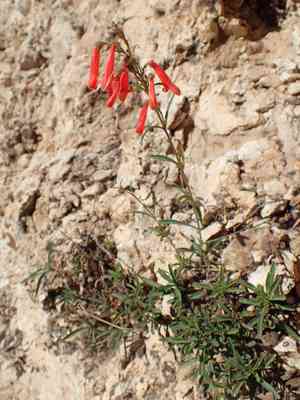
Beardlip penstemon (Penstemon barbatus)
Also known as: Golden-beard penstemon, Red beardtongue, St. joseph's staff
Beardlip penstemon (Penstemon barbatus) is a sun-loving perennial that draws in butterflies, bees, and various pollinators. This plant is notable for the yellow hairs on its lower lip, which is reflected in its common name. It's important for gardeners not to over-fertilize this species to ensure healthy growth.
In This Article
Attributes of Beardlip penstemon
Lifespan
Perennial
Plant Type
Herb
Plant Height
30 cm to 1 m
Spread
22 cm to 30 cm
Leaf Color
Green
Flower Size
2.5 cm
Flower Color
Red
Images of Beardlip penstemon
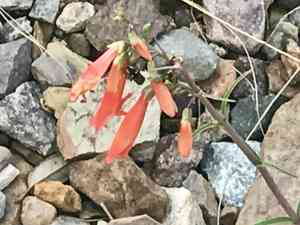
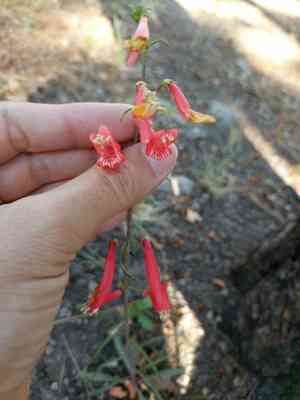
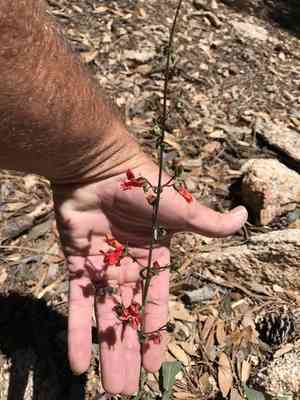
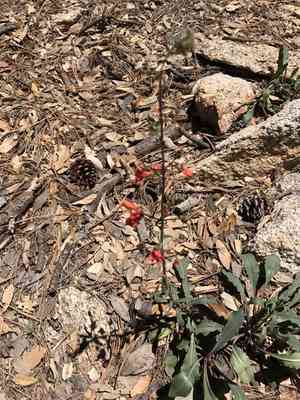
Quickly Identify Beardlip penstemon
1
Identify Penstemon barbatus by its narrow, lance-shaped leaves and vibrant red tubular flowers that cluster on tall, thin stems. The flowers have a characteristic beard-like filament in the throat, which gives the plant its common name.
Scientific Classification of Beardlip penstemon
Phylum
Vascular plants
Class
Dicotyledons
Order
Lamiales
Family
Plantain
Genus
Penstemon
Species
Beardlip penstemon
Planting and Growing of Beardlip penstemon
Care Difficulty
Easy
Watering Schedule
Every 4 days
Sunlight Requirements
Full sun
Sunshine Duration
6-12 hours
Ideal Temperature
60-75℉
Soil Type
Potting Mix, Peat Mix
Soil pH
6.5-7.5
Fertilizer Type
Balanced
Pruning Season
Spring, Summer
Pruning Area
Branches, Leaves
Pruning Frequency
2 times a year
Repotting Season
Spring
Pot Type
Plastic, Ceramic
 How to Water Beardlip penstemon?
The ideal watering amount for Penstemon barbatus is about 250 ml per session. You should aim to water until the soil is moist but not soggy, allowing it to dry slightly between waterings to mimic its natural habitat conditions.
What are the symptoms of an underwatered Beardlip penstemon?
›
What should I do if my Beardlip penstemon is not getting enough water?
›
What are the symptoms of an overwatered Beardlip penstemon?
›
How to save an overwatered Beardlip penstemon?
›
 What Are the Sunlight Requirements for Beardlip penstemon?
Penstemon barbatus prospers in full to partial sun, ideally soaking up 6 to 8 hours of sunlight daily. This lighting encourages lush blooms and healthy foliage while supporting robust photosynthesis for optimal growth.
More About Sunlight Requirements Techniques→
Ideal Sunlight Hours
›
Optimal Positioning
›
Benefits of Ideal Light
›
 What Is the Ideal Temperature Range for Beardlip penstemon?
The ideal temperature range for growing Penstemon barbatus is between 60°F to 75°F. This range provides a balanced environment that encourages healthy growth and vibrant blooms. Consistently maintaining these temperatures ensures that the plant can perform photosynthesis efficiently and develop strong roots.
 What Soil is Best for Beardlip penstemon?
Penstemon barbatus thrives in well-draining soil because it helps prevent root rot, a common issue for many perennial plants. Sandy soil and loam are ideal as they allow excess water to filter away, ensuring that roots maintain the right balance of moisture and oxygen for optimum health and growth. While Penstemon barbatus is not particularly fussy about the nutrient content in the soil, it performs best in moderately fertile ground. Overly rich soil can lead to excessive foliage growth at the expense of flowering. A good balance of nutrients supports healthy growth and vibrant blooms. A neutral to slightly alkaline pH range of 6.5 to 7.5 is optimal for Penstemon barbatus. This range ensures that essential nutrients are readily available to the plant, supporting healthy growth and blooming. Ensuring proper pH can help maintain nutrient accessibility and prevent common deficiencies.
 How to Fertilize Beardlip penstemon?
For Penstemon barbatus, it's important to apply a balanced fertilizer lightly. Use a water-soluble fertilizer mixed according to label instructions, usually about 1/4 teaspoon per gallon of water, ensuring not to over-fertilize, as this plant is tolerant of less rich soil conditions.
 How to Prune Beardlip penstemon?
Always use sharp and sterilized pruning shears to avoid tearing the stems and introducing pests or diseases. Disinfect your tools before and after each pruning session to keep Penstemon barbatus healthy and free from infections. Make cuts at a 45-degree angle to promote better water runoff and minimize the risk of rot. An angled cut reduces water accumulation on the cut surfaces, aiding in quicker healing and reduced susceptibility to water-borne diseases.
More About Pruning Techniques→
 How to Propagate Beardlip penstemon plant?
1
For seed propagation, use a well-draining mix of potting soil and sand. This promotes good drainage and provides the root structure with ample support as the seedling develops.
2
Sow the seeds of Penstemon barbatus on the surface of the soil and barely cover them with a thin layer of sand. Maintain gentle moisture and avoid direct sunlight exposure until germination occurs.
3
Select healthy, non-flowering stems for cuttings. Use pruning shears to cut a 4-6 inch stem, remove the lower leaves, and plant in a pot with a mix of peat and perlite.
 How to Repot Beardlip penstemon plant?
1
You should consider repotting your Penstemon barbatus when you notice roots beginning to grow through the drainage holes at the bottom of the pot or when the growth rate significantly slows down. Another clear sign is if the soil dries out much faster than it used to, indicating the plant is root-bound.
2
Select a new pot just one size larger than the current one. Ensure it has adequate drainage holes to prevent waterlogging, which is detrimental to Penstemon barbatus. A slightly bigger pot reduces the risk of overwatering and supports healthy growth by preventing root rot.
3
Opt for a well-draining potting mix tailored for drought-tolerant or Mediterranean plants. A good soil mix allows for excellent aeration and prevents water accumulation around the roots, which is crucial for the plant's health and vitality in new surroundings.
Learn More About Beardlip penstemon Diseases
Anthracnose
Bacterial Leaf Spot
Bacterial Wilt
Crown Gall
Cyst Nematode
Damping-off
Downy Mildew
Drought Stress
Fusarium Wilt
Gray Mold
Leaf Spot
Mosaic
Nutrient Deficiency
Nutrient Toxicity
Powdery Mildew
Root Rot
Root-knot Nematode
Rusts
Sooty Mold
Spider Mites
Temperature Stress
Thrips Damage
White Mold



