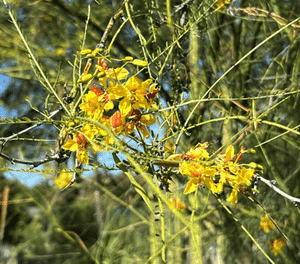
Jerusalem thorn(Parkinsonia aculeata)

Jerusalem thorn (Parkinsonia aculeata)

Also known as: Mexican palo verde, Palo de rayo

The common name "Jerusalem thorn" for Parkinsonia aculeata is believed to be a result of a mistranslation or linguistic corruption. The term "Jerusalem" in the name may have originated from the word "girasole," which means "turning toward the sun." Despite this mix-up, the name "Jerusalem thorn" has persisted over time. The plant is also commonly known as palo verde or palo de rayo.

Attributes of Jerusalem thorn

Lifespan
Perennial
Plant Type
Tree, Shrub
Plant Height
2 m to 10 m
Spread
4.5 m to 6 m
Leaf Color
Green
Flower Size
2 cm
Flower Color
Yellow

ForwardPlant - Identify plants with a snap

Identify and diagnose plants, get toxicity alerts, and explore safety guides for all types of fungi.

Try for Free

Images of Jerusalem thorn

Jerusalem thorn(Parkinsonia aculeata)

Quickly Identify Jerusalem thorn

1
Round-headed canopy of 15-20 feet (4.5-6 meters) distinguishes jerusalem thorn.
2
Foliage with tiny leaflets shedding to reveal midribs during hot seasons.
3
Yellow flowers with orange-red throats bloom sparsely throughout the year.
4
2-6 inch (5-15 cm) cylindrical pods split to reveal lined oblong seeds.
5
Compound leaves with obovate leaflets and spiny stipules accentuate jerusalem thorn identification.

Scientific Classification of Jerusalem thorn

Phylum
Vascular plants
Class
Dicotyledons
Order
Fabales
Family
Legume
Genus
Palo verde
Species
Jerusalem thorn

Planting and Growing of Jerusalem thorn

Care Difficulty
Easy
Watering Schedule
Every 2 days
Sunlight Requirements
Full sun
Sunshine Duration
4-8 hours
Ideal Temperature
68-86℉
Soil Type
Potting Mix, Peat Mix
Soil pH
6.5-7.5
Fertilizer Type
Balanced
Pruning Season
Spring, Summer
Pruning Area
Branches, Leaves
Pruning Frequency
2 times a year
Repotting Season
Spring
Pot Type
Plastic, Ceramic

water icon How to Water Jerusalem thorn?

When watering Parkinsonia aculeata, aim to provide around 500ml each time. This amount serves to moisten the soil without causing waterlogging, ensuring the roots get the necessary moisture without drowning. The general rule is to water deeply but infrequently, allowing the soil to dry out between watering sessions.
What are the symptoms of an underwatered Jerusalem thorn?
What should I do if my Jerusalem thorn is not getting enough water?
What are the symptoms of an overwatered Jerusalem thorn?
How to save an overwatered Jerusalem thorn?
More About Watering Techniques

sunlight icon What Are the Sunlight Requirements for Jerusalem thorn?

Sunlight Requirements: Full sun
Duration of light: 6 to 8 hours daily
Parkinsonia aculeata prospers in full sunlight exposure, attaining optimal growth and flowering. Receiving adequate sunlight daily enhances its photosynthetic efficiency, ensuring robust health and an attractive appearance.
What type of sunlight does Parkinsonia aculeata prefer?
How can I ensure adequate sunlight for my Parkinsonia aculeata during different seasons?
What are the benefits of providing ideal sunlight to Parkinsonia aculeata?
More About Sunlight Requirements Techniques

temperature icon What Is the Ideal Temperature Range for Jerusalem thorn?

Ideal Temperature: 68 ~ 86℉
Parkinsonia aculeata thrives best in warm conditions where temperatures range between 68°F and 86°F. This range ensures healthy growth and optimal physiological activities. Temperatures within this limit allow the plant's photosynthetic processes to function efficiently, promoting lush foliage and resilient development.

soil icon What Soil is Best for Jerusalem thorn?

Soil type: Sandy soil, Loam, Calcareous soil
Soil PH: 6.5 ~ 7.5
Parkinsonia aculeata thrives in well-drained soil to prevent root rot and ensure healthy, robust growth. This soil type helps the plant access necessary nutrients without waterlogging, which is vital for its survival in arid conditions. A soil that is rich in nutrients supports the vibrant growth of Parkinsonia aculeata, promoting lush foliage and abundant flowering. Organic matter mixed into the soil aids in sustaining the plant's vigorous lifecycle. Soil with moderate water retention is critical for Parkinsonia aculeata, striking a balance between moisture availability and drainage. This helps to ensure that the plant receives enough water during dry spells without becoming waterlogged. More About Soil

fertilize icon How to Fertilize Jerusalem thorn?

Fertilizer type: Balanced
When fertilizing Parkinsonia aculeata, use a balanced fertilizer such as a 10-10-10 mix. Apply about 1/2 cup of granular fertilizer per tree, or follow the package instructions for liquid fertilizer (typically 1 tablespoon per gallon of water). Adjust the amount based on the size and age of the tree. More About Fertilizing Techniques

prune icon How to Prune Jerusalem thorn?

Pruning Time: Spring, Summer
Begin by looking for any branches that are dead, diseased, or damaged. These should be the first to be removed since they can harbor pests and spread disease. Use sharp, clean tools to cut the branches back to the point where they join a healthy section. To maintain an open canopy, selectively remove some of the inner growth. This will promote better air circulation and allow sunlight to penetrate through, improving overall plant health. Aim for a balanced structure by removing crossing branches and those that grow inward. Parkinsonia aculeata has formidable thorns; trimming some of these can make handling the plant easier while reducing hazards. Cut back thorny branches to a bud or branch junction to encourage growth in a safer direction. More About Pruning Techniques

propagate icon How to Propagate Jerusalem thorn plant?

Propagate Time: Spring, Early summer
1
Gather mature seeds from the plant in late summer when pods turn brown. Ensure seeds are fully ripe by testing hardness and color.
2
Use a well-draining mix such as a blend of sand and soil to ensure seeds do not rot. The medium should be sterile to prevent fungal infections.
3
Sow seeds in the prepared seed tray, covering them lightly with soil, then water gently to ensure soil is moist but not waterlogged.
More About Propagating Techniques

repot icon How to Repot Jerusalem thorn plant?

Repotting frequency: Every 2-3 years
1
Parkinsonia aculeata should be repotted when you notice its roots growing out of the drainage holes or when it becomes root-bound in its existing pot. These signs indicate that it has outgrown its current home, necessitating a move to a larger pot to ensure healthy growth.
2
Select a pot that is one size larger than the current one, equipped with drainage holes. This prevents waterlogging and root rot, two common issues with insufficient drainage. A slightly larger pot allows for adequate root expansion without overwhelming the plant.
3
Opt for a well-draining cactus mix that mimics the sandy, arid environments that Parkinsonia aculeata naturally thrives in. This type of soil will prevent water retention, reducing the risk of root diseases and ensuring optimal conditions for the plant's growth.

ForwardPlant - Identify plants with a snap

Find the best spots for them to optimize their health, simply using your phone.

Try for Free

Toxicity of Jerusalem thorn

Is Jerusalem thorn toxic to cat?

The Jerusalem thorn presents a low-level toxicity risk to felines. Poisoning can happen if a cat consumes a significant amount of the plant. Every part of the Jerusalem thorn is toxic, making it crucial to keep cats from biting or eating any section of it. After ingestion, a cat might show signs of physical discomfort. Cat owners should remain alert and, if they suspect their cat has eaten any part of the Jerusalem thorn, should promptly seek veterinary assistance to safeguard their pet's health and wellbeing.

Is Jerusalem thorn toxic to dog?

Jerusalem thorn presents a mild toxicity threat to dogs. Although the plant is not extremely toxic, ingesting large amounts can result in poisoning. Dogs might be drawn to and gnaw on various sections of the jerusalem thorn, as all parts are regarded as toxic. If a dog consumes a considerable quantity of jerusalem thorn, it could show signs like gastrointestinal distress, vomiting, or diarrhea. It is essential for dog owners to keep a close watch on their pets and restrict their access to jerusalem thorn to prevent possible poisoning events. Should a dog ingest any portion of jerusalem thorn, prompt veterinary assistance is vital to guarantee appropriate care and treatment.

Identify toxic plants for your safety

Learn which plants are harmful to you and your pets, and make informed choices for a safer home!

Try for Free
WARNING
The judgment on toxicity and danger is for reference only. We DO NOT GUARANTEE any accuracy of such judgment. Therefore, you SHALL NOT rely on such judgment. It is IMPORTANT TO SEEK PROFESSIONAL ADVICE in advance when necessary.
More About Toxic Techniques

