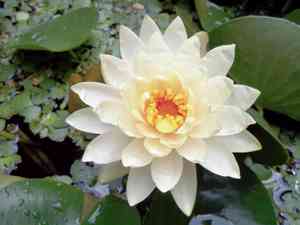
American white water-lily (Nymphaea odorata)
Also known as: Fragrant water-lily, Beaver root, Alligator bonnet, Sweet-scented white water-lily
The American white water-lily (Nymphaea odorata), native to Central and North America, plays a vital role in its pond ecosystem. Its leaves provide essential shade, which helps control algae growth, creating a healthier environment for aquatic life. The plant's flowers attract a variety of pollinators, enhancing local biodiversity. Additionally, its presence offers food and shelter for numerous species, including fish, frogs, and invertebrates, while its roots help stabilize sediment, reducing erosion.
In This Article
Attributes of American white water-lily
Lifespan
Perennial
Plant Type
Herb
Plant Height
2.5 m
Spread
60 cm to 1.2 m
Leaf Color
Green Purple Lavender
Flower Size
10 cm to 15 cm
Flower Color
White Pink
Images of American white water-lily

Quickly Identify American white water-lily
1
Fragrant, prominent white blooms in cup shape, 6-9 inches (15-23 cm) wide.
2
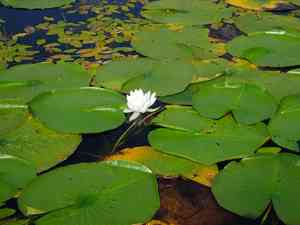
Large, decorative round lily pads, 10 inches (25 cm) across, bright green upper surface.
3
Globular, spongy berry, 0.8-1.2 inches (2-3 cm) diameter, green to yellow-green color.
4
Seeds with ovoid shape, small, and firm texture, released by detached berries.
5
Prefers depths of 3 inches to 3 feet (7.5 cm to 91 cm) in soil ranging from sandy loam to muck.
Scientific Classification of American white water-lily
Phylum
Vascular plants
Class
Dicotyledons
Order
Nymphaeales
Family
Water-lily
Genus
Water lilies
Species
American white water-lily
Planting and Growing of American white water-lily
Care Difficulty
Easy
Watering Schedule
Every 15 days
Sunlight Requirements
Full sun
Sunshine Duration
6-10 hours
Ideal Temperature
75-85℉
Soil Type
Potting Mix, Peat Mix
Soil pH
6.5-7.5
Fertilizer Type
Balanced
Pruning Season
Spring, Summer
Pruning Area
Branches, Leaves
Pruning Frequency
3 times a year
Repotting Season
Spring
Pot Type
Ceramic, Plastic
 How to Water American white water-lily?
Nymphaea odorata thrives in aquatic environments, and thus, the watering amount should be substantial, approximately 500 milliliters per session. Ensure that the plant is well-submerged in water, simulating its natural habitat of lakes and ponds.
What are the symptoms of an underwatered American white water-lily?
›
What should I do if my American white water-lily is not getting enough water?
›
What are the symptoms of an overwatered American white water-lily?
›
How to save an overwatered American white water-lily?
›
 What Are the Sunlight Requirements for American white water-lily?
Full, partial sun is ideal for Nymphaea odorata, allowing it to flourish fully. Ample sunlight ensures radiant blooming, lush foliage, and sustained health across its growing period.
More About Sunlight Requirements Techniques→
What is the ideal light for Nymphaea odorata?
›
How to achieve ideal light conditions?
›
Benefits of ideal lighting conditions?
›
 What Is the Ideal Temperature Range for American white water-lily?
The optimal temperature range for the growth of Nymphaea odorata is between 75°F and 85°F. Within this temperature range, the plant experiences optimal metabolic reactions which promote strong and healthy growth. The heat aids in processes such as photosynthesis and nutrient absorption, which are pivotal for this aquatic plant. Disturbances in this temperature range may lead to delayed growth or other developmental issues, highlighting the importance of maintaining stability.
 What Soil is Best for American white water-lily?
Nymphaea odorata, or the fragrant water lily, thrives in soil that retains moisture well, as its natural habitat surrounds shallow freshwater ponds and lakes. This requirement ensures that the plant receives consistent hydration, crucial for its lush foliage and vibrant blooms. A moisture-retentive soil type helps mimic the aquatic conditions that are innate to its growth. The water lily benefits significantly from soil that is rich in organic matter. Loamy and peat-enriched soils provide an abundant source of nutrients that promote robust growth and sustain the striking floral displays. Organically enriched substrates supply both macro and micronutrients essential for photosynthesis and overall plant health, ensuring the Nymphaea flourishes. Proper aeration is vital for the roots of Nymphaea odorata to breathe efficiently, although primarily an aquatic plant. While standing in water, the soil should be loose enough to allow for oxygen exchange, preventing root rot and encouraging healthy root development. Well-aerated soils balance moisture with the necessary gaseous exchange for optimal health.
 How to Fertilize American white water-lily?
For Nymphaea odorata, the fertilizer amount should be balanced to ensure healthy growth. A liquid fertilizer solution at a rate of about 1/4 strength is generally sufficient when applied twice a month during the growing season. Avoid over-fertilization as it can lead to an imbalance, affecting the plant's health.
 How to Prune American white water-lily?
Ensure you have sharp, clean pruning shears or scissors. This helps prevent plant damage and minimizes disease transmission. A dedicated pair of garden gloves will protect your hands from any debris or sharp edges. Look for yellowing or damaged leaves and fading flowers. These parts should be removed to encourage the plant to redirect energy towards new growth. Ensure that you accurately identify the parts before any cuts are made. When pruning Nymphaea odorata, make clean cuts just above the crown where the leaf stem meets the root. This precision minimizes plant stress and reduces the risk of exposing the plant to pathogens. After pruning, promptly dispose of all removed material. Dead or unhealthy parts can harbor pests and diseases, which could be disastrous if allowed to linger in the vicinity of healthy plants.
More About Pruning Techniques→
 How to Propagate American white water-lily plant?
1
Collect seeds from mature Nymphaea odorata flowers. Rinse and store them in water immediately to prevent drying. Use clean water to maintain the seeds for a period before planting.
2
Carefully dig up the rhizomes from the pond. Use a clean spade to separate the rhizomes into sections, ensuring each section has a viable eye and roots for successful development.
3
Prepare containers with aquatic soil and plant the seeds or rhizome divisions just beneath the surface of the soil. Submerge these containers in shallow water to facilitate their early growth stages.
 How to Repot American white water-lily plant?
1
Repot when Nymphaea odorata shows signs of overcrowding, such as stunted growth or smaller flowers. This typically happens every two to three years. The best time is in late spring or early summer when water lilies actively grow and can quickly establish in new soil.
2
Select wide, shallow pots with no drainage holes to prevent losing soil and nutrients. The width allows water lily rhizomes to spread horizontally, providing stable anchorage and spreading potential. A 12-18 inch diameter pot is usually recommended for balanced growth and flower production.
3
Use a rich aquatic planting mix that compacts well under water without floating away. This soil should hold nutrients effectively to support substantial flowering and maintain good water quality, preventing algae blooms.
Learn More About American white water-lily Diseases
Anthracnose
Bacterial Leaf Spot
Bacterial Soft Rot
Bacterial Wilt
Chemical Injury
Crown Gall
Damping-off
Downy Mildew
Drought Stress
Fusarium Wilt
Gray Mold
Leaf Spot
Mosaic
Nutrient Deficiency
Nutrient Toxicity
Powdery Mildew
Root Rot
Root-knot Nematode
Sooty Mold
Spider Mites
Temperature Stress
Thrips Damage
White Mold



