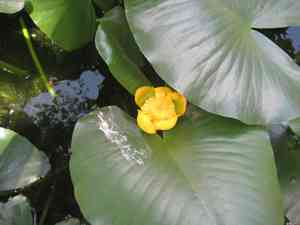
Spatterdock(Nuphar advena)

Spatterdock (Nuphar advena)

Also known as: Yellow pond-lily, Cow lily

Spatterdock (Nuphar advena) is a perennial aquatic plant notable for its large, heart-shaped leaves that float on or rise slightly above the water's surface. Key points about its characteristics and blooming cycle include:

- **Leaves**: Typically 30 to 41 cm in length, these leaves are heart-shaped and can either float or stand above the water.
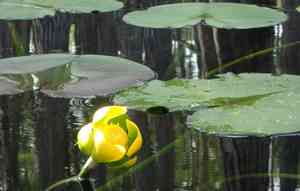
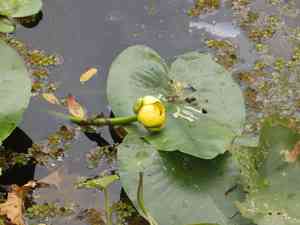
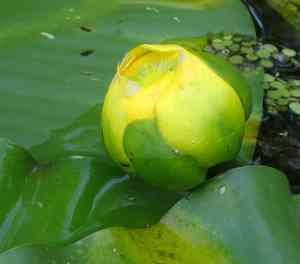
- **Flowers**: Bright yellow, cup-shaped flowers that emerge from late spring through early fall. The flowers start as green buds and open to reveal a greenish-yellow hue, closing each evening.
- **Blooming Cycle**: The blooming period extends from late spring to early fall, with flowers gradually replaced by fruits as the season progresses.

This plant is important for providing habitat and stabilizing sediment in aquatic environments.

Attributes of Spatterdock

Lifespan
Perennial
Plant Type
Herb
Plant Height
90 cm to 1.2 m
Spread
90 cm to 1.5 m
Leaf Color
Dark green
Flower Size
5 cm
Flower Color
Yellow

ForwardPlant - Identify plants with a snap

Identify and diagnose plants, get toxicity alerts, and explore safety guides for all types of fungi.

Try for Free

Images of Spatterdock

Spatterdock(Nuphar advena)

Quickly Identify Spatterdock

1
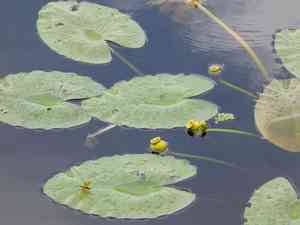
Look for large, floating, heart-shaped leaves that can be up to 16 inches long with a wavy margin. The flowers are yellow and cup-shaped with numerous petals, usually emerging just above the water level.

Scientific Classification of Spatterdock

Phylum
Vascular plants
Class
Dicotyledons
Order
Nymphaeales
Family
Water-lily
Genus
Pond-lily
Species
Spatterdock

Planting and Growing of Spatterdock

Care Difficulty
Easy
Watering Schedule
Every 8 days
Sunlight Requirements
Partial sun
Sunshine Duration
4-8 hours
Ideal Temperature
70-85℉
Soil Type
Potting Mix, Peat Mix
Soil pH
6.5-7.5
Fertilizer Type
Balanced
Pruning Season
Spring, Summer
Pruning Area
Branches, Leaves
Pruning Frequency
2 times a year
Repotting Season
Spring
Pot Type
Plastic, Ceramic

water icon How to Water Spatterdock?

Nuphar advena thrives in water-rich environments like ponds or slow-moving waterways. Thus, when watering this plant in a non-aquatic setting, ensure the substrate remains thoroughly moist, almost to the point of saturation, mimicking its natural habitat. Use approximately 500 ml of water to achieve such conditions.
What are the symptoms of an underwatered Spatterdock? ›
What should I do if my Spatterdock is not getting enough water? ›
What are the symptoms of an overwatered Spatterdock? ›
How to save an overwatered Spatterdock? ›

sunlight icon What Are the Sunlight Requirements for Spatterdock?

Sunlight Requirements: Partial sun
Duration of light: 4 to 6 hours daily
Ideal light range for Nuphar advena is partial sun. This ensures balanced sunlight exposure which supports vibrant growth, encourages blooming, and fortifies its structure against environmental stresses.
What is the ideal light for Nuphar advena? ›
How can I achieve ideal lighting for Nuphar advena? ›
What benefits does ideal lighting bring to Nuphar advena? ›
More About Sunlight Requirements Techniques→

temperature icon What Is the Ideal Temperature Range for Spatterdock?

Ideal Temperature: 70 ~ 85℉
The ideal temperature range for Nuphar advena is crucial for its optimal growth. This plant thrives best between 70°F and 85°F. This range provides the perfect environmental conditions for the plant's biological processes, like photosynthesis and respiration, to occur efficiently. Staying within this range minimizes stress and promotes healthy foliage and robust blooms.

soil icon What Soil is Best for Spatterdock?

Soil type: Loam, Clay soil, Peat soil
Soil PH: 6.5 ~ 7.5
Nuphar advena thrives in soil that can retain ample moisture, a crucial aspect as it naturally grows in water-rich environments like ponds and slow streams. Maintaining soil moisture ensures that the plant can continuously access the water necessary for its lush growth and vibrant yellow blooms. The plant benefits greatly from a nutrient-rich soil which supports its vigorous growth. It requires a substrate that supplies essential nutrients facilitating robust foliage and enhancing bloom production, making the plant a thriving part of aquatic and semi-aquatic ecosystems. Proper soil aeration is essential to avoid compaction, which can limit root expansion and oxygen availability. Aerated soils help this aquatic plant efficiently transport water and nutrients to different parts of its rooted system, keeping it healthy and resilient.

fertilize icon How to Fertilize Spatterdock?

Fertilizer type: Balanced
Nuphar advena typically requires moderate fertilization. Use a balanced liquid fertilizer mixed at a concentration of 1/4 strength. Apply 1 liter per plant for adequate nutrient uptake.

prune icon How to Prune Spatterdock?

Pruning Time: Spring, Summer
Begin by inspecting the plant closely and identifying any dead or damaged leaves and stems. These should be removed first to promote new growth and prevent disease. For optimal results, make your cuts at the base of the stem, just above where it meets the rhizome. This helps to prevent stubs that can rot and cause infection. If the plant is too dense, carefully trim back some of the healthy foliage to allow sunlight and nutrients to reach smaller, younger shoots. Be mindful not to over-prune, as this can stress the plant. More About Pruning Techniques→

propagate icon How to Propagate Spatterdock plant?

Propagate Time: Spring, Early spring, Late spring
1
Fill the seed tray with quality seed starting mix and evenly moisten it. Ensuring the medium is well-drained yet retains moisture is crucial for successful seed germination.
2
Sprinkle the seeds evenly on the surface of the moistened soil, and lightly cover them with more soil. Ensure seeds are not buried too deep as they require light exposure to germinate.
3
For division, carefully separate sections of the rhizome with a sharp knife. Each section should have healthy roots and at least one growing shoot to encourage successful growth.
More About Propagating Techniques→

repot icon How to Repot Spatterdock plant?

Repotting frequency: Every 2-3 years
1
Nuphar advena, commonly known as the Spatterdock, needs repotting when its roots outgrow the current pot or when the plant seems unhealthy. Look for signs like reduced growth or yellowing leaves. Spring and summer are the ideal times to repot as the plant is actively growing and will adapt more quickly to new conditions.
2
Choose a wide and shallow pot to accommodate the spreading rhizomes of Nuphar advena. A container with few drainage holes will help retain moisture, mimicking the plant's natural aquatic environment. Using the right pot size prevents water stagnation while ensuring the plant gets the hydration it needs.
3
Opt for an aquatic plant soil mix that maintains adequate moisture but allows oxygen to reach the roots. This type of soil supports the unique needs of aquatic plants like Nuphar advena by maintaining a balance between wet and well-aerated conditions, preventing root rot.

ForwardPlant - Identify plants with a snap

Find the best spots for them to optimize their health, simply using your phone.

Try for Free

Toxicity

ingestion

Identify toxic plants for your safety

Learn which plants are harmful to you and your pets, and make informed choices for a safer home!

Try for Free
WARNING
The judgment on toxicity and danger is for reference only. We DO NOT GUARANTEE any accuracy of such judgment. Therefore, you SHALL NOT rely on such judgment. It is IMPORTANT TO SEEK PROFESSIONAL ADVICE in advance when necessary.