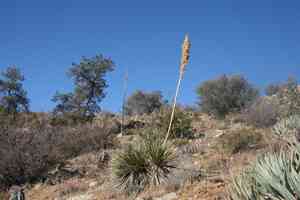
Bigelow's nolina (Nolina bigelovii)
Also known as: Bigelow's Nolina, Beargrass
The plant you're referring to is the Bigelow's nolina. It thrives in extremely arid desert conditions and is a distinctive feature in Southwestern U.S. gardens. Although it resembles grass, it's from a different family altogether. This becomes clear when it sends up a tall flower stalk from the center of its leaf rosette. In Arizona, Nolina bigelovii enjoys protected status.
In This Article
Attributes of Bigelow's nolina
Lifespan
Perennial
Plant Type
Tree, Shrub
Plant Height
1.2 m to 2.5 m
Spread
1.2 m
Leaf Color
Green
Flower Size
Approximately 0.25 inches (0.6 cm)
Flower Color
White Yellow Green Brown
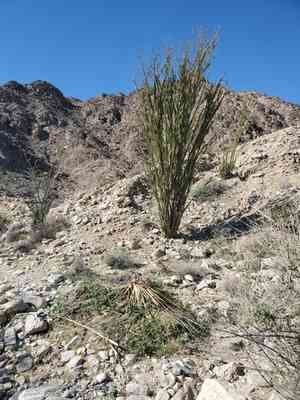
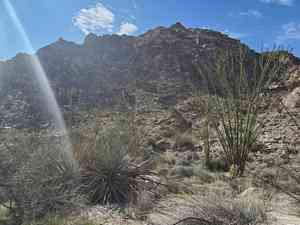
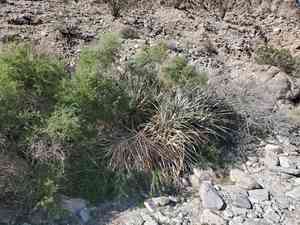
Images of Bigelow's nolina

Quickly Identify Bigelow's nolina
1
Identifying Nolina bigelovii involves looking for its long, narrow, grass-like leaves that grow in dense clusters and can reach up to 3 feet in height. The leaves are tough and fibrous with serrated edges. The plant produces a tall flowering stalk, which can be up to 13 feet tall, topped with a dense cluster of small, white flowers.
Scientific Classification of Bigelow's nolina
Phylum
Vascular plants
Class
Monocotyledons
Order
Asparagales
Family
Asparagus
Genus
Beargrasses
Species
Bigelow's nolina
Planting and Growing of Bigelow's nolina
Care Difficulty
Easy
Watering Schedule
Every 2 days
Sunlight Requirements
Full sun
Sunshine Duration
6-10 hours
Ideal Temperature
70-85℉
Soil Type
Potting Mix, Peat Mix
Soil pH
6.5-7.5
Fertilizer Type
Balanced
Pruning Season
Spring, Summer
Pruning Area
Branches, Leaves
Pruning Frequency
2 times a year
Repotting Season
Spring
Pot Type
Plastic, Ceramic
 How to Water Bigelow's nolina?
Nolina bigelovii, commonly known as Desert Beargrass, thrives in arid environments. Its watering should mimic natural rainfall patterns; hence, a deep soak of about 250ml ensures moisture reaches the roots without waterlogging the soil. It is crucial to allow the soil to dry out completely between waterings to prevent root rot.
What are the symptoms of an underwatered Bigelow's nolina?
›
What should I do if my Bigelow's nolina is not getting enough water?
›
What are the symptoms of an overwatered Bigelow's nolina?
›
How to save an overwatered Bigelow's nolina?
›
 What Are the Sunlight Requirements for Bigelow's nolina?
Nolina bigelovii thrives in full to partial sun environments. Ideal lighting ensures it maintains its lush, architectural structure, improves growth efficiency, and enhances overall resilience.
More About Sunlight Requirements Techniques→
Ideal Solution Introduction
›
Specific Measures
›
Benefits of Ideal Lighting
›
 What Is the Ideal Temperature Range for Bigelow's nolina?
The ideal temperature range for Nolina bigelovii, also known as beargrass, is between 70°F and 85°F. This range provides the optimal conditions for photosynthesis and growth, ensuring that the plant thrives. Temperatures within this range support cellular functions and allow the plant to maintain its structural integrity while promoting vibrant foliage.
 What Soil is Best for Bigelow's nolina?
Nolina bigelovii thrives in well-drained soil to prevent root rot. Efficient drainage keeps the roots healthy and allows the plant to absorb nutrients better, leading to robust growth. A sandy loam enriched with moderate nutrients supports Nolina bigelovii's requirements. Balanced nutrients promote steady growth, and help the plant maintain its vibrant foliage. The preferred texture is slightly gritty which helps anchor the plant and provides stability. This characteristic also mimics its natural desert habitat, offering optimal growing conditions.
 How to Fertilize Bigelow's nolina?
Nolina bigelovii, commonly known as Bigelow's Nolina, requires minimal fertilization. For liquid fertilizers, use a diluted balanced formula, such as a 20-20-20, at half strength. For slow-release fertilizers, use a low-nitrogen formula, approximately 14-12-12, applied lightly. Too much nitrogen can harm the plant's development.
 How to Prune Bigelow's nolina?
Begin by identifying and removing any dead leaves or damaged parts. Cut as close to the base as possible to avoid leaving unsightly stubs and to promote newer leaf growth. If your Nolina bigelovii is becoming too dense, trim back some of the leaves. This not only helps in improving airflow but also keeps the plant looking tidy and balanced in form. After pruning, avoid watering the plant excessively, as this can cause root rot. Allow the soil to dry out between waterings, simulating the natural arid environment of this species.
More About Pruning Techniques→
 How to Propagate Bigelow's nolina plant?
1
Fill the trays with potting soil, ensuring it is well-moistened. The soil should be loose to promote root growth and prevent seed rot.
2
Place the Nolina bigelovii seeds on the surface of the soil and lightly press them in. Avoid burying them too deep to ensure successful germination.
3
Place the seed trays in a warm, sunny location or under grow lights. A temperature around 75°F (24°C) is ideal for germination.
 How to Repot Bigelow's nolina plant?
1
Nolina bigelovii signals a need for repotting when you notice roots growing from drainage holes or the plant becoming top-heavy. These indicators suggest that the plant's root system has outgrown its current container, restricting growth and necessitating repotting to provide ample space for new roots.
2
Choose a pot with drainage holes that is 1-2 inches larger in diameter than the current pot. A slightly larger pot ensures that Nolina bigelovii has space to grow without overwhelming its root system, which can lead to water retention issues. A terracotta pot is ideal as it allows excess moisture to evaporate, preventing root rot.
3
Opt for a well-draining soil, like a cactus mix combined with sand or perlite. This composition mimics the plant's natural arid habitat, ensuring that water does not linger around the roots, promoting healthy growth and preventing overwatering, which is detrimental to Nolina bigelovii.



