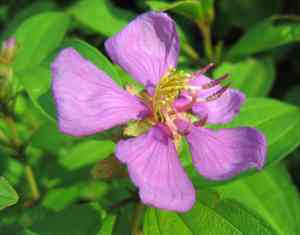
Common melastoma (Melastoma candidum)
Also known as: Senduduk, Indian rhododendron
Common melastoma (Melastoma malabathricum) is popular as an ornamental plant primarily due to its striking five-petaled purple flowers, which add visual appeal to gardens. Despite its beauty, it is a highly invasive shrub that spreads quickly in tropical and subtropical regions, often overtaking native vegetation. Yet, its ornamental charm keeps it in demand among gardeners.
In This Article
Attributes of Common melastoma
Lifespan
Perennial
Plant Type
Tree, Shrub
Plant Height
3 m
Spread
2 m
Leaf Color
Green
Flower Size
4 cm to 7 cm
Flower Color
Purple Pink
Images of Common melastoma
Quickly Identify Common melastoma
1
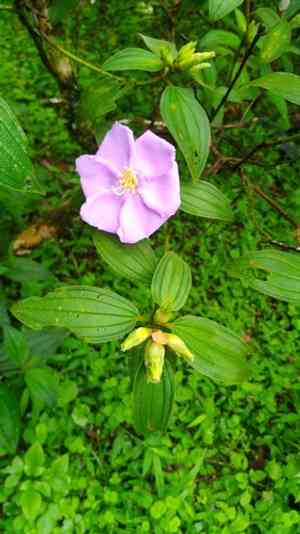
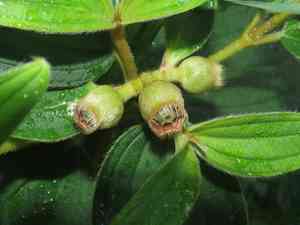
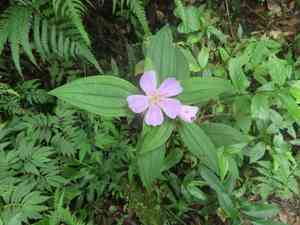
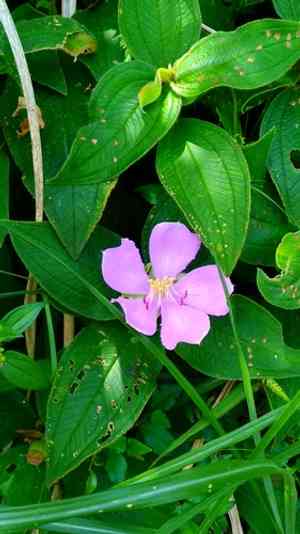
This plant can be identified by its purple to pink flowers with five petals and prominent yellow stamens. The leaves are simple, elliptic, and have a rough texture.
Scientific Classification of Common melastoma
Phylum
Vascular plants
Class
Dicotyledons
Order
Myrtales
Family
Melastome
Genus
Melastoma
Species
Common melastoma
Planting and Growing of Common melastoma
Care Difficulty
Easy
Watering Schedule
Every 3 days
Sunlight Requirements
Partial sun
Sunshine Duration
4-8 hours
Ideal Temperature
68-77℉
Soil Type
Potting Mix, Peat Mix
Soil pH
4.5-6.5
Fertilizer Type
Balanced
Pruning Season
Spring, Summer
Pruning Area
Branches, Leaves
Pruning Frequency
2 times a year
Repotting Season
Spring
Pot Type
Terracotta, Plastic
 How to Water Common melastoma?
For Melastoma candidum, aim to keep the soil consistently moist but not waterlogged. Each session should consist of approximately 300 ml of water, ensuring the water reaches the root zone but avoids pooling. The principle is to maintain a balance where the soil feels slightly damp to the touch but does not remain wet.
What are the symptoms of an underwatered Common melastoma?
›
What should I do if my Common melastoma is not getting enough water?
›
What are the symptoms of an overwatered Common melastoma?
›
How to save an overwatered Common melastoma?
›
 What Are the Sunlight Requirements for Common melastoma?
Melastoma candidum finds its ideal light range in partial to full sun, benefiting from the balance of light for photosynthesis and vibrant blooms, enhancing overall appearance and vitality.
More About Sunlight Requirements Techniques→
How much light does Melastoma candidum need?
›
What solutions can help Melastoma candidum achieve ideal lighting?
›
What are the benefits of ideal lighting for Melastoma candidum?
›
 What Is the Ideal Temperature Range for Common melastoma?
The ideal temperature range for Melastoma candidum is between 68°F and 77°F. This range ensures optimal growth and flowering for the plant. These temperatures mimic the plant's natural subtropical and tropical habitat, providing warmth without excessive heat. Maintaining these temperatures will help in maximizing photosynthesis and overall plant health.
 What Soil is Best for Common melastoma?
Melastoma candidum thrives in nutrient-rich soils that support its growth and vibrant flowering. Rich soils supply essential nutrients that promote healthy foliage and preserves the plant’s natural vigor, leading to lush greenery and stunning blossoms. Ensuring good drainage is essential to prevent waterlogging, which can lead to root rot. Well-draining soils maintain the perfect moisture balance, preventing over-saturation while still supplying the needed water for optimal growth. While good drainage is crucial, Melastoma candidum also benefits from soils that retain some moisture. Soils with moisture retention allow the roots to absorb water even in dry periods, enabling consistent growth and resilience against drought.
 How to Fertilize Common melastoma?
Melastoma candidum appreciates a balanced fertilizer regimen. For liquid fertilizers, use about 10-15 ml of a balanced 10-10-10 NPK (Nitrogen, Phosphorus, Potassium) solution diluted in 1 liter of water. For solid fertilizers, apply 20 grams of slow-release granules around the base of the plant, ensuring not to pile it directly on the stem.
 How to Prune Common melastoma?
Begin by removing any dead, broken, or diseased branches. Make clean cuts close to the branch base to allow for quick healing, preventing potential pest infestations or diseases. Trim back overgrown branches to shape the plant into a desirable form. Focus on keeping the center open to enhance air circulation, which reduces the risk of fungal diseases. To encourage blooms, trim back long, non-flowering stems by a third. This stimulates new growth which is more likely to produce flowers, giving your plant a lush, colorful appearance.
More About Pruning Techniques→
 How to Propagate Common melastoma plant?
1
Gather mature seeds from Melastoma candidum when the fruit ripens. Clean them to remove any pulp and allow them to dry before sowing.
2
Select a healthy, non-flowering stem and cut a 4-6 inch section at a 45-degree angle. Remove lower leaves to prevent rot in the soil.
3
Plant seeds or cuttings in a well-draining soil mix. Cover with a humidity dome or plastic wrap to maintain moisture and warmth. Water lightly as needed.
 How to Repot Common melastoma plant?
1
Melastoma candidum should be repotted when you notice roots poking through the drainage holes or when the plant's growth stalls despite adequate care. Typically, new leaves will appear stunted, or the plant will seem to outgrow its current pot.
2
Pick a pot that is 2-3 inches wider than the current one, ideally made from a breathable material like terracotta. This allows excess moisture to escape, helping to prevent root rot, while providing ample space for root expansion.
3
Opt for acidic, well-drained soil, enriched with organic matter. This type of soil mimics the plant's natural habitat, ensuring robust root health and nutrient availability, while effectively preventing waterlogging.
Learn More About Common melastoma Diseases
Anthracnose
Bacterial Leaf Spot
Bacterial Wilt
Black Spot
Chemical Injury
Damping-off
Downy Mildew
Drought Stress
Fusarium Wilt
Gray Mold
Leaf Curl
Leaf Spot
Mosaic
Nutrient Deficiency
Nutrient Toxicity
Powdery Mildew
Root Rot
Root-knot Nematode
Rusts
Sooty Mold
Spider Mites
Temperature Stress
Thrips Damage
White Mold



