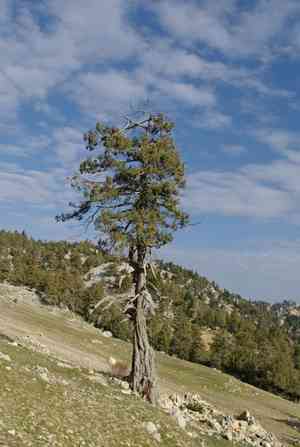
Greek juniper (Juniperus excelsa)
Also known as: Crimean juniper
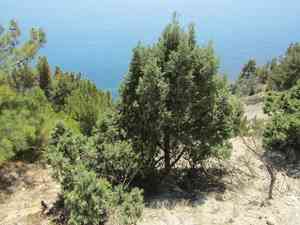
Juniperus excelsa typically grows as a large shrub or tree, usually reaching heights between 6 and 20 meters, though it can occasionally grow up to 25 meters. It features a trunk that can be as wide as 2 meters in diameter and has a broadly conical to irregularly shaped crown. The tree has two types of leaves: juvenile needle-like leaves that are 8 to 10 mm long, and adult scale-like leaves that are 0.6 to 3 mm long.
In This Article
Attributes of Greek juniper
Lifespan
Perennial
Plant Type
Tree
Plant Height
6 m to 25 m
Spread
5 m to 8 m
Leaf Color
Green
Flower Size
3 mm to 4 mm
Flower Color
White Blue Black
Images of Greek juniper
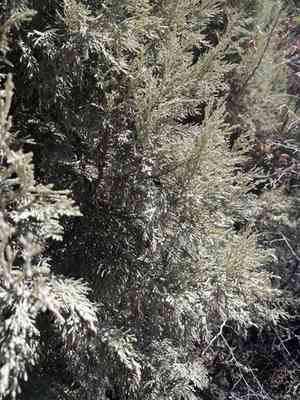
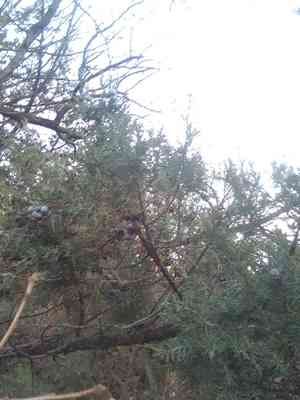
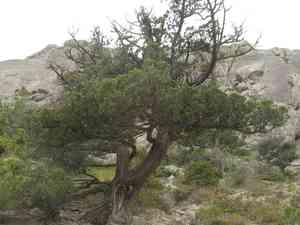
Quickly Identify Greek juniper
1
Juniperus excelsa can be identified by its scale-like leaves that are green to blue-green, its peeling bark, and its berry-like cones which are initially green and turn to a blue or purple shade as they mature.
Scientific Classification of Greek juniper
Phylum
Vascular plants
Class
Conifers
Order
Pinales
Family
Cypress
Genus
Junipers
Species
Greek juniper
Planting and Growing of Greek juniper
Care Difficulty
Easy
Watering Schedule
Every 2 days
Sunlight Requirements
Full sun
Sunshine Duration
4-6 hours
Ideal Temperature
60-75℉
Soil Type
Potting Mix, Peat Mix
Soil pH
6.5-7.5
Fertilizer Type
Balanced
Pruning Season
Spring, Summer
Pruning Area
Branches, Leaves
Pruning Frequency
2 times a year
Repotting Season
Spring
Pot Type
Plastic, Ceramic
 How to Water Greek juniper?
Juniperus excelsa prefers to be watered deeply but infrequently. A general rule is to provide about 500 milliliters of water per session. Make sure the water reaches the deeper roots by soaking the soil thoroughly, ensuring no dry patches remain. This deep watering encourages robust root growth and mimics its natural environment.
What are the symptoms of an underwatered Greek juniper?
›
What should I do if my Greek juniper is not getting enough water?
›
What are the symptoms of an overwatered Greek juniper?
›
How to save an overwatered Greek juniper?
›
 What Are the Sunlight Requirements for Greek juniper?
Juniperus excelsa thrives in full to partial sun, requiring a minimum of 6 hours of sunlight daily. Ideal lighting ensures dense foliage and healthy plant growth, bolstering its aesthetic and biological vigor.
What is the best lighting for Juniperus excelsa?
›
How can one achieve ideal lighting conditions indoors?
›
What benefits arise from ideal lighting?
›
 What Is the Ideal Temperature Range for Greek juniper?
Juniperus excelsa thrives optimally in a temperature range of 60 to 75 degrees Fahrenheit. This range provides the warmth necessary for photosynthesis while avoiding stress from extreme heat or cold, ensuring healthy development and growth.
 What Soil is Best for Greek juniper?
Juniperus excelsa thrives in sandy soil due to its excellent drainage capabilities, which help prevent root rot. The loose texture of sandy soil allows roots to spread and access nutrients efficiently, enhancing plant vitality. This plant prefers well-drained loam as it offers a perfect balance of moisture retention and drainage. The fine particles in loam help retain essential nutrients, which support strong and healthy growth. Juniperus excelsa can tolerate calcareous soil, often rich in calcium carbonate. This tolerance allows it to thrive in soils where other plants might struggle, making it ideal for areas with high lime content.
 How to Fertilize Greek juniper?
For Juniperus excelsa, utilize a balanced fertilizer diluted according to package instructions, typically around 20-20-20 NPK ratio. Apply a half-dose for liquid fertilizers or 50 grams per square meter for granular options to avoid over-fertilization.
 How to Prune Greek juniper?
Use clean, sharp pruning shears for cutting branches. The best time to prune is in late winter or early spring before new growth appears. This allows the plant to recover quickly and promotes the development of strong, healthy new shoots. Start by cutting away any dead, damaged, or diseased branches. This not only improves the plant's aesthetic appearance but also prevents the spread of diseases and pests. Always make cuts at the branch collar to encourage proper healing. Trim back branches to maintain the desired shape. Aim for an open, balanced form that allows light and air to reach the inner foliage. Be cautious not to over-prune, as junipers do not regrow from old wood.
More About Pruning Techniques→
 How to Propagate Greek juniper plant?
1
Gather ripe seeds from the cones of Juniperus excelsa in early spring. Dry them properly and stratify in a cold environment for several weeks before sowing them.
2
Select healthy, semi-hardwood cuttings of about 10-15 cm in length. Strip the lower leaves and dip the cut end in rooting hormone to encourage root development.
3
For seeds, sow them shallowly in the potting medium, ensuring even spacing. For cuttings, insert the prepared ends into the medium and firm the soil gently around them.
 How to Repot Greek juniper plant?
1
Juniperus excelsa signals the need for repotting when its roots begin to circle the pot's interior or grow through the drainage holes. This typically occurs every 2-3 years and is best addressed in spring or summer when the plant is actively growing, ensuring quick recovery.
2
Select a pot that is 2-3 inches larger in diameter than the current one to provide adequate room for growth. Ensure the pot has drainage holes to prevent waterlogging, which can lead to root rot, thus facilitating healthy root development and overall plant health.
3
For Juniperus excelsa, choose a well-draining soil mix that mimics its natural habitat with a sandy loam texture. This prevents root rot by allowing excess water to escape quickly, maintaining proper air circulation around the roots, and supporting robust growth and vitality.
Toxicity
ingestion
WARNING
The judgment on toxicity and danger is for reference only. We DO NOT GUARANTEE any accuracy of such judgment. Therefore, you SHALL NOT rely on such judgment. It is IMPORTANT TO SEEK PROFESSIONAL ADVICE in advance when necessary.



