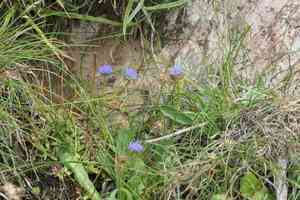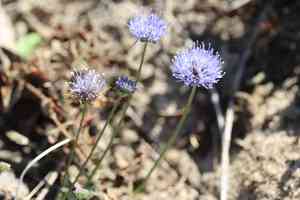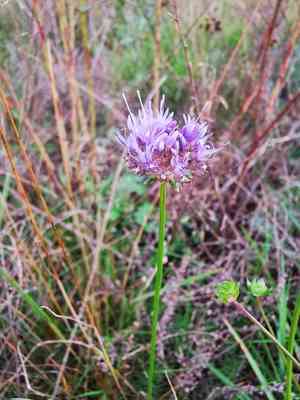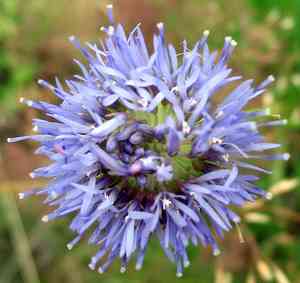
Sheep's-bit(Jasione montana)

Sheep's-bit (Jasione montana)

Also known as: Sheep's-bit, Blue-honey flower

Sheep's-bit (Jasione montana) is a plant introduced to North America from Europe and Asia. It thrives on moors and coastal clifftops, where it withstands harsh winds. When in bloom, it can cover extensive areas with its blue flowers, creating a striking visual effect.

Attributes of Sheep's-bit

Lifespan
Perennial, Annual, Biennial
Plant Type
Herb
Plant Height
20 cm
Spread
30 cm
Leaf Color
Green
Flower Size
6 mm to 1.5 cm
Flower Color
Blue

ForwardPlant - Identify plants with a snap

Identify and diagnose plants, get toxicity alerts, and explore safety guides for all types of fungi.

Try for Free

Images of Sheep's-bit

Sheep's-bit(Jasione montana)

Quickly Identify Sheep's-bit

1
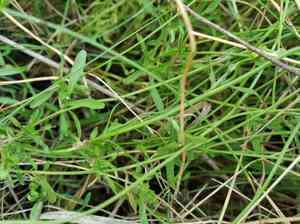
Look for a plant that grows up to 30 cm tall with fine, hairy stems. The leaves are lanceolate and covered with fine hairs, and the flower heads are dense, blue and globular.

Scientific Classification of Sheep's-bit

Phylum
Vascular plants
Class
Dicotyledons
Order
Asterales
Family
Bellflower
Genus
Jasione
Species
Sheep's-bit

Planting and Growing of Sheep's-bit

Care Difficulty
Easy
Watering Schedule
Every 2 days
Sunlight Requirements
Full sun
Sunshine Duration
6-10 hours
Ideal Temperature
60-70℉
Soil Type
Potting Mix, Peat Mix
Soil pH
6.5-7.5
Fertilizer Type
Balanced
Pruning Season
Spring, Summer
Pruning Area
Branches, Leaves
Pruning Frequency
2 times a year
Repotting Season
Spring
Pot Type
Plastic, Terracotta

water icon How to Water Sheep's-bit?

When watering Jasione montana, aim for approximately 250 milliliters per session. The goal is to moisten the soil thoroughly without causing water to pool at the base. This amount ensures the soil is damp but not waterlogged, mimicking the plant's natural environment while avoiding root rot.
What are the symptoms of an underwatered Sheep's-bit?
What should I do if my Sheep's-bit is not getting enough water?
What are the symptoms of an overwatered Sheep's-bit?
How to save an overwatered Sheep's-bit?

sunlight icon What Are the Sunlight Requirements for Sheep's-bit?

Sunlight Requirements: Full sun, Partial sun
Duration of light: 6-8 hours a day
Jasione montana prefers full sun to partial sun exposure to ensure robust growth and vibrant flower production, essential for its visual appeal and health.
How much light does Jasione montana ideally need?
What solutions exist to achieve ideal lighting?
What are the benefits of ideal lighting for Jasione montana?
More About Sunlight Requirements Techniques

temperature icon What Is the Ideal Temperature Range for Sheep's-bit?

Ideal Temperature: 60 ~ 70℉
Jasione montana, commonly known as the Sheep's bit, thrives best in temperatures ranging from 60°F to 70°F. These conditions mimic its natural habitat, allowing optimal photosynthesis and growth. The roots and foliage of the plant prefer a balanced temperature to prevent stress and encourage blossoming.

soil icon What Soil is Best for Sheep's-bit?

Soil type: Sandy soil, Sandy loam
Soil PH: 6.5 ~ 7.5
Jasione montana thrives in well-draining soil, which prevents water from pooling around its roots. This condition is beneficial as it reduces the risk of root rot and encourages healthy growth and flowering. This plant prefers soils that are nutrient-poor, which mimics its natural environment. Excess nutrients can cause excessive leaf growth at the expense of flowers, leading to a less vibrant display. The loose texture of sandy or sandy loam soils facilitates root penetration, allowing the plant to establish itself more effectively. This ensures robust stem development, enhancing its overall stability and resilience.

fertilize icon How to Fertilize Sheep's-bit?

Fertilizer type: Balanced
Jasione montana benefits from a balanced, light application of fertilizer. A liquid fertilizer diluted to half strength should suffice. Aim for roughly 0.5 to 1 teaspoon per gallon of water when using liquid fertilizers. For solid slow-release options, ensure only a small sprinkling around the base, avoiding direct contact with the plant stem.

prune icon How to Prune Sheep's-bit?

Pruning Time: Spring, Summer
Begin your pruning session by deadheading spent flowers. This encourages the plant to divert its energy back to generating new blooms and growth. Use sharp scissors to snip off wilted flowers just above the next leaf node. Assess the plant and identify any excessive or leggy stems. Cut these back to promote a more compact growth habit and increase air circulation, which reduces the potential for fungal diseases. After removing excessive growth, look for any damaged or diseased stems. Cut these out completely to prevent any decay from spreading to healthy parts of the plant. More About Pruning Techniques

propagate icon How to Propagate Sheep's-bit plant?

Propagate Time: Spring, Early spring
1
Start by soaking the seeds in warm water for 12-24 hours to help break dormancy and improve germination rates. This step will help soften seed coatings, allowing moisture to reach the embryo more efficiently.
2
Fill seed trays with the fine potting mix and gently press the seeds into the soil surface. Lightly cover the seeds with a thin layer of sand or fine soil to prevent them from being displaced.
3
Place the seed trays in a warm environment with temperatures around 15-20°C (59-68°F). Ensure they receive indirect sunlight and maintain high humidity by covering with a lid or plastic wrap.
More About Propagating Techniques

repot icon How to Repot Sheep's-bit plant?

Repotting frequency: Every 1-2 years
1
Jasione montana needs repotting when you observe roots coming out of the drainage holes, or the plant's growth appears stunted. These are clear indicators that the plant has outgrown its current pot. Additionally, if the soil drains water too quickly, losing its moisture retention, it is a signal that repotting is due.
2
Select a pot that is only slightly larger than the current one, about 1-2 inches bigger in diameter. This allows the plant to have more room to grow without overwhelming its roots. A pot with drainage holes is essential to prevent waterlogging, which can lead to root rot and other issues.
3
Opt for a well-draining loamy soil. This type of soil ensures that water doesn't accumulate around the roots, which can cause root rot. It provides the right amount of aeration while retaining necessary moisture for Jasione montana's optimal growth.

ForwardPlant - Identify plants with a snap

Find the best spots for them to optimize their health, simply using your phone.

Try for Free

Toxicity of Sheep's-bit

Is Sheep's-bit toxic to humans?

Sheep's-bit has a low level of toxicity for humans, as the entire plant can lead to poisoning if consumed. Ingestion of sheep's-bit may result in various symptoms, which can include gastrointestinal distress like nausea and vomiting, along with possible irritation in the mouth and throat. The mild toxicity associated with sheep's-bit indicates that while the resulting symptoms may be bothersome, they are generally not severe. Nevertheless, since the whole plant is toxic, individuals should take precautions to avert accidental consumption, especially in areas where sheep's-bit can be found.

Is Sheep's-bit toxic to cat?

Sheep's-bit displays a slight degree of toxicity to cats, potentially resulting in poisoning if accidentally consumed. The entire plant poses a risk, with no specific section being more dangerous than the rest. If a cat ingests parts of sheep's-bit, it may show symptoms reflecting physical distress, signaling a toxic reaction. To safeguard the well-being of felines, cat owners must keep sheep's-bit out of their pets' reach and remain alert. In the event a cat shows signs of illness following ingestion of the plant, it is imperative to quickly obtain veterinary assistance for appropriate treatment.

Is Sheep's-bit toxic to dog?

The plant species under discussion, known as sheep's-bit, poses a mild toxicity threat to dogs. Canines might accidentally ingest portions of this plant, resulting in potential poisoning. It is crucial for dog owners to recognize that the whole sheep's-bit plant is deemed toxic and could lead to adverse health implications if their pets consume it. Symptoms of poisoning from sheep's-bit can vary but may include gastrointestinal distress, such as upset stomach, vomiting, diarrhea, or, in more severe instances, reactions that depend on the quantity ingested and the individual dog's sensitivity. In situations where a dog has consumed sheep's-bit, it is imperative to seek prompt veterinary assistance to ensure appropriate treatment and management of symptoms.

Identify toxic plants for your safety

Learn which plants are harmful to you and your pets, and make informed choices for a safer home!

Try for Free
WARNING
The judgment on toxicity and danger is for reference only. We DO NOT GUARANTEE any accuracy of such judgment. Therefore, you SHALL NOT rely on such judgment. It is IMPORTANT TO SEEK PROFESSIONAL ADVICE in advance when necessary.
More About Toxic Techniques