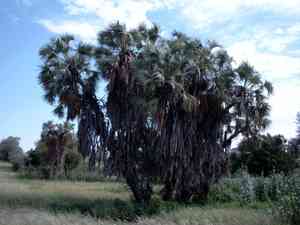
Egyptian doum palm (Hyphaene thebaica)
Also known as: African doum palm
The doum palm, which is a dioecious species, can grow up to 17 meters tall. Its trunk, with a potential girth of up to 90 cm, branches in a distinctive dichotomous pattern and is topped with clusters of large leaves. The dark grey bark is relatively smooth and marked by the scars of leaves that have fallen.
In This Article
Attributes of Egyptian doum palm
Lifespan
Perennial
Plant Type
Tree
Plant Height
17 m
Spread
8 m
Leaf Color
Green
Flower Size
1 cm to 1.5 cm
Flower Color
Yellowish
Images of Egyptian doum palm

Quickly Identify Egyptian doum palm
1
Look for a multi-stemmed palm with fan-shaped leaves and a distinct branching pattern, which is unusual among palms. The fruit is a hard, brown drupe.
Scientific Classification of Egyptian doum palm
Phylum
Vascular plants
Class
Monocotyledons
Order
Arecales
Family
Palm
Genus
Hyphaene
Species
Egyptian doum palm
Planting and Growing of Egyptian doum palm
Care Difficulty
Hard
Watering Schedule
Every 2 days
Sunlight Requirements
Full sun
Sunshine Duration
6-10 hours
Ideal Temperature
70-95℉
Soil Type
Potting Mix, Peat Mix
Soil pH
6.5-8.5
Fertilizer Type
Balanced
Pruning Season
Spring, Summer
Pruning Area
Branches, Leaves
Pruning Frequency
2 times a year
Repotting Season
Spring
Pot Type
Plastic, Terracotta
 How to Water Egyptian doum palm?
Hyphaene thebaica requires a moderate amount of water, approximately 500ml per session. It is vital to ensure the soil is soaked uniformly, allowing moisture to reach the deeper roots without causing waterlogging. This thorough but moderate watering ensures the plant can maintain its structure and resilience.
What are the symptoms of an underwatered Egyptian doum palm?
›
What should I do if my Egyptian doum palm is not getting enough water?
›
What are the symptoms of an overwatered Egyptian doum palm?
›
How to save an overwatered Egyptian doum palm?
›
 What Are the Sunlight Requirements for Egyptian doum palm?
Hyphaene thebaica thrives under full sun conditions. This ideal lighting supports vibrant growth and optimal metabolic functions, crucial for its survival and reproduction efficiency.
More About Sunlight Requirements Techniques→
What is the optimal light intensity for Hyphaene thebaica?
›
How can I achieve the best lighting for Hyphaene thebaica?
›
What are the benefits of ideal light conditions?
›
 What Is the Ideal Temperature Range for Egyptian doum palm?
The ideal temperature range of 70-95°F for Hyphaene thebaica ensures optimal physiological functions and growth. At these temperatures, the plant maintains efficient photosynthesis, respiration, and nutrient absorption. This range mimics its natural desert environment, providing sufficient warmth to drive metabolic processes without causing heat stress.
 What Soil is Best for Egyptian doum palm?
Hyphaene thebaica thrives in well-drained soils, preventing root rot and promoting healthy root systems. This growth environment makes it suitable for locations with seasonal flooding and ensures nutrients are not washed away, providing a stable home for the plant. This plant prefers slightly nutrient-rich soil that supports its robust growth and fruit production. Adding organic matter like compost can enhance soil fertility, ensuring the plant receives ample nutrients for sustained growth and vigor. While the African doum palm is drought-tolerant, it flourishes best in soil that retains moisture moderately. A consistent yet moderate moisture level helps maintain optimal growth and keeps the foliage lush and vibrant.
 How to Fertilize Egyptian doum palm?
For Hyphaene thebaica, it's crucial to maintain a balanced nutrient profile. Apply about 1/2 cup of balanced, water-soluble fertilizer diluted to half strength. Always follow the manufacturer's instructions to avoid over-fertilization.
 How to Prune Egyptian doum palm?
Begin by inspecting the plant for dead or damaged fronds. These can be identified by their brown or broken appearance. Removing them helps the plant channel its energy to healthier parts, enhancing overall growth. When cutting, make smooth and clean cuts close to the trunk. Avoid tearing or leaving jagged edges, as these can become entry points for pests or diseases. Prune any suckers at the base of the trunk to maintain a single, strong main stem. This keeps the palm looking tidy and focused on upward growth.
More About Pruning Techniques→
 How to Propagate Egyptian doum palm plant?
1
Begin by collecting mature seeds from Hyphaene thebaica, usually found in the dried fruit. Clean the seeds thoroughly to remove any pulp. Scarify the seeds lightly to weaken the tough outer shell and soak them in water for 24-48 hours to enhance germination.
2
After soaking, plant each seed in a germination tray filled with a well-draining soil mix. Ensure the seeds are planted at a depth of about twice their diameter. Place the trays in a warm location with indirect sunlight, maintaining consistent moisture levels.
3
Germination can take a few weeks. During this period, monitor the moisture levels and keep the soil consistently damp. Once seedlings have developed a couple of leaves and are sturdy enough, they can be transplanted into larger pots or directly into the ground.
 How to Repot Egyptian doum palm plant?
1
Hyphaene thebaica should be repotted when you notice that the roots are protruding from the drainage holes, indicating that the plant has outgrown its current space. Additionally, if the plant shows signs of stunted growth or the soil becomes compacted and drains poorly, it's time to repot. These are clear signals that your plant needs a new home.
2
Select a pot that is one size larger than the current one to provide enough space for root growth without overwhelming the plant. The pot should have ample drainage holes to prevent waterlogging, which can lead to root rot. A terracotta pot is ideal as it is porous, allowing for better air exchange, which is beneficial for this plant's growth.
3
Choose a well-draining sandy soil mix for repotting Hyphaene thebaica. This type of soil mimics its natural habitat and prevents the roots from sitting in water, reducing the risk of rot. A mixture of sand, perlite, and a bit of organic compost will provide good drainage as well as nutrients for healthy growth.
Learn More About Egyptian doum palm Diseases
Anthracnose
Bacterial Leaf Spot
Bacterial Soft Rot
Bacterial Wilt
Black Spot
Chemical Injury
Crown Gall
Cyst Nematode
Damping-off
Downy Mildew
Drought Stress
Fusarium Wilt
Gray Mold
Leaf Spot
Mosaic
Nutrient Deficiency
Nutrient Toxicity
Powdery Mildew
Root Rot
Root-knot Nematode
Rusts
Sooty Mold
Spider Mites
Temperature Stress
Thrips Damage
White Mold



