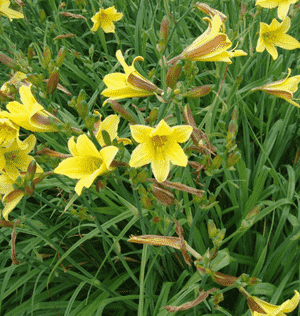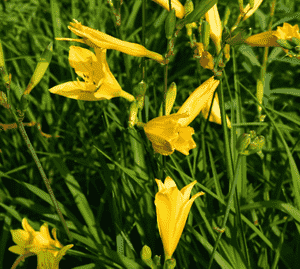
Dwarf yellow daylily(Hemerocallis minor)

Dwarf yellow daylily (Hemerocallis minor)

Also known as: Grass-leaved daylily, Orange day lily

The dwarf yellow daylily (Hemerocallis minor) is cherished in garden landscapes for its compact form and vibrant blooms. Here are its distinctive features and advantages:

### Attributes:
1. **Compact Size**: Typically reaches 1-2 feet in height, earning the nickname "small daylily" due to its miniature stature.
2. **Flowering**: Boasts bright yellow, trumpet-shaped flowers that bloom in late spring to early summer, adding a splash of color.
3. **Foliage**: Exhibits slender, grass-like leaves that remain attractive even when the plant is not in bloom.
4. **Adaptability**: Thrives in a variety of soil types and is resilient in USDA zones 3-9.
5. **Growth Pattern**: Forms dense clumps, making it suitable for use as ground cover to suppress weeds.

### Advantages:
1. **Easy Care**: Requires minimal maintenance, with occasional watering and deadheading being sufficient.
2. **Heat and Humidity Tolerant**: Capable of enduring hot summer temperatures and high humidity levels.
3. **Pest and Disease Resistance**: Generally resistant to common garden pests and diseases, minimizing the need for interventions.
4. **Pollinator Friendly**: Attracts butterflies and other pollinators, enhancing the ecological value of the garden.
5. **Versatile Application**: Perfect for perennial borders, rock gardens, and as a ground cover, offering aesthetic appeal and functional benefits.

In summary, the dwarf yellow daylily is a versatile and low-maintenance plant that brightens up garden landscapes with its cheerful flowers and resilient nature.

Attributes of Dwarf yellow daylily

Lifespan
Perennial
Plant Type
Herb
Plant Height
30 cm to 61 cm
Spread
23 cm to 30 cm
Leaf Color
Green
Flower Size
2.5 cm to 8 cm
Flower Color
Yellow

ForwardPlant - Identify plants with a snap

Identify and diagnose plants, get toxicity alerts, and explore safety guides for all types of fungi.

Try for Free

Images of Dwarf yellow daylily

Dwarf yellow daylily(Hemerocallis minor)

Quickly Identify Dwarf yellow daylily

1
Compact growth pattern, 1-2 feet (30-60 cm) tall
2
Profusion of yellow trumpet-shaped flowers on slender stalks
3
3-parted seed capsule, pale brown, triangular shape
4
Narrow, arching, linear leaves, 12-24 inches (30-60 cm) long
5
Smooth-textured, entire margin leaves in a basal rosette

Scientific Classification of Dwarf yellow daylily

Phylum
Vascular plants
Class
Monocotyledons
Order
Asparagus and allies
Family
Asphodel
Genus
Daylilies
Species
Dwarf yellow daylily

Planting and Growing of Dwarf yellow daylily

Care Difficulty
Easy
Watering Schedule
Every 4 days
Sunlight Requirements
Full sun
Sunshine Duration
4-8 hours
Ideal Temperature
60-75℉
Soil Type
Potting Mix, Peat Mix
Soil pH
6.5-7.5
Fertilizer Type
Balanced
Pruning Season
Spring, Summer
Pruning Area
Branches, Leaves
Pruning Frequency
2 times a year
Repotting Season
Spring
Pot Type
Plastic, Terracotta

water icon How to Water Dwarf yellow daylily?

When watering Hemerocallis minor, aim to provide about 500 ml of water per session. The soil should be drenched but not soggy. It's key to ensure good drainage, as standing water can lead to root issues. Water until you see it start to drain from the bottom, then pause.
What are the symptoms of an underwatered Dwarf yellow daylily?
What should I do if my Dwarf yellow daylily is not getting enough water?
What are the symptoms of an overwatered Dwarf yellow daylily?
How to save an overwatered Dwarf yellow daylily?

sunlight icon What Are the Sunlight Requirements for Dwarf yellow daylily?

Sunlight Requirements: Full sun, Partial sun
Duration of light: 6 to 8 hours
Hemerocallis minor thrives in semi to full sun, ideally receiving 6 to 8 hours of sunlight per day. This range promotes optimal flowering and enhances the plant's overall vigor and health.
What is the ideal light intensity?
How to provide optimal light conditions?
What benefits does ideal light provide?
More About Sunlight Requirements Techniques

temperature icon What Is the Ideal Temperature Range for Dwarf yellow daylily?

Ideal Temperature: 60 ~ 75℉
The ideal temperature range for Hemerocallis minor is between 60°F and 75°F. These temperatures provide optimal conditions for healthy growth and flowering. The plant thrives in mild to moderately warm environments, where it can receive adequate sunlight and nutrients. Maintaining consistent temperatures within this range ensures robust foliage and abundant blooms.

soil icon What Soil is Best for Dwarf yellow daylily?

Soil type: Loam, Sandy loam
Soil PH: 6.5 ~ 7.5
Hemerocallis minor thrives in well-drained soil, as it prevents root rot by allowing excess water to escape efficiently. This ensures healthy root development and robust plant growth. This plant prefers a nutrient-rich environment, which boosts its lush foliage and enhances its vibrant flowering. Regular addition of organic compost can significantly improve soil fertility. While it does not tolerate waterlogged conditions, Hemerocallis minor benefits from moderate moisture retention that ensures consistent water supply without oversaturation.

fertilize icon How to Fertilize Dwarf yellow daylily?

Fertilizer type: Balanced
For Hemerocallis minor, the amount of fertilizer should be modest but consistent. In general, apply about 1/4 cup of a balanced granular fertilizer, like a 10-10-10 mix, per plant. When using liquid fertilizers, dilute according to label instructions to avoid root burn and provide essential nutrients without overwhelming the plant.

prune icon How to Prune Dwarf yellow daylily?

Pruning Time: Spring, Autumn
Start by identifying and removing any dead or faded flowers. Cut back the stems to the base of each bloom to prevent the plant from wasting energy on seed production. Trim away any yellowing or damaged leaves to improve airflow around the plant. This not only keeps the Hemerocallis minor looking tidy but also reduces the risk of fungal diseases. More About Pruning Techniques

propagate icon How to Propagate Dwarf yellow daylily plant?

Propagate Time: Late spring, Early autumn
1
Before dividing Hemerocallis minor, water the plant thoroughly a day before to ease the process. This helps in reducing shock to the plant and makes the soil easier to work with.
2
Use a garden fork to gently loosen the soil around the daylily. Carefully lift the entire root clump from the ground, taking care to preserve the roots intact.
3
Use a sharp knife or spade to cut the root clump into smaller sections, each with at least three fans of leaves. This ensures each new plant has enough root system to establish and thrive.
More About Propagating Techniques

repot icon How to Repot Dwarf yellow daylily plant?

Repotting frequency: Every 2-3 years
1
Hemerocallis minor, or dwarf daylily, needs repotting when you notice roots emerging from the pot's drainage holes, or when the plant's growth has slowed. Typically, early spring or late summer serve as optimal timing for repotting. The plant benefits from more space and fresh soil to encourage vigorous growth.
2
Select a pot that is just slightly larger than the current one. Ensure it has ample drainage holes to prevent water from pooling at the bottom. A pot that is too large can lead to overwatering issues, while one that is too small will restrict root growth. The right size pot balances moisture while providing enough room for roots to expand.
3
Use a well-draining garden soil mix to avoid waterlogging. The soil should be nutrient-rich yet light enough to allow proper aeration. Adding some organic matter improves the fertility and texture, which promotes healthy root development and robust top growth for your daylily.

ForwardPlant - Identify plants with a snap

Find the best spots for them to optimize their health, simply using your phone.

Try for Free

Toxicity of Dwarf yellow daylily

Is Dwarf yellow daylily toxic to cat?

The charming dwarf yellow daylily presents a significant danger to your cat, and any contact with it could lead to a medical crisis. All parts of this plant are toxic to felines, including the water it might be submerged in. Even a small nibble of the flower or merely licking some pollen off its fur can trigger kidney failure in your cat. Initial signs of toxicity may include drooling, vomiting, and decreased appetite.

Identify toxic plants for your safety

Learn which plants are harmful to you and your pets, and make informed choices for a safer home!

Try for Free
WARNING
The judgment on toxicity and danger is for reference only. We DO NOT GUARANTEE any accuracy of such judgment. Therefore, you SHALL NOT rely on such judgment. It is IMPORTANT TO SEEK PROFESSIONAL ADVICE in advance when necessary.
More About Toxic Techniques