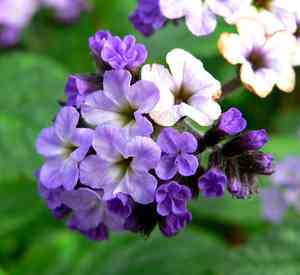
Scorpion's-tail (Heliotropium angiospermum)
Also known as: Rooster Comb, Bright Eye Bush, Dog's tail, White clary
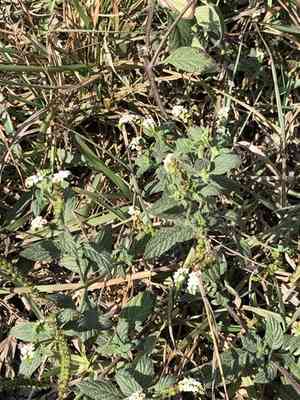
Scorpion's-tail (Heliotropium angiospermum) is a short-lived perennial that can reach up to 91 cm in height. It thrives in full sun to partial shade and is well-suited to dry, rocky, or sandy soils. This plant blooms throughout the year, producing small white flowers in terminal spikes that resemble a scorpion's tail. The flowers are known to attract various pollinators, including butterflies and bees.
In This Article
Attributes of Scorpion's-tail
Lifespan
Annual, Perennial
Plant Type
Herb
Plant Height
1 m
Spread
40 cm
Leaf Color
Purple Lavender
Flower Size
0.5-1.0 cm
Flower Color
White
Images of Scorpion's-tail
Quickly Identify Scorpion's-tail
1
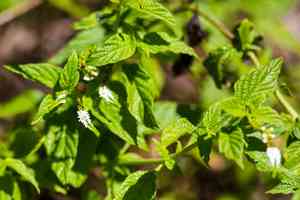
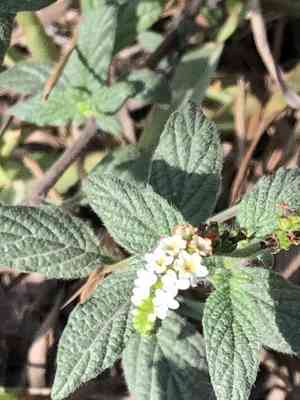
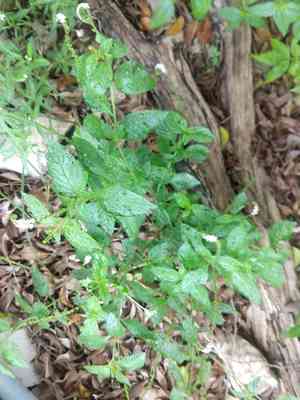
Identify Heliotropium angiospermum by its small, white or purple, five-petaled flowers arranged in a coiled, tail-like cluster. The plant has green, lance-shaped leaves and a height of up to 50 cm.
Scientific Classification of Scorpion's-tail
Phylum
Vascular plants
Class
Dicotyledons
Order
Boraginales
Family
Heliotropiaceae
Genus
Heliotropes
Species
Scorpion's-tail
Planting and Growing of Scorpion's-tail
Care Difficulty
Easy
Watering Schedule
Every 4 days
Sunlight Requirements
Partial sun
Sunshine Duration
6-10 hours
Ideal Temperature
65-80℉
Soil Type
Potting Mix, Peat Mix
Soil pH
6.5-7.5
Fertilizer Type
Balanced
Pruning Season
Spring, Summer
Pruning Area
Branches, Leaves
Pruning Frequency
2 times a year
Repotting Season
Spring
Pot Type
Plastic, Ceramic
 How to Water Scorpion's-tail?
For Heliotropium angiospermum, the ideal watering amount is approximately 250 milliliters per session. Water until the soil feels moist but not soggy, ensuring thorough saturation without waterlogging the roots. This ensures the roots receive enough moisture without the risk of rot, which is crucial for healthy growth.
What are the symptoms of an underwatered Scorpion's-tail?
›
What should I do if my Scorpion's-tail is not getting enough water?
›
What are the symptoms of an overwatered Scorpion's-tail?
›
How to save an overwatered Scorpion's-tail?
›
 What Are the Sunlight Requirements for Scorpion's-tail?
Heliotropium angiospermum prefers partial sun, promoting balanced growth with ample energy for photosynthesis while minimizing heat-induced stress.
More About Sunlight Requirements Techniques→
How much sun does Heliotropium angiospermum need?
›
What solutions ensure Heliotropium angiospermum receives ideal light?
›
What benefits arise from ideal lighting for Heliotropium angiospermum?
›
 What Is the Ideal Temperature Range for Scorpion's-tail?
Heliotropium angiospermum thrives best in temperatures ranging from 65°F to 80°F. This range ensures that the plant maintains metabolic efficiency, leading to ideal growth and flowering conditions. Maintaining this environment is crucial for the health and robustness of the plant.
 What Soil is Best for Scorpion's-tail?
Heliotropium angiospermum requires well-draining soil to prevent root rot and other water-related issues. Proper drainage ensures that the plant's roots have access to oxygen and prevents water accumulation that can lead to fungal diseases. A nutrient-rich soil is essential for vigorous growth, providing the plant with the necessary elements like nitrogen, phosphorus, and potassium. A loamy soil enriched with organic matter supports robust flowering and foliage. Maintaining a neutral pH close to 7.0 allows Heliotropium angiospermum to absorb nutrients effectively. Acidic or alkaline soils can hinder nutrient uptake, impacting the plant’s health and growth.
 How to Fertilize Scorpion's-tail?
Heliotropium angiospermum benefits from balanced fertilizers. For liquid fertilizers, a dilution to half the recommended strength is ideal, applying 250 ml for small plants and scaling up for larger specimens. Solid fertilizers should be applied sparingly, using about 50 grams per application for medium plants.
 How to Prune Scorpion's-tail?
Carefully inspect the plant for any dead or diseased leaves and stems. These should be removed first to prevent the spread of disease and to allow room for healthy growth. Prune the plant to maintain a manageable size and pleasing shape. Focus on cutting back excess growth, particularly in the center of the plant, to ensure sunlight and air can infiltrate the entire plant structure. Trim the tips of the branches to encourage fuller growth and more blooms. Heliotropium angiospermum responds well to tip pruning, which stimulates lateral growth and enhances floral display.
More About Pruning Techniques→
 How to Propagate Scorpion's-tail plant?
1
To propagate via seeds, first collect mature seeds from the Heliotropium angiospermum plant. Look for seeds that are fully developed and dry. This ensures that the seeds have the best chance of germination.
2
If using cuttings, select healthy, non-flowering stems and cut at a 45-degree angle. The cuttings should ideally be 4-6 inches long. Remove any leaves from the lower half to reduce water loss and facilitate rooting.
3
Plant the seeds or cuttings in prepared trays or pots with quality potting mix. Ensure they are placed in a warm, bright area, but out of direct sunlight. Water them gently but thoroughly to keep the soil moist but not saturated.
 How to Repot Scorpion's-tail plant?
1
Repot Heliotropium angiospermum when you notice that the roots are circling the pot or protruding through the drainage holes, indicating it is rootbound. Furthermore, when the soil surface starts looking depleted of nutrients or you're observing slow growth despite proper sunlight and watering, it's a strong cue to consider repotting, usually best at the start of the growing season.
2
When selecting a pot for Heliotropium angiospermum, ensure it's only slightly bigger than the current one to prevent over-soiling, which can lead to root rot. The pot should have ample drainage holes to facilitate excess water outflow, simulating this plant's natural semi-arid environment. A terracotta pot is a great choice since it promotes breathability, allowing air exchange at the root zone, thereby maintaining optimal root health.
3
Opt for a well-draining sandy loam mix when repotting Heliotropium angiospermum to mirror its native habitat. This blend mitigates the risk of waterlogging while providing sufficient nutrients. A mix that ensures both moisture retention and aeration encourages strong root growth and robust overall plant health, leading to vibrant foliage and prosperous blooming seasons.
Toxicity
Ingestion
WARNING
The judgment on toxicity and danger is for reference only. We DO NOT GUARANTEE any accuracy of such judgment. Therefore, you SHALL NOT rely on such judgment. It is IMPORTANT TO SEEK PROFESSIONAL ADVICE in advance when necessary.



