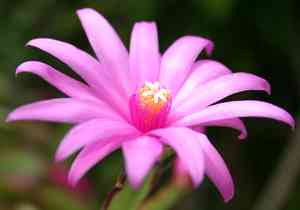
Easter cactus (Hatiora gaertneri)
Also known as: Holiday cactus, Whitesun
Hatiora gaertneri, commonly known as the Easter Cactus, is a flowering plant indigenous to southeastern Brazil. It typically grows epiphytically on other plants and trees, and occasionally on rocks. This plant is popular for its vibrant, ornamental blooms that typically appear around the Easter season.
In This Article
Attributes of Easter cactus
Lifespan
Perennial
Plant Type
Succulent, Shrub
Plant Height
63 cm
Spread
60 cm
Leaf Color
Green
Flower Size
4 cm to 8 cm
Flower Color
Pink Red Orange
Images of Easter cactus
Quickly Identify Easter cactus
1
Hatiora gaertneri can be identified by its flat, segmented stems and bright tubular flowers that bloom in colors ranging from red to pink. The segments are often edged with small, bristle-like teeth.
Scientific Classification of Easter cactus
Phylum
Vascular plants
Class
Dicotyledons
Order
Caryophyllales
Family
Cactuses
Genus
Hatiora
Species
Easter cactus
Planting and Growing of Easter cactus
Care Difficulty
Easy
Watering Schedule
Every 2 days
Sunlight Requirements
Partial sun
Sunshine Duration
4-8 hours
Ideal Temperature
65-75℉
Soil Type
Potting Mix, Peat Mix
Soil pH
6.5-7.5
Fertilizer Type
Balanced
Pruning Season
Spring, Summer
Pruning Area
Branches, Leaves
Pruning Frequency
2 times a year
Repotting Season
Spring
Pot Type
Plastic, Ceramic
 How to Water Easter cactus?
Hatiora gaertneri, commonly known as the Easter Cactus, requires a careful balance when it comes to watering. Ensure the soil is moist but not waterlogged. Approximately 200 ml per session is ideal, allowing excess water to drain. It's crucial to let the top inch of the soil dry out between watering to prevent root rot.
More About Watering Techniques→
What are the symptoms of an underwatered Easter cactus?
›
What should I do if my Easter cactus is not getting enough water?
›
What are the symptoms of an overwatered Easter cactus?
›
How to save an overwatered Easter cactus?
›
 What Are the Sunlight Requirements for Easter cactus?
Hatiora gaertneri thrives in partial sun, ideally receiving 4-6 hours of indirect light daily. This lighting facilitates optimal growth, allowing the plant to photosynthesize efficiently and produce lush foliage.
More About Sunlight Requirements Techniques→
Where should I place Hatiora gaertneri?
›
What can I do if I don’t have suitable windows?
›
What benefits does ideal lighting provide?
›
 What Is the Ideal Temperature Range for Easter cactus?
The ideal temperature range for Hatiora gaertneri lies between 65°F and 75°F. In this range, the plant experiences optimal conditions for growth, nutrient absorption, and flowering. Temperatures within this range foster a conducive environment for maintaining healthy foliage and ensuring that the cactus can thrive and produce vibrant blooms.
 What Soil is Best for Easter cactus?
Hatiora gaertneri thrives in well-draining soils. Good drainage prevents waterlogging, which can lead to root rot, ensuring the plant's root system gets enough air circulation, thus promoting healthy growth. The presence of organic matter in the soil is vital for Hatiora gaertneri. Organic matter provides essential nutrients and maintains moisture levels, creating a balanced environment for robust flowering and foliage development. A loose soil structure is preferred as it allows easy root expansion and nutrient absorption. This helps Hatiora gaertneri in optimizing its growth, resulting in a more vigorous and lush plant.
More About Soil→
 How to Fertilize Easter cactus?
For Hatiora gaertneri, use a diluted liquid fertilizer with a balanced N-P-K ratio such as 10-10-10 or 20-20-20 during the growth period. Apply approximately half the recommended strength to avoid over-fertilization as the plant is sensitive.
 How to Prune Easter cactus?
Begin by inspecting the plant for any dead, damaged, or weak segments. Using sharp pruning shears, carefully cut these segments at a joint. Aim to prune the plant back following the natural shape, enhancing its appearance and encouraging branching. After each use, disinfect your pruning tools in a solution of one part bleach to nine parts water. This prevents the spread of any potential diseases to the plant during pruning sessions.
 How to Propagate Easter cactus plant?
1
Select healthy segments with at least two to three joints. Use sterilized pruning shears to make clean cuts, and let the cut ends callous over before planting.
2
Sow the seeds in well-draining soil. Slightly cover them with soil and maintain warm temperatures to encourage germination, which can take a few weeks.
3
Place the cuttings or seeds in indirect light and keep the soil consistently moist but not waterlogged. Maintain a humidity level of around 50%.
 How to Repot Easter cactus plant?
1
Repot your Hatiora gaertneri when you see roots growing out of the drainage holes or when the soil dries out very quickly after watering. These are signs that the plant has outgrown its current pot and is ready for a new home. Spring and early summer, when the plant is not flowering, are the ideal times for repotting, allowing the plant to recover and establish itself in its new environment.
2
Choose a pot that is one size larger than the current one to give the roots space to grow. A pot with drainage holes is essential to prevent waterlogged soil, which can lead to root rot. The new pot should ideally be made of breathable material like terracotta, which helps keep moisture levels balanced.
3
Opt for a well-draining cactus mix that ensures excellent aeration for the roots. This type of soil is lightweight and doesn't retain excess water, mimicking the plant's natural habitat. Good drainage is crucial as it prevents overwatering, one of the main causes of plant stress and disease.



