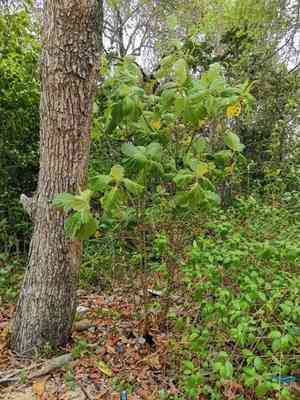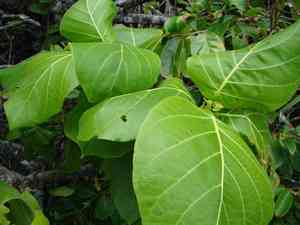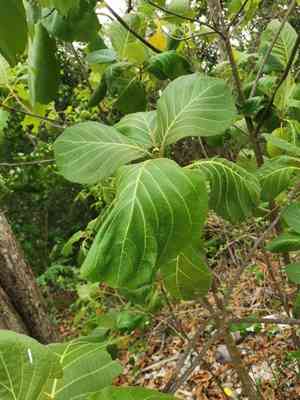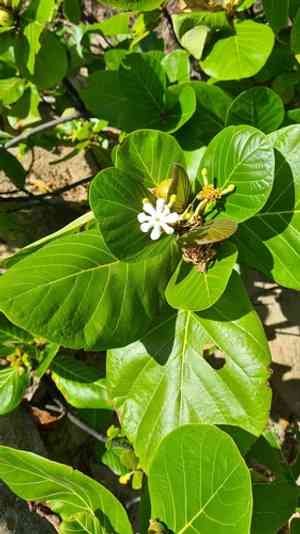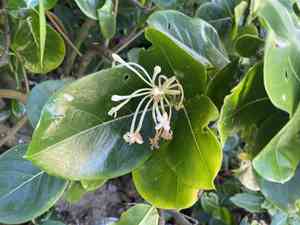
Sea randa(Guettarda speciosa)

Sea randa (Guettarda speciosa)

Also known as: Funeral flower, Zebrawood

The Sea randa tree, also known as Cerbera manghas, is a small evergreen species native to tropical regions around the Pacific Ocean. Local communities make use of various parts of the tree in several ways:

1. **Food Wrapping**: The broad leaves are commonly employed to wrap food, offering a natural and biodegradable solution.
2. **Hair Dye**: The leaves are also used to create natural hair dyes.
3. **Fragrance**: The fragrant flowers are often utilized in making deodorants and perfumes.
4. **Construction**: The wood, although not very strong, is used in light construction projects and for crafting small items.

These uses highlight the tree's versatility, although care must be taken due to its toxic components.

Attributes of Sea randa

Lifespan
Perennial
Plant Type
Tree, Shrub
Plant Height
3 m to 5 m
Spread
1 m to 3 m
Leaf Color
Dark green
Flower Size
1.1 cm to 3 cm
Flower Color
White

ForwardPlant - Identify plants with a snap

Identify and diagnose plants, get toxicity alerts, and explore safety guides for all types of fungi.

Try for Free

Images of Sea randa

Sea randa(Guettarda speciosa)

Quickly Identify Sea randa

1
Guettarda speciosa can be identified by its oval-shaped leaves, which are glossy and dark green with a leathery texture. The flowers are white, fragrant, and usually bloom in the evening. The plant also produces ribbed, woody seeds.

Scientific Classification of Sea randa

Phylum
Vascular plants
Class
Dicotyledons
Order
Gentianales
Family
Madder
Genus
Velvetseed
Species
Sea randa

Planting and Growing of Sea randa

Care Difficulty
Easy
Watering Schedule
Every 4 days
Sunlight Requirements
Full sun
Sunshine Duration
6-12 hours
Ideal Temperature
75-86℉
Soil Type
Potting Mix, Peat Mix
Soil pH
6.5-7.5
Fertilizer Type
Balanced
Pruning Season
Spring, Summer
Pruning Area
Branches, Leaves
Pruning Frequency
2 times a year
Repotting Season
Spring
Pot Type
Plastic, Ceramic

water icon How to Water Sea randa?

Guettarda speciosa, often found in coastal areas, thrives with a balanced watering schedule. It requires about 500ml of water per session, ensuring that the soil becomes moderately moist but never waterlogged. Adopting a 'soak and dry' method is optimal; water until you notice slight drainage, then let the soil dry out somewhat before the next watering.
What are the symptoms of an underwatered Sea randa?
What should I do if my Sea randa is not getting enough water?
What are the symptoms of an overwatered Sea randa?
How to save an overwatered Sea randa?

sunlight icon What Are the Sunlight Requirements for Sea randa?

Sunlight Requirements: Full sun, Partial sun
Duration of light: 6 to 8 hours
Guettarda speciosa thrives in full to partial sunlight, benefiting from 6 to 8 hours of light daily. Ideal light facilitates lush growth, vibrant foliage, and optimal flowering through robust photosynthesis.
Optimal placement
Morning sunlight
Balanced exposure

temperature icon What Is the Ideal Temperature Range for Sea randa?

Ideal Temperature: 75 ~ 86℉
Guettarda speciosa thrives best in warm climates, with an ideal temperature range between 75°F and 86°F. This range ensures optimal growth and flowering, providing the plant with the warmth it needs while avoiding excessive heat stress. Maintaining a consistent temperature within this range can promote healthy development and vitality.

soil icon What Soil is Best for Sea randa?

Soil type: Sandy soil, Loam, Sandy loam
Soil PH: 6.5 ~ 7.5
Guettarda speciosa thrives best in well-draining soils. This ensures that water does not accumulate around the roots, preventing root rot. The sandy and loamy textures facilitate this drainage, providing the roots with sufficient aeration. The plant requires a moderately fertile soil for optimal growth. Loam, which contains a balance of sand, silt, and clay, offers a rich supply of nutrients necessary for sustained growth, providing Guettarda speciosa with essential minerals. While the soil needs to drain well, it should also retain enough moisture for the plant's needs. Sandy loam strikes the perfect balance, preventing the plant from drying out too quickly while ensuring roots are not waterlogged.

fertilize icon How to Fertilize Sea randa?

Fertilizer type: Balanced
For Guettarda speciosa, it is crucial to provide balanced fertilization that caters to its tropical nature. Use approximately 1/4 tablespoon of a well-balanced liquid fertilizer per gallon of water for liquid applications. When using slow-release granules, apply about 1 tablespoon per square foot, ensuring even distribution around the root zone.

prune icon How to Prune Sea randa?

Pruning Time: Spring, Summer, Autumn
Begin by examining the Guettarda speciosa to identify damaged, dead, or diseased branches. Mark these branches for removal. This assessment ensures that you focus on areas that need pruning the most. Start from the top of the plant and work your way down, making clean cuts just above a node. This fosters new growth and improves air circulation, leading to healthier plants. Focus on maintaining a balanced shape by removing any overlapping or crossing branches. This not only enhances aesthetic appeal but also prevents branches from competing for sunlight. More About Pruning Techniques

propagate icon How to Propagate Sea randa plant?

Propagate Time: Spring, Early summer, Late spring
1
Select healthy, non-flowering shoots for cuttings, approximately 4-6 inches in length. Remove any leaves from the lower part of the cutting to reduce moisture loss and prevent decay when planted.
2
Collect fresh seeds from mature fruits and allow them to dry for a few days. Sow them in a seed tray filled with well-draining soil. Lightly cover with soil and maintain consistent moisture until germination.
3
Begin by selecting a healthy mother plant. Use sterilized tools to extract small tissue samples. Cultures are then placed in a sterile container with growing medium, allowing for the multiplication of new plantlets.

repot icon How to Repot Sea randa plant?

Repotting frequency: Every two years
1
Guettarda speciosa, also known as the beach gardenia, should be repotted when you notice its roots begin to circle the pot or grow through the drainage holes. This usually indicates that it's starting to become root-bound. Another good indicator is slower growth or frequent wilting, even with regular watering. Repotting gives the plant more room for root development, which in turn supports robust growth.
2
Choose a pot that is 1-2 inches larger in diameter than the current one. A good option is a terra cotta or ceramic pot as it allows for some breathability, preventing root rot by promoting air circulation. Ensure the pot has adequate drainage holes to avoid waterlogging. A well-sized pot also aids in maintaining a healthy balance of moisture and aeration in the soil, giving roots room to expand.
3
Opt for a sandy loam soil mix that drains well. This ensures that the roots do not sit in overly saturated conditions which can lead to root rot. Adding organic components such as coconut coir or fine bark can enhance the soil structure and keep it light. A sound choice of soil supports healthy root aeration and nutrient uptake, promoting a thriving plant.

ForwardPlant - Identify plants with a snap

Find the best spots for them to optimize their health, simply using your phone.

Try for Free