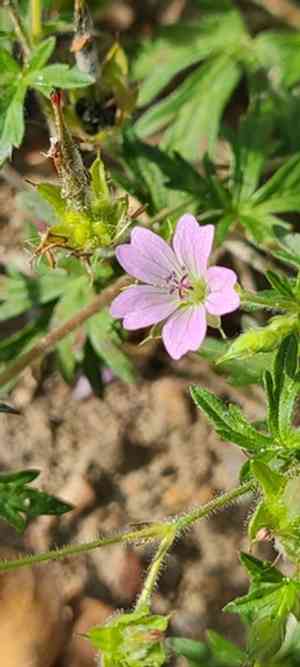
Bicknell's cranesbill (Geranium bicknellii)
Also known as: Northern cranesbill
Bicknell's cranesbill (Geranium bicknellii) is a North American wildflower adapted to thrive in post-fire environments. Its seeds typically germinate after being exposed to conditions created by forest fires, which clear the forest floor. The heat and ash from the fire help to break seed dormancy, allowing them to sprout. Therefore, fire exposure is a key condition for the germination of Bicknell's cranesbill seeds.
In This Article
Attributes of Bicknell's cranesbill
Lifespan
Annual, Biennial
Plant Type
Herb
Plant Height
20 cm to 30 cm
Spread
Typically up to 30 cm (12 inches)
Leaf Color
Medium to dark green
Flower Size
Approximately 1 to 1.5 cm (0.4 to 0.6 inches)
Flower Color
White Purple
Images of Bicknell's cranesbill
Quickly Identify Bicknell's cranesbill
1
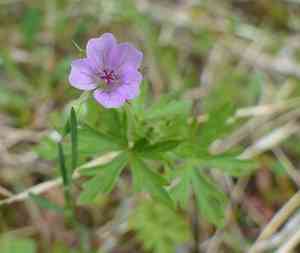
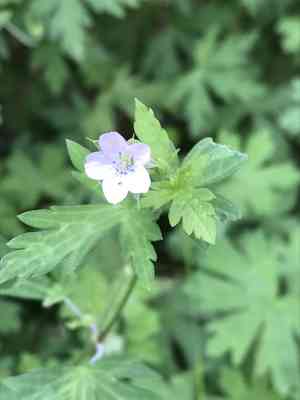
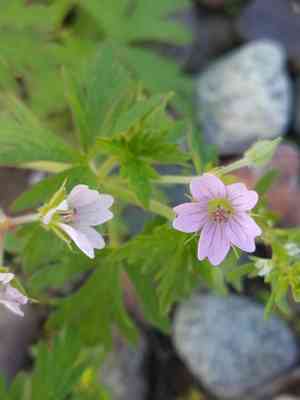
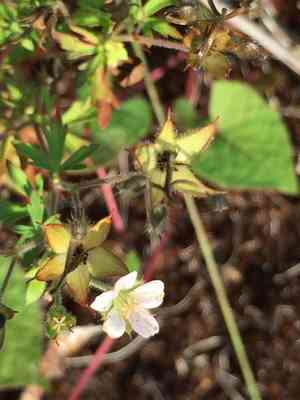
Geranium bicknellii can be identified by its rounded leaves with five to seven lobes and its small, pink to purple flowers. The stems are hairy, and the plant tends to form a mound-like shape.
Scientific Classification of Bicknell's cranesbill
Phylum
Vascular plants
Class
Dicotyledons
Order
Geraniales
Family
Geranium
Genus
Geraniums
Species
Bicknell's cranesbill
Planting and Growing of Bicknell's cranesbill
Care Difficulty
Easy
Watering Schedule
Every 3 days
Sunlight Requirements
Full sun
Sunshine Duration
6-10 hours
Ideal Temperature
60-75℉
Soil Type
Potting Mix, Peat Mix
Soil pH
6.5-7.5
Fertilizer Type
Balanced
Pruning Season
Spring, Summer
Pruning Area
Branches, Leaves
Pruning Frequency
2 times a year
Repotting Season
Spring
Pot Type
Plastic, Ceramic
 How to Water Bicknell's cranesbill?
For Geranium bicknellii, it is crucial to ensure the soil remains consistently moist but not waterlogged. A typical watering session involves providing approximately 250 milliliters of water, ensuring complete soil saturation without creating standing water.
What are the symptoms of an underwatered Bicknell's cranesbill?
›
What should I do if my Bicknell's cranesbill is not getting enough water?
›
What are the symptoms of an overwatered Bicknell's cranesbill?
›
How to save an overwatered Bicknell's cranesbill?
›
 What Are the Sunlight Requirements for Bicknell's cranesbill?
Geranium bicknellii prefers full sun to partial sun, enjoying 6 to 8 hours of light daily. This exposure supports robust growth and flowering, bolstering the plant's energy reserves and overall health.
More About Sunlight Requirements Techniques→
Question 1: What is the ideal lighting condition?
›
Question 2: What's a practical approach for maximizing ideal light?
›
Question 3: What benefits come with ideal lighting?
›
 What Is the Ideal Temperature Range for Bicknell's cranesbill?
Geranium bicknellii thrives best when kept in an environment where the temperature ranges between 60°F and 75°F. This range provides optimal conditions for photosynthesis and overall health, ensuring efficient nutrient absorption and healthy growth.
 What Soil is Best for Bicknell's cranesbill?
Geranium bicknellii thrives in well-drained soils, ensuring that water does not stagnate and roots receive adequate oxygen. This requirement is crucial to prevent root rot and to promote healthy growth and flowering. A nutrient-rich soil is vital for Geranium bicknellii, as it provides the necessary elements for robust growth and vibrant blooms. The presence of organic matter improves soil fertility and retains essential nutrients for plant health. The soil should have moderate moisture retention ability to ensure that it stays moist but not waterlogged. This balance allows Geranium bicknellii to absorb water efficiently without experiencing stress from excessive dryness or oversaturation.
 How to Fertilize Bicknell's cranesbill?
Geranium bicknellii requires a modest amount of fertilizer. Use a balanced 10-10-10 liquid fertilizer diluted to half strength. Apply approximately one tablespoon per plant when using slow-release granules. Ensure even distribution to avoid root burn.
 How to Prune Bicknell's cranesbill?
Begin by inspecting the plant for dead or diseased stems and foliage, removing them to promote healthy growth. Use clean, sharp pruning shears to make precise cuts just above a leaf node or bud. Focus on thinning out dense areas to improve air circulation, which helps prevent disease. Also, trim back any stems that extend beyond the desired shape or size. To maintain an aesthetically pleasing form, gently trim the outer edges of the Geranium bicknellii. This helps create a balanced, rounded shape. Be mindful of the plant’s natural growth pattern and try to complement it while pruning. It’s important to avoid trimming more than one-third of the plant at once, as this can stress the plant.
More About Pruning Techniques→
 How to Propagate Bicknell's cranesbill plant?
1
Collect seeds from mature Geranium bicknellii and store them in a dry, cool place until ready to plant. Before sowing, soak seeds in water overnight to improve germination rates.
2
Select healthy, non-flowering stems for cuttings. Cut just below a node, leaving about 5-7 inches of stem for optimal root formation.
3
Gently uproot a mature plant and separate the root clumps. Ensure each division has several shoots and a portion of the root system to guarantee successful re-establishment.
 How to Repot Bicknell's cranesbill plant?
1
Look for signs such as roots growing out of the drainage holes, soil that dries out quickly after watering, or reduced growth and flowering. These indicate that Geranium bicknellii needs repotting, typically when it's outgrown its current container.
2
Select a pot that is one to two inches larger in diameter than the current one. Ensure it has adequate drainage holes to prevent waterlogging, which can cause root rot and other issues.
3
Opt for a well-drained potting mix that is rich in organic matter. This type of soil supports healthy root growth by providing the necessary nutrients while allowing excess water to drain away.
Learn More About Bicknell's cranesbill Diseases
Anthracnose
Bacterial Leaf Spot
Bacterial Soft Rot
Bacterial Wilt
Black Spot
Chemical Injury
Crown Gall
Damping-off
Downy Mildew
Drought Stress
Fusarium Wilt
Gray Mold
Leaf Curl
Leaf Spot
Mosaic
Nutrient Deficiency
Nutrient Toxicity
Powdery Mildew
Root Rot
Root-knot Nematode
Rusts
Sooty Mold
Spider Mites
Temperature Stress
Thrips Damage
White Mold



