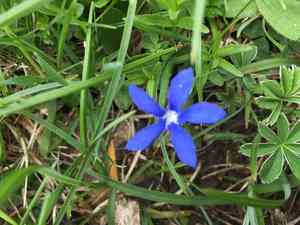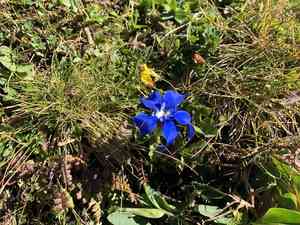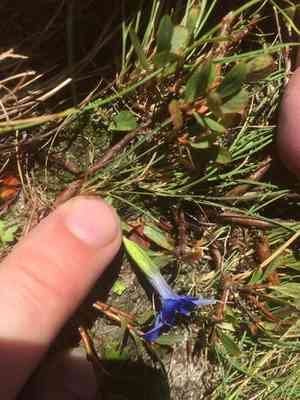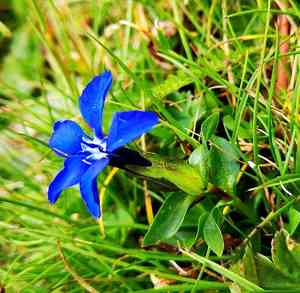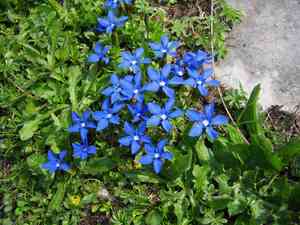
Spring gentian(Gentiana verna)

Spring gentian (Gentiana verna)

Also known as: Lucy of teesdale

The Edelweiss (Leontopodium alpinum) is a notable plant found across Eurasia, thriving mainly in sunny alpine meadows. In some European regions, it is considered endangered and enjoys protected status. Known for its distinctive star-shaped white flowers, Edelweiss is cherished but must be preserved in its natural habitat.

Attributes of Spring gentian

Lifespan
Perennial
Plant Type
Herb
Plant Height
10 cm
Spread
40 cm
Leaf Color
Green
Flower Size
2.5 cm
Flower Color
Blue

ForwardPlant - Identify plants with a snap

Identify and diagnose plants, get toxicity alerts, and explore safety guides for all types of fungi.

Try for Free

Images of Spring gentian

Spring gentian(Gentiana verna)

Quickly Identify Spring gentian

1
You can identify Gentiana verna by its bright blue, tubular flowers with five lobes, its low-growing rosette of narrow, lance-shaped leaves, and its preference for calcareous soils. The flowers typically appear in spring.

Scientific Classification of Spring gentian

Phylum
Vascular plants
Class
Dicotyledons
Order
Gentianales
Family
Gentian
Genus
Gentian
Species
Spring gentian

Planting and Growing of Spring gentian

Care Difficulty
Hard
Watering Schedule
Every 2 days
Sunlight Requirements
Full sun
Sunshine Duration
4-6 hours
Ideal Temperature
46-60℉
Soil Type
Potting Mix, Peat Mix
Soil pH
6.5-7.5
Fertilizer Type
Balanced
Pruning Season
Spring, Summer
Pruning Area
Branches, Leaves
Pruning Frequency
2 times a year
Repotting Season
Spring
Pot Type
Plastic, Ceramic

water icon How to Water Spring gentian?

Gentiana verna requires moderate watering, ensuring the soil remains consistently moist yet not waterlogged. Water until the top layer of soil is damp but not saturated, about 150 ml per session.
What are the symptoms of an underwatered Spring gentian?
What should I do if my Spring gentian is not getting enough water?
What are the symptoms of an overwatered Spring gentian?
How to save an overwatered Spring gentian?

sunlight icon What Are the Sunlight Requirements for Spring gentian?

Sunlight Requirements: Full sun, Partial sun
Duration of light: 4 to 6 hours
Gentiana verna ideally needs full sun to partial sun exposure. Providing this preferred light range supports its bright blue flower bloom, enhances vigor, and improves overall plant health. This careful balance in light conditions simulates its native alpine and subalpine environments and supports sustainable growth and reproduction.
How much sun does Gentiana verna need?
What are the solutions for ensuring ideal light conditions?
What are the benefits of proper lighting for Gentiana verna?
More About Sunlight Requirements Techniques

temperature icon What Is the Ideal Temperature Range for Spring gentian?

Ideal Temperature: 46 ~ 60℉
The ideal temperature range for Gentiana verna is between 46°F and 60°F. This temperature range provides the optimal conditions for growth and flowering, enhancing the plant’s bright blue blooms. Maintaining these temperatures ensures healthy metabolic and physiological processes, leading to vigorous growth.

soil icon What Soil is Best for Spring gentian?

Soil type: Loam, Acidic soil, Calcareous soil
Soil PH: 6.5 ~ 7.5
Gentiana verna thrives in well-drained soil that prevents waterlogging. Proper drainage enhances root aeration and prevents root rot, ensuring a healthier plant overall. This plant prefers soil with moderate moisture levels. Consistent moisture availability supports active growth and vibrant blooming periods, contributing to its aesthetic appeal. Soil rich in organic matter is beneficial for Gentiana verna as it supports robust growth by supplying essential nutrients, leading to lush foliage and prolific flowering.

fertilize icon How to Fertilize Spring gentian?

Fertilizer type: Balanced
Gentiana verna, known as the Spring Gentian, has modest nutrient requirements due to its natural habitat in alpine environments. When applying fertilizer, look for a balanced formula such as 10-10-10 NPK. Apply at a rate of approximately 1/4 to 1/3 the recommended dose for larger plants to avoid over-fertilization. Each plant's needs can vary slightly, so it's wise to monitor its growth and adjust accordingly.

prune icon How to Prune Spring gentian?

Pruning Time: Spring, Summer
The best time to prune Gentiana verna is in early spring, as new shoots appear. This ensures you don't disrupt blooming and allows the plant to focus energy on healthy new growth. While pruning, ensure not to remove too much foliage at once. Gentiana verna relies on its leaves for photosynthesis, and taking too many leaves can lead to weakened growth. More About Pruning Techniques

propagate icon How to Propagate Spring gentian plant?

Propagate Time: Early spring, Late spring
1
Fill seed trays with a well-draining soil mix. Scatter the seeds evenly over the surface and cover them lightly with soil. Water gently and place in a location with indirect sunlight. Maintain moisture throughout the germination period.
2
Select healthy stems and cut them just below a node. Remove lower leaves and dip the cut end into rooting hormone. Place the cutting into a moist growing medium and cover with plastic to retain humidity.
3
Dig up a mature Gentiana verna and gently shake off excess soil. Use a sharp knife to divide the root clump into sections, ensuring each section has roots attached. Replant divisions promptly in prepared, well-draining soil.
More About Propagating Techniques

repot icon How to Repot Spring gentian plant?

Repotting frequency: Every 2-3 years
1
You should repot Gentiana verna when you notice that the roots are growing out of the drainage holes or when the plant becomes root-bound. An overgrown root system indicates restricted growth space, which is a signal to repot. Repot in early spring when the plant is coming out of dormancy for the best results.
2
Choose a pot that is only slightly larger than the current one, with adequate drainage holes. A pot that is too large can hold excess moisture, leading to root rot. Clay pots can be a great choice as they allow water to evaporate faster, helping to prevent overwatering.
3
Opt for well-drained, gritty compost as soil for Gentiana verna. This type of soil is crucial because it mimics the plant’s natural rocky habitat, providing adequate drainage and preventing water-logging. The soil structure allows for ample air circulation around the roots, promoting healthy growth.

ForwardPlant - Identify plants with a snap

Find the best spots for them to optimize their health, simply using your phone.

Try for Free

Toxicity of Spring gentian

Is Spring gentian toxic to humans?

The spring gentian exhibits a low level of toxicity to humans, with every part of the plant capable of inducing poisoning if consumed. The toxic compounds, namely seco-iridoids and xanthones, are found throughout the spring gentian, rendering all sections potentially dangerous. Ingesting these substances can trigger a variety of symptoms, which may encompass gastrointestinal issues such as nausea, vomiting, and diarrhea. Furthermore, individuals might suffer from headaches, dizziness, and a general sense of unwellness. Given the widespread presence of toxic elements in spring gentian, even unintentional ingestion of minimal quantities can lead to these negative effects. It is imperative for individuals to recognize the toxicity of spring gentian to avert accidental poisoning.

Is Spring gentian toxic to cat?

Spring gentian possesses a low degree of toxicity towards cats. If a cat accidentally consumes any portion of this plant, it can lead to poisoning since all parts of the spring gentian are toxic. The harmful components are seco-iridoids and xanthones, which can result in negative health impacts when ingested. Possible symptoms might include gastrointestinal distress, such as vomiting or diarrhea, lethargy, or various indicators of physical discomfort. Should there be any suspicion of ingestion of spring gentian by a cat, it is essential to seek immediate veterinary assistance to safeguard the cat's health.

Is Spring gentian toxic to dog?

The plant species being discussed, spring gentian, poses a mild toxicity risk to dogs. If canines consume any portion of this plant, they may be at risk of poisoning, as the entire plant is deemed toxic. Dogs generally encounter spring gentian through accidental ingestion while exploring natural environments. After exposure to spring gentian, dogs may show signs consistent with poisoning, which can encompass gastrointestinal distress, such as vomiting and diarrhea, lethargy, or potentially more severe symptoms based on the quantity consumed. The toxic elements within spring gentian are seco-iridoids and xanthones, substances that can negatively impact a dog's health. Should you suspect that your dog has ingested spring gentian, it is crucial to seek immediate veterinary assistance to secure the best possible outcome for your pet.

Identify toxic plants for your safety

Learn which plants are harmful to you and your pets, and make informed choices for a safer home!

Try for Free
WARNING
The judgment on toxicity and danger is for reference only. We DO NOT GUARANTEE any accuracy of such judgment. Therefore, you SHALL NOT rely on such judgment. It is IMPORTANT TO SEEK PROFESSIONAL ADVICE in advance when necessary.
More About Toxic Techniques