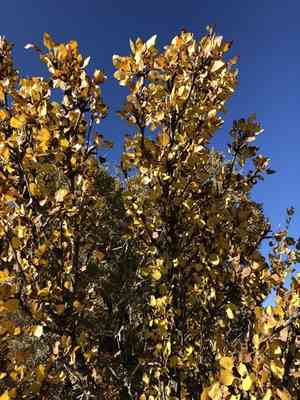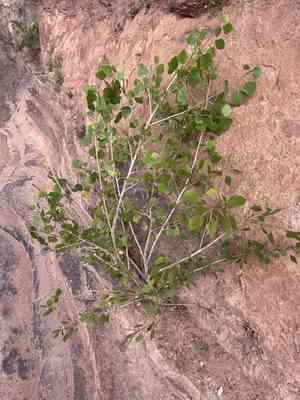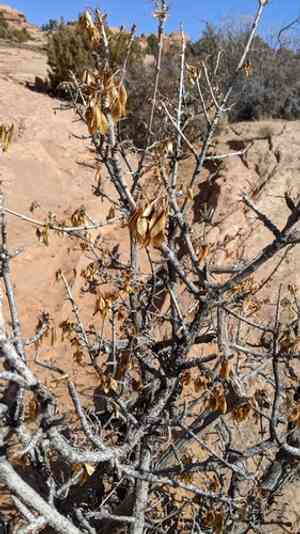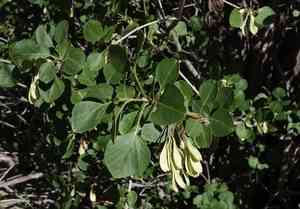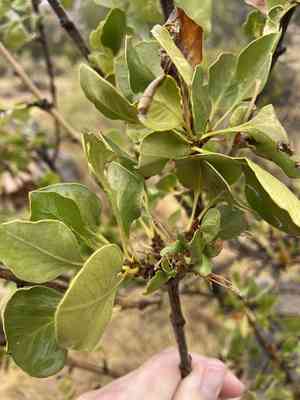
Single-leaf ash(Fraxinus anomala)

Single-leaf ash (Fraxinus anomala)

Also known as: Singleleaf Ash

The single-leaf ash (Fraxinus anomala) is a resilient shrub or small tree that thrives in the dry environments of the southwestern United States. Typically reaching heights of 10-20 feet, it is notable for its solitary leaflet per leaf, a feature that distinguishes it from other ash species. The bark is initially smooth and gray, becoming more textured and furrowed with age.

Natural habitat: Single-leaf ash is commonly found in arid regions, including canyons and rocky slopes, where it adapts well to well-drained soils and drought conditions.

Key characteristics:
- Single leaflet per leaf
- Grows as a shrub or small tree, 10-20 feet tall
- Gray, smooth bark that ages to a more furrowed texture
- Twisting branches
- Clusters of yellow-green flowers in spring
- Unique winged fruit

This species is particularly well-suited to its rugged desert and rocky habitats.

Attributes of Single-leaf ash

Lifespan
Perennial
Plant Type
Tree
Plant Height
3 to 7 meters
Spread
2 to 5 meters
Leaf Color
Glossy Green
Flower Size
0.5 to 1 centimeter
Flower Color
Greenish to brown

ForwardPlant - Identify plants with a snap

Identify and diagnose plants, get toxicity alerts, and explore safety guides for all types of fungi.

Try for Free

Images of Single-leaf ash

Single-leaf ash(Fraxinus anomala)

Quickly Identify Single-leaf ash

1
Look for a small tree or shrub with single, non-compound leaves. The leaves are typically oval, with a smooth margin and a glossy green appearance. The bark is light gray and relatively smooth on younger trees, becoming furrowed with age.

Scientific Classification of Single-leaf ash

Phylum
Vascular plants
Class
Dicotyledons
Order
Lamiales
Family
Olive
Genus
Ashes
Species
Single-leaf ash

Planting and Growing of Single-leaf ash

Care Difficulty
Easy
Watering Schedule
Every 2 days
Sunlight Requirements
Full sun
Sunshine Duration
4-8 hours
Ideal Temperature
60-75℉
Soil Type
Potting Mix, Peat Mix
Soil pH
6.5-7.5
Fertilizer Type
Balanced
Pruning Season
Spring, Summer
Pruning Area
Branches, Leaves
Pruning Frequency
2 times a year
Repotting Season
Spring
Pot Type
Plastic, Ceramic

water icon How to Water Single-leaf ash?

For Fraxinus anomala, aim for a deep watering approach. Each watering should allow the moisture to penetrate deeply into the root zone, approximately 500 milliliters per session. This ensures the roots receive adequate hydration without causing waterlogging.
What are the symptoms of an underwatered Single-leaf ash?
What should I do if my Single-leaf ash is not getting enough water?
What are the symptoms of an overwatered Single-leaf ash?
How to save an overwatered Single-leaf ash?

sunlight icon What Are the Sunlight Requirements for Single-leaf ash?

Sunlight Requirements: Full sun, Partial sun
Duration of light: 6-8 hours daily
Fraxinus anomala's ideal light range is full sun to partial sun. Such light conditions facilitate optimal photosynthesis, promoting healthy growth and strengthening its structural integrity.
How much sunlight does Fraxinus anomala need?
What solutions ensure ideal lighting?
Benefits of giving ideal light?

temperature icon What Is the Ideal Temperature Range for Single-leaf ash?

Ideal Temperature: 60 ~ 75℉
Fraxinus anomala thrives best when the temperature is maintained between 60°F to 75°F. This range allows optimal growth and development, as it simulates the conditions found in its natural habitat. Maintaining temperatures in this range helps ensure vigorous growth and resistance to diseases.

soil icon What Soil is Best for Single-leaf ash?

Soil type: Loam, Clay soil, Sandy loam, Calcareous soil
Soil PH: 6.5 ~ 7.5
Fraxinus anomala thrives in well-drained soils, preventing waterlogging, which can cause root rot and other issues. Good drainage ensures healthy root systems and robust growth. The plant flourishes with a loamy, nutrient-rich soil that ensures sufficient mineral availability. This fosters strong stem and leaf development while boosting its overall resilience. Fraxinus anomala can tolerate slightly calcareous soils, making it adaptable in areas with higher lime content. This can be beneficial for regions where acidic soil amendments are not feasible.

fertilize icon How to Fertilize Single-leaf ash?

Fertilizer type: Balanced
Fraxinus anomala typically benefits from a balanced fertilizer that supports its growth during the active season. Use liquid fertilizer at half the recommended concentration to avoid root burn, allowing for healthy foliage development.

prune icon How to Prune Single-leaf ash?

Pruning Time: Spring, Summer
For young Fraxinus anomala, prioritize the development of a strong leader by trimming any competing stems. This early-stage pruning helps in establishing a sturdy framework for future growth. For mature Fraxinus anomala, concentrate on removing dead, damaged, or diseased wood. If necessary, selectively thin out branches to rejuvenate dense canopies and prevent wind damage. More About Pruning Techniques

propagate icon How to Propagate Single-leaf ash plant?

Propagate Time: Early spring,Spring
1
Harvest seeds from mature Fraxinus anomala fruits in autumn. Ensure that seeds are fully matured but not overripe for effective germination.
2
Select healthy, disease-free branches in early spring and cut them into lengths of about 10-15 cm with sterilized pruning shears.
3
Sow seeds in seedling trays filled with a well-draining potting mix. Cover lightly with soil and keep moist for optimal germination.
More About Propagating Techniques

repot icon How to Repot Single-leaf ash plant?

Repotting frequency: Every 2-3 years
1
Look for signs like roots emerging from the drainage holes, slow growth, or the soil not retaining moisture well. These indicate that the plant needs more space and nutrients, making it the perfect time to repot.
2
Select a pot that is one size larger and has adequate drainage. A pot that's too large can lead to excessive moisture retention, potentially causing root rot. A slightly larger pot encourages healthy root growth and stability.
3
Choose a well-draining sandy mix to prevent waterlogging, ensuring good air circulation around the roots. Such soil will support healthy growth by providing necessary aeration and preventing the roots from staying too wet.

ForwardPlant - Identify plants with a snap

Find the best spots for them to optimize their health, simply using your phone.

Try for Free