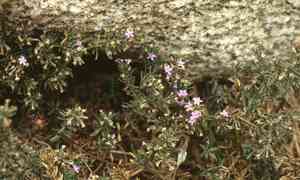
Alkali seaheath (Frankenia salina)
Also known as: Alkali heath
Glasswort (Salicornia europaea) is a succulent, low-lying plant commonly found in salty environments like beaches, estuaries, and salt marshes. It has adapted to saline habitats with specialized glands that excrete salt, which then crystallizes on its surface. This plant is also used effectively as a groundcover for areas with high soil salinity.
In This Article
Attributes of Alkali seaheath
Lifespan
Perennial
Plant Type
Herb
Plant Height
15 cm to 30 cm
Spread
30 cm
Leaf Color
Grayish-green
Flower Size
8 mm
Flower Color
Pink Purple
Images of Alkali seaheath
Quickly Identify Alkali seaheath
1
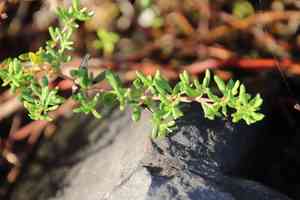
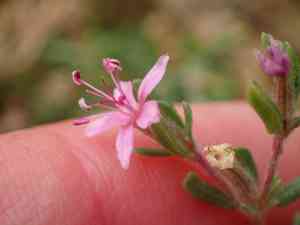
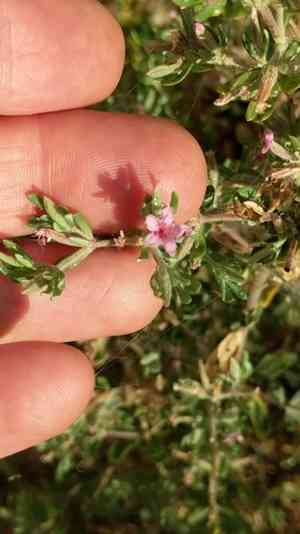
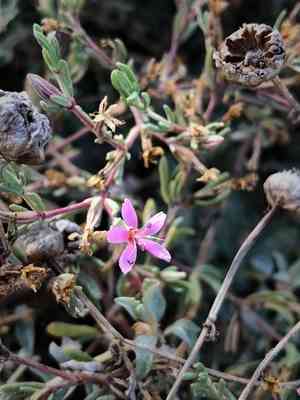
Frankenia salina can be identified by its small, opposite leaves, which are typically grayish-green in color, and its clusters of small pink flowers. The plant often forms low, dense mats.
Scientific Classification of Alkali seaheath
Phylum
Vascular plants
Class
Dicotyledons
Order
Caryophyllales
Family
Frankenias
Genus
frankenia
Species
Alkali seaheath
Planting and Growing of Alkali seaheath
Care Difficulty
Easy
Watering Schedule
Every 2 days
Sunlight Requirements
Full sun
Sunshine Duration
6-10 hours
Ideal Temperature
60-75℉
Soil Type
Potting Mix, Peat Mix
Soil pH
6.5-7.5
Fertilizer Type
Balanced
Pruning Season
Spring, Summer
Pruning Area
Branches, Leaves
Pruning Frequency
2 times a year
Repotting Season
Spring
Pot Type
Plastic, Ceramic
 How to Water Alkali seaheath?
Frankenia salina, also known as alkali heath, thrives in salty and coastal environments. When watering, ensure the soil is adequately moist but not waterlogged. Approximately 250 ml per session is ideal, following the principle of deep watering to maintain consistent moisture without oversaturating the roots.
What are the symptoms of an underwatered Alkali seaheath?
›
What should I do if my Alkali seaheath is not getting enough water?
›
What are the symptoms of an overwatered Alkali seaheath?
›
How to save an overwatered Alkali seaheath?
›
 What Are the Sunlight Requirements for Alkali seaheath?
Frankenia salina thrives in full sun to partial sun environments. Ideal lighting promotes flowering, enhances foliage color, and ensures efficient energy production through photosynthesis, contributing to overall plant health.
More About Sunlight Requirements Techniques→
What is the best lighting condition for Frankenia salina?
›
How can I provide ideal lighting conditions?
›
What are the benefits of ideal lighting for this plant?
›
 What Is the Ideal Temperature Range for Alkali seaheath?
For optimal growth, Frankenia salina thrives in temperatures ranging from 60°F to 75°F. Within this range, the plant can efficiently carry out metabolic processes resulting in vibrant growth and robustness. Consistency in this thermal interval ensures unhindered photosynthesis and nutrient uptake.
 What Soil is Best for Alkali seaheath?
Frankenia salina thrives best in well-draining soils that prevent waterlogging. This is crucial for the plant's root health and overall vitality as it helps avoid root rot and ensures adequate oxygen supply to the roots. The plant favors soils with moderate fertility. Excessive nutrients can lead to overly lush growth with fewer flowers. A balanced nutrient availability supports the plant’s sturdy structure and vibrant flowering. Given its natural habitat in saline environments, Frankenia salina can tolerate and even prefers slightly saline conditions. This tolerance allows it to thrive where other species might struggle due to high salt concentrations.
 How to Fertilize Alkali seaheath?
For Frankenia salina, a conservative approach to fertilization is best. Use a liquid fertilizer diluted to half the recommended strength. Each application should involve approximately 5 ml per liter of water, ensuring even distribution around the plant base. Over-fertilization can lead to salt buildup, especially due to its natural habitat.
 How to Prune Alkali seaheath?
Use a pair of sharp, clean pruning shears to make clear and precise cuts. Ensure the tools are disinfected to prevent disease transmission. Choosing the right tools minimizes damage and stress to the plant during the pruning process. Inspect the plant to determine which branches need trimming. Focus on removing dead, diseased, or crossing branches. Also, thin out overgrown areas to maintain a desirable shape. This will ensure that the plant's energy is directed towards healthy parts. Start pruning by removing small amounts of growth at a time. Gradual pruning reduces shock and allows the plant to adapt more efficiently. This method is especially important for maintaining the natural shape and avoiding over-pruning. After removing unhealthy parts, focus on shaping the plant. Cut back excess growth to keep Frankenia salina from spreading too wide or high. Shaping ensures the plant remains aesthetically pleasing and fits well within your garden's design.
More About Pruning Techniques→
 How to Propagate Alkali seaheath plant?
1
Harvest seeds from mature Frankenia salina plants during the blooming season. Ensure seeds are dry and store them in a cool, dark place before planting to maximize germination success.
2
Select healthy, non-flowering shoots and cut them into 10-15 cm lengths. Remove lower leaves and dip the cut ends in rooting hormone powder to facilitate root development.
3
Gently unearth the plant's root mass and divide it into smaller sections using a clean knife. Ensure each division has sufficient roots and shoots for successful re-establishment in new locations.
 How to Repot Alkali seaheath plant?
1
Frankenia salina shows it's time for a bigger home when its roots start peeking through the drainage holes or if growth seems stunted. Typically, this occurs every couple of years, especially after flowering seasons. Repot when you notice the soil drying out faster than usual or if the plant becomes top-heavy and prone to tipping.
2
For Frankenia salina, select a pot that is one size larger than the current one, preferably made of terracotta or ceramic, to aid in healthy evaporation. Ensure it has adequate drainage holes to prevent waterlogging. A slightly heavier pot can also help stabilize the plant, preventing it from becoming unbalanced when fully grown.
3
Opt for a loamy, well-draining soil mix enriched with organic matter. This substrate provides the right balance of water retention and aeration, preventing root rot while supporting nutrient uptake. Adding perlite can enhance drainage, ensuring the soil remains loose and promotes healthy root growth.
Learn More About Alkali seaheath Diseases
Anthracnose
Bacterial Leaf Spot
Bacterial Soft Rot
Bacterial Wilt
Chemical Injury
Crown Gall
Cyst Nematode
Damping-off
Downy Mildew
Drought Stress
Fusarium Wilt
Gray Mold
Leaf Spot
Mosaic
Nutrient Deficiency
Nutrient Toxicity
Powdery Mildew
Root Rot
Root-knot Nematode
Rusts
Sooty Mold
Spider Mites
Temperature Stress
Thrips Damage
White Mold



