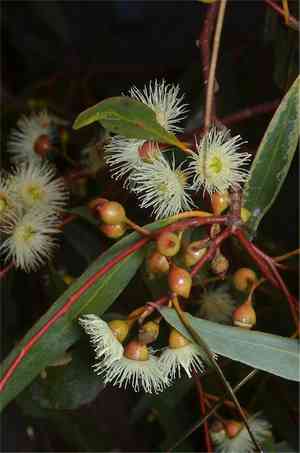
Yellow gum(Eucalyptus leucoxylon)

Yellow gum (Eucalyptus leucoxylon)

Also known as: Blue gum, Red- flowered yellow gum, Bastard box

The yellow gum tree, or Eucalyptus leucoxylon, is an Australian native recognized for its distinctive, colorful bark and vibrant blooms.

**Characteristics:**
- **Height:** Generally grows between 10-20 meters tall.
- **Flowers:** Displays bright yellow flowers, mainly during winter and spring.
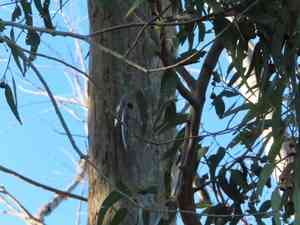
- **Bark:** Features smooth, multi-hued bark in shades of white, grey, and pink.
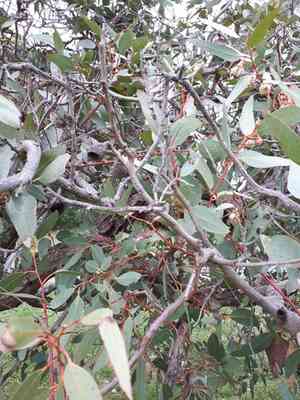
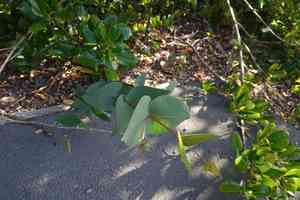
- **Leaves:** Lance-shaped and blue-green, maturing to green as they age.

**Uses in a Garden Setting:**
- **Visual Appeal:** Its striking flowers and unique bark add significant aesthetic value.
- **Shade Provider:** Offers excellent shade with its wide canopy.
- **Wildlife Support:** Attracts birds and beneficial insects, particularly those that feed on nectar.
- **Functional:** Effective as a windbreak or privacy screen thanks to its dense foliage.
- **Low Maintenance:** Drought-resistant and relatively free of pests, making it ideal for gardens requiring minimal upkeep.

Suitable for larger garden spaces, the yellow gum tree can be a captivating centerpiece or an integral part of diverse plant groupings.

Attributes of Yellow gum

Lifespan
Perennial
Plant Type
Tree
Plant Height
6 m
Spread
5 m
Leaf Color
Green
Flower Size
2 to 3 cm
Flower Color
Red

ForwardPlant - Identify plants with a snap

Identify and diagnose plants, get toxicity alerts, and explore safety guides for all types of fungi.

Try for Free

Images of Yellow gum

Yellow gum(Eucalyptus leucoxylon)

Quickly Identify Yellow gum

1
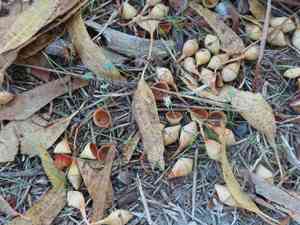
Eucalyptus leucoxylon can be identified by its smooth bark that sheds in long strips, revealing a creamy white or grey surface underneath. The leaves are lance-shaped and alternately arranged. The flowers are particularly distinctive, occurring in clusters, with a wide color range.

Scientific Classification of Yellow gum

Phylum
Vascular plants
Class
Dicotyledons
Order
Myrtales
Family
Myrtle
Genus
Eucalypts
Species
Yellow gum

Planting and Growing of Yellow gum

Care Difficulty
Easy
Watering Schedule
Every 2 days
Sunlight Requirements
Full sun
Sunshine Duration
4-8 hours
Ideal Temperature
64-77℉
Soil Type
Potting Mix, Peat Mix
Soil pH
6.5-7.5
Fertilizer Type
Balanced
Pruning Season
Spring, Summer
Pruning Area
Branches, Leaves
Pruning Frequency
2 times a year
Repotting Season
Spring
Pot Type
Plastic, Ceramic

water icon How to Water Yellow gum?

For Eucalyptus leucoxylon, it's crucial to provide around 1000 ml of water each time. The plant thrives when the soil is thoroughly moistened but not waterlogged. Ensure the soil drains well to prevent roots from sitting in water, which mimics their natural dry and then rain-heavy Australian climate.
What are the symptoms of an underwatered Yellow gum? ›
What should I do if my Yellow gum is not getting enough water? ›
What are the symptoms of an overwatered Yellow gum? ›
How to save an overwatered Yellow gum? ›

sunlight icon What Are the Sunlight Requirements for Yellow gum?

Sunlight Requirements: Full sun, Partial sun
Duration of light: 8 to 10 hours
Eucalyptus leucoxylon thrives best with full to partial sun, meaning it ideally enjoys 8-10 hours of sunlight. This ample light ensures vigorous growth, enhances its beautiful blue-green leaves, and improves its aromatic properties.
What is the best spot for Eucalyptus leucoxylon? ›
How do I ensure my Eucalyptus leucoxylon gets enough light? ›
What benefits does ideal lighting bring to Eucalyptus leucoxylon? ›

temperature icon What Is the Ideal Temperature Range for Yellow gum?

Ideal Temperature: 64 ~ 77℉
Eucalyptus leucoxylon thrives best within a temperature range of 64°F to 77°F. This range ensures optimal physiological and metabolic activities, promoting healthy growth and development. Any deviation from this range might cause stress to the plant, affecting its growth and productivity.

soil icon What Soil is Best for Yellow gum?

Soil type: Sandy soil, Loam, Clay soil, Acidic soil, Calcareous soil
Soil PH: 6.5 ~ 7.5
Eucalyptus leucoxylon thrives in well-drained soils, helping to prevent root rot. Ensuring good drainage supports healthy root development by avoiding waterlogging, promoting vigorous growth. This plant prefers a soil enriched with organic matter, which ensures a steady supply of nutrients. Ample nutrient availability is crucial for robust foliage and flowering in Eucalyptus leucoxylon. Eucalyptus leucoxylon is adaptable but prefers neutral to slightly alkaline pH levels. Maintaining an optimal pH helps maximize nutrient uptake and keeps the plant thriving.

fertilize icon How to Fertilize Yellow gum?

Fertilizer type: Balanced
For Eucalyptus leucoxylon, it’s important to apply fertilizer at a suitable rate. Typically, you should use a balanced fertilizer with an NPK ratio of 10-10-10. Use about 1 pound (450 grams) of fertilizer per mature tree. Applying too much can harm the plant.

prune icon How to Prune Yellow gum?

Pruning Time: Spring, Summer, Autumn
Begin by removing any dead or diseased branches to ensure the tree maintains a healthy structure. Next, focus on shaping the tree by trimming back branches that create cross-over or grow inwards. This will not only give it an aesthetically pleasing appearance but also allow better air circulation and light penetration. More About Pruning Techniques→

propagate icon How to Propagate Yellow gum plant?

Propagate Time: Spring, Early summer
1
To propagate Eucalyptus leucoxylon, start by collecting seeds from mature plants or take semi-hardwood cuttings. Ensure that seeds are free from mold, and cuttings are disease-free.
2
Use a well-draining potting mix for seeds or a perlite/peat mix for cuttings. This ensures that your seedlings or cuttings do not suffer from root rot due to excess moisture.
3
Place your seeds or cuttings into the growing medium. Seeds should be shallowly buried, whereas cuttings placed about two inches deep. Maintain consistent moisture without waterlogging.
More About Propagating Techniques→

repot icon How to Repot Yellow gum plant?

Repotting frequency: Every 2-3 years
1
Eucalyptus leucoxylon shows its need for repotting when its roots start to circle around the pot's interior. You may also observe that the plant's growth rate slows down or it seems root-bound, indicating it's time for a larger space. Spring is ideal as the plant is beginning its active growth phase, which can help it adapt more quickly to its new surroundings.
2
Select a pot that is 1-2 inches larger in diameter than the current one. A pot with good drainage is crucial to avoid waterlogging, which eucalyptus does not tolerate well. The slightly larger size offers room for growth without overwhelming the plant, reducing transplant shock and ensuring healthy development.
3
Opt for a well-draining loamy soil to facilitate rapid drainage. This type of soil typically contains sand, silt, and a smaller amount of clay, providing ample aeration and preventing root rot. The soil mix should be slightly acidic to neutral to maintain the plant's vibrant health and support its growth cycle.

ForwardPlant - Identify plants with a snap

Find the best spots for them to optimize their health, simply using your phone.

Try for Free