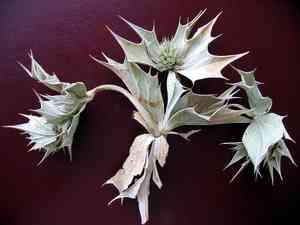
Sea holly(Eryngium maritimum)

Sea holly (Eryngium maritimum)

Also known as: Seaside coyote-thistle

Sea holly (Eryngium) is a striking perennial often found along European coastlines. Known for its spiky, metallic blue or silver flowers and spiny foliage, it blooms from mid-summer to early fall.

**Key Characteristics:**
- Height: Typically 1 to 3 feet
- Flower Color: Metallic blue or silver
- Bloom Time: Mid-summer to early fall
- Wildlife: Attracts bees and butterflies
- Conservation: Considered endangered in some regions

**Growing Requirements:**
- Light: Prefers full sun
- Soil: Thrives in well-drained, sandy or loamy soil
- Water: Low to moderate; drought-tolerant
- USDA Hardiness Zones: 4-9
- Maintenance: Minimal care needed; deadheading can prolong blooming

Sea holly is a resilient plant that adds unique texture and color to gardens, making it ideal for xeriscaping and coastal landscapes.

Attributes of Sea holly

Lifespan
Perennial, Biennial
Plant Type
Herb
Plant Height
60 cm to 90 cm
Spread
60 cm to 90 cm
Leaf Color
Green White Silver Blue Gray
Flower Size
1-2 cm
Flower Color
Blue

ForwardPlant - Identify plants with a snap

Identify and diagnose plants, get toxicity alerts, and explore safety guides for all types of fungi.

Try for Free

Images of Sea holly

Sea holly(Eryngium maritimum)

Quickly Identify Sea holly

1
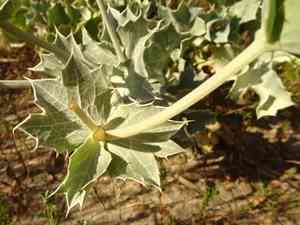
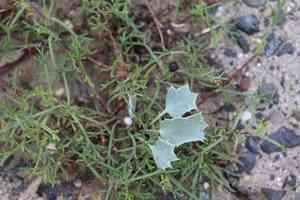
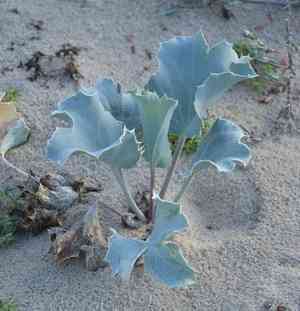
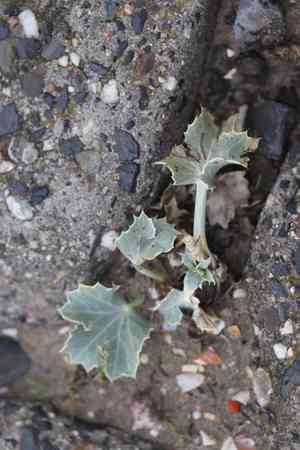
Eryngium maritimum can be identified by its deeply divided, spiny leaves that are bluish-green in color, and by its globular flower heads that are also blue and thistle-like.

Scientific Classification of Sea holly

Phylum
Vascular plants
Class
Dicotyledons
Order
Apiales
Family
Umbellifers
Genus
Eryngos
Species
Sea holly

Planting and Growing of Sea holly

Care Difficulty
Easy
Watering Schedule
Every 2 days
Sunlight Requirements
Full sun
Sunshine Duration
6-10 hours
Ideal Temperature
60-75℉
Soil Type
Potting Mix, Peat Mix
Soil pH
6.5-7.5
Fertilizer Type
Balanced
Pruning Season
Spring, Summer
Pruning Area
Branches, Leaves
Pruning Frequency
Once a year
Repotting Season
Spring
Pot Type
Plastic, Ceramic

water icon How to Water Sea holly?

Eryngium maritimum requires a modest amount of water, approximately 250 ml per watering session. This amount ensures that the soil remains moist but not soggy, which is crucial for its roots' health. The key is to allow the top layer of the soil to dry out between waterings, as this plant is adapted to coastal conditions where water retention is minimal.
What are the symptoms of an underwatered Sea holly?
What should I do if my Sea holly is not getting enough water?
What are the symptoms of an overwatered Sea holly?
How to save an overwatered Sea holly?

sunlight icon What Are the Sunlight Requirements for Sea holly?

Sunlight Requirements: Full sun, Partial sun
Duration of light: Six to eight hours
Eryngium maritimum thrives in full sun to partial sun environments, best suited for areas receiving six to eight hours of sunlight a day. This exposure fosters healthy, vibrant growth and abundant flowering.
What is the ideal light condition for Eryngium maritimum?
How can I ensure Eryngium maritimum gets the best light?
What benefits does Eryngium maritimum gain from optimal sunlight?
More About Sunlight Requirements Techniques

temperature icon What Is the Ideal Temperature Range for Sea holly?

Ideal Temperature: 60 ~ 75℉
The ideal temperature range for Eryngium maritimum is between 60°F and 75°F. This range provides optimal conditions for growth by ensuring enough warmth to stimulate metabolic processes while avoiding excessive heat that could stress the plant. Temperatures within this range mimic the natural coastal habitats where these plants thrive, typically resulting in healthier foliage and better growth rates.

soil icon What Soil is Best for Sea holly?

Soil type: Sandy soil, Sand soil, Calcareous soil
Soil PH: 6.5 ~ 7.5
Eryngium maritimum thrives in well-drained soils to prevent root rot and other moisture-related issues. Well-drained conditions help the roots access oxygen, promoting strong and healthy growth of the plant. Adapting to nutrient-poor soils is one of the strengths of Eryngium maritimum. It thrives in environments where other species might struggle, emphasizing its minimal fertilization needs to achieve its characteristic silvery foliage and striking blue flowers. This plant is adept at handling saline environments, making it well-suited for coastal areas. This tolerance allows it to thrive where salt sprays can devastate less hardy species, contributing to its natural beauty in these unique landscapes.

fertilize icon How to Fertilize Sea holly?

Fertilizer type: Balanced
Eryngium maritimum, commonly known as sea holly, typically thrives with minimal fertilization. When fertilizing, use a balanced fertilizer at one-half the strength recommended for standard use. This helps ensure that the plant receives adequate nutrients without overwhelming its systems.

prune icon How to Prune Sea holly?

Pruning Time: Spring, Summer
Begin by identifying dead or damaged stems. Use clean, sharp pruning shears to cut these stems back to the base. This encourages healthy new growth and helps maintain a tidy appearance. Trim the plant to maintain its natural shape, avoiding excessive cutting to preserve its structural form. Once flowering has finished, remove spent flower heads by cutting them back to the nearest healthy leaf node. This prevents seed formation, which can sap energy from the plant, and encourages a second flush of blooms if done in early summer. More About Pruning Techniques

propagate icon How to Propagate Sea holly plant?

Propagate Time: Spring, Early summer
1
Harvest seeds from mature Eryngium maritimum flowers at the end of their blooming period. Ensure seeds are completely dry before storage to prevent mold or decay.
2
Select healthy stems and use a sharp knife to make clean cuts. Cuttings should be around 4-5 inches long, with leaves removed from the lower part to facilitate rooting.
3
Place seeds in a seed tray filled with well-draining soil mix. Cover lightly with soil and keep the tray in a warm, sunny location. Maintain consistent moisture until germination occurs.
More About Propagating Techniques

repot icon How to Repot Sea holly plant?

Repotting frequency: Every 2-3 years
1
Eryngium maritimum shows signs that it's ready for repotting when its roots start protruding from the drainage holes or the plant appears stunted despite proper care. Ideally, repotting should occur during the active growing season in spring or summer to minimize transplant shock.
2
Select a pot that is slightly larger than the current one and has good drainage holes. Ceramic or terracotta pots are beneficial as they allow for better air exchange and stabilization. Such pots ensure your Eryngium maritimum avoids potential waterlogging and encourages root health.
3
Opt for sandy, well-drained soil that mimics its natural coastal habitat. This type of soil prevents water retention, reducing the risk of root rot. Adding grit or perlite to the soil mix can further enhance drainage, catering to the plant's preference for arid conditions.

ForwardPlant - Identify plants with a snap

Find the best spots for them to optimize their health, simply using your phone.

Try for Free