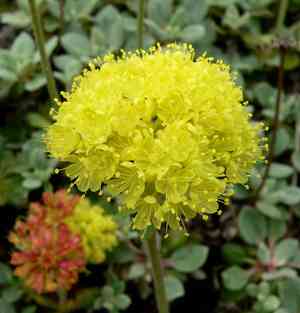
Sulphurflower Buckwheat (Eriogonum umbellatum)
Also known as: One-Eyed Sulphur Flower
Gray Santolina (Santolina chamaecyparissus) is a resilient perennial that thrives in cold, heat, and drought. With its distinctive grayish-silver foliage and bright yellow summer blooms, it serves as an attractive ground cover, particularly in poor soil. It flourishes in both full sun and partial shade.
In This Article
Attributes of Sulphurflower Buckwheat
Lifespan
Perennial
Plant Type
Herb, Shrub
Plant Height
2 cm to 2 m
Spread
5 cm to 2 m
Leaf Color
Green Gray
Flower Size
2 mm to 1 cm
Flower Color
Yellow
Images of Sulphurflower Buckwheat

Quickly Identify Sulphurflower Buckwheat
1
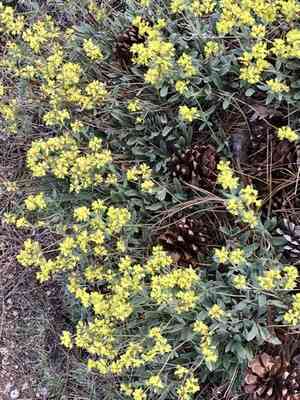
Showy clusters of small, bright yellow flowers in umbrella-like arrays.
2
Spoon-shaped, blue-green leaves with a fine, whitish powder and basal formation.
3
Slender stems ranging from 8 to 24 inches (20 to 60 cm) in height.
4
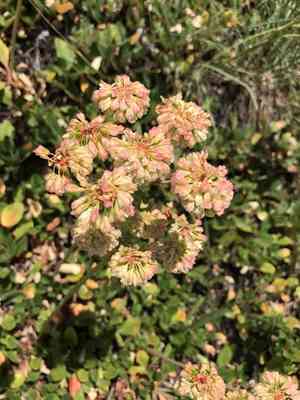
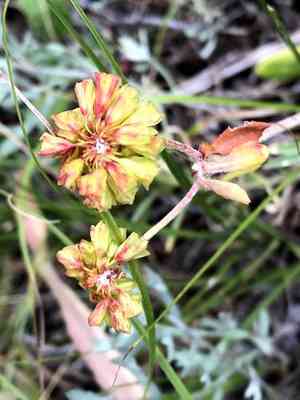
Tiny flowers, initially yellow, drying to a striking red or burgundy hue.
5
Upper leaf surface vibrant green, lower side white and felted, 1-2 inches (2.5-5 cm) long.
Scientific Classification of Sulphurflower Buckwheat
Phylum
Vascular plants
Class
Dicotyledons
Order
Caryophyllales
Family
Buckwheat
Genus
Wild Buckwheat
Species
Sulphurflower Buckwheat
Planting and Growing of Sulphurflower Buckwheat
Care Difficulty
Easy
Watering Schedule
Every 2 days
Sunlight Requirements
Full sun
Sunshine Duration
6-10 hours
Ideal Temperature
65-75℉
Soil Type
Potting Mix, Peat Mix
Soil pH
6.5-7.5
Fertilizer Type
Balanced
Pruning Season
Spring, Summer
Pruning Area
Branches, Leaves
Pruning Frequency
2 times a year
Repotting Season
Spring
Pot Type
Plastic, Ceramic
 How to Water Sulphurflower Buckwheat?
Eriogonum umbellatum, commonly known as buckwheats, requires a moderate amount of water. It's crucial to water until the soil is moist but not soggy. A good rule of thumb is to provide around 500 ml of water each time, ensuring even distribution throughout the root zone. This helps the plant access moisture without drowning its roots. The soil should feel moist to the touch after watering, but excess water should not pool on the surface.
What are the symptoms of an underwatered Sulphurflower Buckwheat?
›
What should I do if my Sulphurflower Buckwheat is not getting enough water?
›
What are the symptoms of an overwatered Sulphurflower Buckwheat?
›
How to save an overwatered Sulphurflower Buckwheat?
›
 What Are the Sunlight Requirements for Sulphurflower Buckwheat?
Ideally, Eriogonum umbellatum should receive full sun to partial sun conditions. Optimal lighting ensures vigorous growth and a profusion of flowers, enhancing its visual appeal and ecological benefits in the garden setting.
More About Sunlight Requirements Techniques→
What is the best lighting condition?
›
How to achieve ideal lighting?
›
What are the benefits of ideal lighting?
›
 What Is the Ideal Temperature Range for Sulphurflower Buckwheat?
Eriogonum umbellatum thrives best in temperate conditions where temperatures consistently stay between 65°F and 75°F. This range supports optimal growth, flowering, and overall plant health, allowing the plant to perform vital physiological and biochemical processes efficiently.
 What Soil is Best for Sulphurflower Buckwheat?
Eriogonum umbellatum thrives best in well-draining soil, which helps prevent waterlogging and root rot, ensuring the plant remains healthy and vigorous even in rainy conditions. This species prefers slightly alkaline soil environments. Such conditions improve nutrient availability and support robust growth, enhancing the plant's vibrant bloom characteristics. While not overly demanding, Eriogonum umbellatum benefits from soil with moderate nutrient levels, which provides the essential elements for sustained growth and flowering without promoting excessive foliage.
 How to Fertilize Sulphurflower Buckwheat?
For Eriogonum umbellatum, it is important to use a balanced approach when fertilizing. This plant generally requires minimal fertilization due to its adaptation to nutrient-poor soils. When applying fertilizers, a diluted solution of a balanced liquid fertilizer at half the recommended strength is ideal to prevent overwhelming the plant’s roots. Excessive fertilizer can lead to rapid, weak growth.
 How to Prune Sulphurflower Buckwheat?
Begin by examining the entire plant to identify any dead, damaged, or diseased stems. This assessment will guide your pruning process and help prioritize which areas need attention. First, remove any dead or unhealthy branches, cutting them off at a slight angle close to the base. Follow by trimming back any excessively long or crossing branches to maintain a balanced shape. This helps improve air circulation and sunlight penetration. After shaping, cut back the tips of the healthy branches to encourage bushy growth. This not only promotes a dense appearance but also stimulates the development of more flowers, enhancing the plant’s aesthetic appeal.
More About Pruning Techniques→
 How to Propagate Sulphurflower Buckwheat plant?
1
Start by soaking Eriogonum umbellatum seeds overnight to break dormancy. This enhances germination success rates and is an important step for proper propagation when using seeds.
2
Select healthy, disease-free stems for taking cuttings. The cut should be about 4-6 inches long, and all but the top few leaves should be removed to reduce moisture loss.
3
Carefully dig up mature plants and gently separate the root clumps. Ensure that each divided section has enough roots and shoots to support future growth when replanted.
 How to Repot Sulphurflower Buckwheat plant?
1
Eriogonum umbellatum should be repotted when it outgrows its current pot, which can be identified by roots poking through drainage holes or reduced plant growth. Early spring is ideal, as it aligns with the plant's active growing season, allowing it to adapt more easily.
2
Select a pot that offers excellent drainage and is 2-3 inches larger in diameter than the current one. Clay pots are recommended for their breathability, which helps prevent root rot by allowing excess moisture to escape.
3
Opt for a sandy, well-draining soil mix that mimics its natural rocky environment. This choice prevents water retention, reducing the risk of root rot and encouraging healthy root development.



