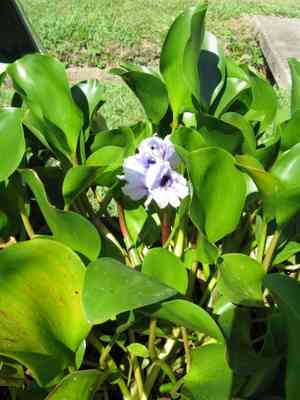
Anchored water hyacinth (Eichhornia azurea)
Also known as: Saw-petal water-hyacinth, Rooted water hyacinth
The water hyacinth (Eichhornia crassipes) is a notable aquatic perennial featuring broad, glossy leaves that float on water surfaces. It displays eye-catching blue-violet flowers on tall stems, which attract pollinators and bring vibrant color to water environments. This plant thrives in calm freshwater habitats, using its extensive root system to anchor itself in muddy substrates and absorb essential nutrients.
In This Article
Attributes of Anchored water hyacinth
Lifespan
Perennial
Plant Type
Herb
Plant Height
Up to 1 meter (3.3 feet)
Spread
N/A (As it is an aquatic plant without a typical \'crown\' structure)
Leaf Color
Green
Flower Size
3-5 cm
Flower Color
Purple White Pink Blue
Images of Anchored water hyacinth
Quickly Identify Anchored water hyacinth
1
Identify Eichhornia azurea by its broad, thick, glossy leaves that are typically arranged in a rosette. The flowers are distinctive with six petals and are blue to violet in color with a yellow spot on one of the petals.
Scientific Classification of Anchored water hyacinth
Phylum
Vascular plants
Class
Monocotyledons
Order
Commelinales
Family
Water-hyacinth
Genus
Water hyacinths
Species
Anchored water hyacinth
Planting and Growing of Anchored water hyacinth
Care Difficulty
Easy
Watering Schedule
Every 10 days
Sunlight Requirements
Full sun
Sunshine Duration
6-10 hours
Ideal Temperature
77-86℉
Soil Type
Potting Mix, Peat Mix
Soil pH
6.5-7.5
Fertilizer Type
Balanced
Pruning Season
Spring, Summer
Pruning Area
Branches, Leaves
Pruning Frequency
2 times a year
Repotting Season
Spring
Pot Type
Plastic, Ceramic
 How to Water Anchored water hyacinth?
Eichhornia azurea, commonly known as water hyacinth, absorbs water primarily through its extensive root system. It thrives in aquatic environments, so the water should always cover its roots. If growing in a pond or similar setup, maintain consistent water levels rather than measuring in milliliters.
What are the symptoms of an underwatered Anchored water hyacinth?
›
What should I do if my Anchored water hyacinth is not getting enough water?
›
What are the symptoms of an overwatered Anchored water hyacinth?
›
How to save an overwatered Anchored water hyacinth?
›
 What Are the Sunlight Requirements for Anchored water hyacinth?
Eichhornia azurea enjoys full to partial sun, ideally receiving 4-6 hours of direct light daily. Consistently achieving this range enhances photosynthesis, boosting growth and flower quality.
More About Sunlight Requirements Techniques→
Question 1: What is the optimal location for Eichhornia azurea?
›
Question 2: How can I ensure my plant receives enough light year-round?
›
Question 3: What benefits does ideal lighting bring to Eichhornia azurea?
›
 What Is the Ideal Temperature Range for Anchored water hyacinth?
Eichhornia azurea thrives ideally within temperatures of 77°F to 86°F. In this range, the plant can perform its biological processes efficiently, leading to optimal growth and reproduction. Do you want to know why this range benefits the plant? The temperature supports enzymatic activities and physiological processes which are crucial for photosynthesis, nutrient uptake, and overall health.
 What Soil is Best for Anchored water hyacinth?
Eichhornia azurea thrives in nutrient-rich substrates, which provide essential nutrients and support plant growth. Utilizing a rich substrate ensures that the plant gets adequate nourishment, promoting healthy foliage and vibrant blooms. The soil for Eichhornia azurea should maintain good water retention to accommodate its semi-aquatic nature. Soil that retains moisture well helps prevent the plant from drying out, simulating its natural wetland environment. Although Eichhornia azurea favors moist conditions, the soil must have proper drainage to prevent waterlogging. Proper drainage avoids root rot while ensuring the plant accesses sufficient water for its growth.
 How to Fertilize Anchored water hyacinth?
For Eichhornia azurea, it is essential to use a balanced fertilizer with equal amounts of nitrogen, phosphorus, and potassium. When using liquid fertilizers, dilute them to half the recommended strength to prevent root burn. For slow-release fertilizers, use about one tablespoon per plant, adjusting based on growth observations.
 How to Prune Anchored water hyacinth?
Start by assessing the plant for any overly long stalks or dead leaves. These should be pruned back to encourage new, healthy growth and prevent the plant from becoming too invasive. Use gentle pressure as you trim the stalks, cutting just above a leaf node. This helps encourage branching and fuller foliage. Dispose of the trimmings responsibly, ensuring they don't clog waterways.
More About Pruning Techniques→
 How to Propagate Anchored water hyacinth plant?
1
Choose mature, healthy plants for cuttings or division. Ensure the plant is disease-free and has ample foliage. Healthy parent plants increase the chances of successful propagation.
2
Cut a 6-8 inch section from the non-flowering part of the stem using pruning shears. Remove the lower leaves to expose the nodes, which will promote root development when planted.
3
Plant the cuttings in moist, well-draining soil or a container with water. Ensure they are placed in a location with indirect sunlight and maintain consistent moisture to encourage root growth.
 How to Repot Anchored water hyacinth plant?
1
Eichhornia azurea should be repotted when it visibly outgrows its current container. Signs include roots growing through drainage holes or the plant's growth becoming stunted. The ideal time to perform this task is in spring or summer when the plant is in its active growth phase, making it resilient to changes.
2
Choosing the right pot involves ensuring there are adequate drainage holes at the bottom to prevent waterlogging, which this aquatic-loving plant does not appreciate when cultivated out of water. A slightly larger pot than the current one also allows room for root expansion, important for maintaining healthy growth.
3
Opt for loamy soil enriched with nutrients to mimic the plant's native habitat in water bodies. This should provide the right balance between moisture retention and drainage, ensuring the plant maintains the hydration it needs without sitting in waterlogged soil.



