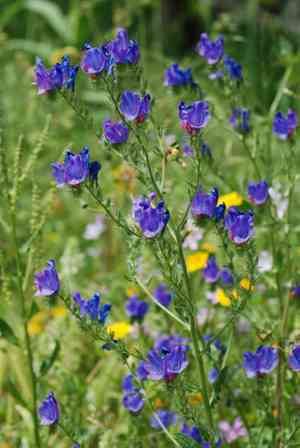
Purple viper's bugloss(Echium plantagineum)

Purple viper's bugloss (Echium plantagineum)

Also known as: Plantain-leaved bugloss

Purple viper's bugloss (Echium plantagineum) originates from the Mediterranean region, covering parts of Europe, Asia, and North Africa. It has also spread to Australia and the Americas, where it can be considered invasive. The plant's vibrant bluish-purple flowers are beneficial for bees, providing an essential early source of nectar. However, it poses a risk to livestock, especially horses, due to its toxic pyrrolizidine alkaloids, which can cause severe liver damage if consumed in significant amounts.

Attributes of Purple viper's bugloss

Lifespan
Annual, Biennial, Perennial
Plant Type
Herb
Plant Height
20 cm to 60 cm
Spread
40 cm to 50 cm
Leaf Color
Green
Flower Size
5 cm to 15 cm
Flower Color
Pink Blue Purple White

ForwardPlant - Identify plants with a snap

Identify and diagnose plants, get toxicity alerts, and explore safety guides for all types of fungi.

Try for Free

Images of Purple viper's bugloss

Purple viper's bugloss(Echium plantagineum)

Quickly Identify Purple viper's bugloss

1
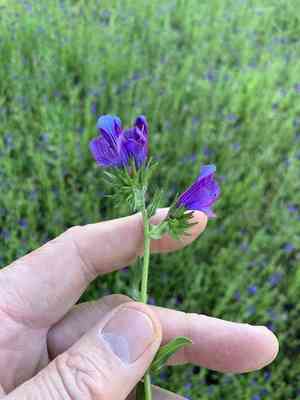
Trumpet-shaped purple flowers with red stamens, 0.8-1.2 inches (2-3 cm) in diameter.
2
Bristly texture due to stiff hairs covering stems and leaves.
3
Oval-shaped fruit nutlets, gray to black with fine wrinkles and pitting.
4
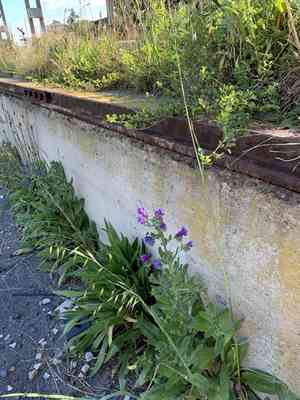
Basal rosette leaves without stems, up to 4 inches (10 cm) long.
5
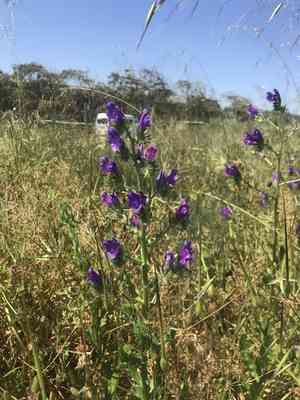
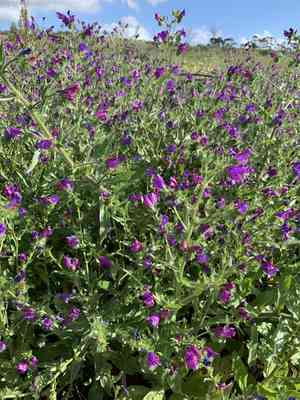
Single or multiple erect stems with stiff, bristly hairs, up to 3 feet (90 cm) tall.

Scientific Classification of Purple viper's bugloss

Phylum
Vascular plants
Class
Dicotyledons
Order
Boraginales
Family
Borage
Genus
Viper's-buglosses
Species
Purple viper's bugloss

Planting and Growing of Purple viper's bugloss

Care Difficulty
Easy
Watering Schedule
Every 4 days
Sunlight Requirements
Full sun
Sunshine Duration
4-8 hours
Ideal Temperature
60-75℉
Soil Type
Potting Mix, Peat Mix
Soil pH
6.5-7.5
Fertilizer Type
Balanced
Pruning Season
Spring, Summer
Pruning Area
Branches, Leaves
Pruning Frequency
2 times a year
Repotting Season
Spring
Pot Type
Plastic, Ceramic

water icon How to Water Purple viper's bugloss?

For Echium plantagineum, aim to water enough to keep the soil slightly moist. This typically means about 250 ml per session, ensuring the soil doesn't dry out completely but is not waterlogged either.
What are the symptoms of an underwatered Purple viper's bugloss?
What should I do if my Purple viper's bugloss is not getting enough water?
What are the symptoms of an overwatered Purple viper's bugloss?
How to save an overwatered Purple viper's bugloss?
More About Watering Techniques

sunlight icon What Are the Sunlight Requirements for Purple viper's bugloss?

Sunlight Requirements: Full sun, Partial sun
Duration of light: 6 to 8 hours daily
Echium plantagineum thrives best with full sun to partial sun, ideally within the range of 6 to 8 hours of direct sunlight. This lighting ensures robust growth, healthy blooms, and stronger plant structure.
What are the ideal lighting conditions for Echium plantagineum?
What solutions can be implemented to achieve ideal lighting?
What are the benefits of achieving ideal lighting conditions?
More About Sunlight Requirements Techniques

temperature icon What Is the Ideal Temperature Range for Purple viper's bugloss?

Ideal Temperature: 60 ~ 75℉
Echium plantagineum thrives best in temperatures ranging from 60°F to 75°F. This range ensures adequate metabolic activities and minimizes stress, thus supporting healthy growth and flowering.

soil icon What Soil is Best for Purple viper's bugloss?

Soil type: Sandy soil, Loam, Sandy loam
Soil PH: 6.5 ~ 7.5
Echium plantagineum thrives in nutrient-rich soils that supply all essential minerals for optimal growth, promoting vibrant blooms and robust plant health. This plant requires well-drained soils to prevent root rot. Sufficient drainage ensures that the roots get enough oxygen and remain healthy. The soil should have moderate moisture retention to ensure the plant gets enough water without excessive dampness, balancing hydration with aeration. More About Soil

fertilize icon How to Fertilize Purple viper's bugloss?

Fertilizer type: Balanced
For Echium plantagineum, a balanced and diluted fertilizer is best. Use a liquid fertilizer at half the recommended dose every two weeks during the growing season. Avoid over-fertilizing as this can lead to excessive leaf growth and reduced flowering. More About Fertilizing Techniques

prune icon How to Prune Purple viper's bugloss?

Pruning Time: Spring, Summer
Regularly remove spent flowers by cutting just above the next set of leaves to promote more blooms and a tidier appearance. This process, known as deadheading, also prevents self-seeding, which can lead to invasiveness. Once the flowering period ends, consider cutting back the plant to about half its size. This encourages fresh basal growth and helps maintain a compact structure, preventing the plant from becoming too leggy. For Echium plantagineum, avoid drastic pruning which might shock the plant. Focus instead on trimming lightly and shaping it gently to encourage natural growth patterns while still maintaining health. More About Pruning Techniques

propagate icon How to Propagate Purple viper's bugloss plant?

Propagate Time: Late spring, Early summer
1
Fill the seed trays with potting soil, ensuring it's evenly spread and lightly compacted. This creates a smooth surface for sowing your seeds, which is important for consistent germination.
2
Distribute the seeds evenly over the soil surface, covering them lightly with a thin layer of soil. Be cautious to avoid sowing seeds too deep, as this can hinder germination.
3
Mist the soil lightly to moisten it without causing saturation. Place the trays in a location where they can receive indirect sunlight, which supports seedling health and prevents drying out.
More About Propagating Techniques

repot icon How to Repot Purple viper's bugloss plant?

Repotting frequency: Every 1-2 years
1
Echium plantagineum shows signs it needs repotting when roots begin to protrude from the drainage holes, or if the plant's growth has slowed noticeably. Ideally, repot in spring or early autumn when the plant is not flowering, which allows it to establish roots in its new environment effectively.
2
Select a pot that is 1-2 inches larger in diameter than the current one. A pot with good drainage is essential to prevent waterlogging which Echium dislikes. Choose clay pots for better aeration and to maintain a balanced moisture level, thus promoting healthy root growth.
3
Opt for a well-draining, sandy soil mix that mimics the natural growing conditions of Echium plantagineum. This soil type ensures excess water drains quickly, reducing the risk of root rot and providing the plant with the healthy aeration it requires.

ForwardPlant - Identify plants with a snap

Find the best spots for them to optimize their health, simply using your phone.

Try for Free

Toxicity of Purple viper's bugloss

Is Purple viper's bugloss toxic to humans?

The purple viper's bugloss exhibits a low degree of toxicity in humans, mainly through consumption. Every part of the plant possesses toxic characteristics, notably including pyrrolizidine alkaloids and a notably high copper to molybdenum ratio. If consumed, these components may induce a variety of symptoms. Affected individuals could suffer from gastrointestinal issues such as nausea, vomiting, and diarrhea. Furthermore, the liver may also be impacted, leading to potential hepatic complications linked to the alkaloids present in the plant. While symptoms can vary in intensity, they generally correspond to the plant's mild toxicity rating. Therefore, it is crucial for people to steer clear of unintentional consumption of purple viper's bugloss to avert these negative health consequences.

Identify toxic plants for your safety

Learn which plants are harmful to you and your pets, and make informed choices for a safer home!

Try for Free
WARNING
The judgment on toxicity and danger is for reference only. We DO NOT GUARANTEE any accuracy of such judgment. Therefore, you SHALL NOT rely on such judgment. It is IMPORTANT TO SEEK PROFESSIONAL ADVICE in advance when necessary.
More About Toxic Techniques