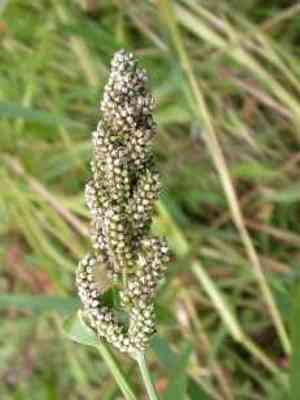
Japanese millet (Echinochloa esculenta)
Also known as: Japanese millet, barnyard millet
Japanese barnyard millet has traditionally been cultivated in regions where the land is unsuitable or the climate too cool for paddy rice. However, the advent of rice varieties that can tolerate colder climates has significantly reduced the cultivation of barnyard millet, as many farmers have switched to growing rice instead. Additionally, while barnyard millet has a long history, dating back to the Jōmon period around 2000 BC, its role in modern agriculture has diminished due to these advancements and changing agricultural practices.
In This Article
Attributes of Japanese millet
Lifespan
Annual
Plant Type
Grass
Plant Height
1 to 1.5 meters
Spread
N/A
Leaf Color
Green
Flower Size
Small, not typically measured
Flower Color
Greenish to purplish
Images of Japanese millet

Quickly Identify Japanese millet
1
This plant can be identified by its robust, upright stems and broad, flat leaves. The inflorescence is a loose, open panicle with spikelets borne on short branches.
Scientific Classification of Japanese millet
Phylum
Vascular plants
Class
Monocotyledons
Order
Poales
Family
Grass
Genus
Echinochloa
Species
Japanese millet
Planting and Growing of Japanese millet
Care Difficulty
Easy
Watering Schedule
Every 8 days
Sunlight Requirements
Full sun
Sunshine Duration
6-10 hours
Ideal Temperature
68-77℉
Soil Type
Potting Mix, Peat Mix
Soil pH
6.5-7.5
Fertilizer Type
Balanced
Pruning Season
Spring, Summer
Pruning Area
Branches, Leaves
Pruning Frequency
2 times a year
Repotting Season
Spring
Pot Type
Plastic, Ceramic
 How to Water Japanese millet?
For Echinochloa esculenta, you should water it until the soil is moist but not waterlogged. Ideally, the water should seep about an inch into the soil, ensuring that it reaches the plant's roots effectively without causing puddles. This helps maintain the necessary moisture level for optimal growth.
What are the symptoms of an underwatered Japanese millet?
›
What should I do if my Japanese millet is not getting enough water?
›
What are the symptoms of an overwatered Japanese millet?
›
How to save an overwatered Japanese millet?
›
 What Are the Sunlight Requirements for Japanese millet?
Echinochloa esculenta's optimal light condition is full sun. This ensures maximum photosynthetic activity, robust growth, and higher yield production, benefiting agricultural purposes and nutritional properties.
What kind of sunlight does Echinochloa esculenta prefer?
›
How can I ensure Echinochloa esculenta gets sufficient light?
›
What are the benefits of ideal lighting conditions for Echinochloa esculenta?
›
 What Is the Ideal Temperature Range for Japanese millet?
The ideal temperature range for Echinochloa esculenta growth is between 68°F and 77°F. This range provides optimal conditions for photosynthesis and growth, allowing the plant to efficiently metabolize nutrients and maintain healthy vigor. Maintaining this temperature range ensures the plant avoids stress from excessive heat or cold, which could hinder its development.
 What Soil is Best for Japanese millet?
This plant thrives in soils with good drainage to prevent waterlogging, which can lead to root rot. Ensuring that the soil drains well allows the roots to access necessary oxygen and nutrients, promoting healthy growth. Echinochloa esculenta requires a soil rich in nutrients for optimal growth. This ensures the plant has enough resources to support robust stem and leaf development, ultimately leading to a better yield. A slightly acidic to neutral soil pH, ranging between 6.5 and 7.5, is ideal for Echinochloa esculenta. This pH range maintains nutrient availability, particularly for nitrogen, phosphorus, and potassium uptake, crucial for plant health.
 How to Fertilize Japanese millet?
For Echinochloa esculenta, apply 0.5 to 1 kg of nitrogen-rich fertilizer per hectare during the active growth phase. Ensure the amount is evenly distributed to avoid nutrient imbalances that can impede growth.
 How to Prune Japanese millet?
Begin by removing any browned or unhealthy-looking leaves. Follow up with trimming back overgrown or lanky stems to maintain a tidy appearance. Ensure you cut at a 45-degree angle to promote hair growth. Beyond health, shaping your Echinochloa esculenta can enhance its decorative appeal. Aim for a balanced silhouette, making even cuts around the plant to promote symmetry and prevent uneven growth.
More About Pruning Techniques→
 How to Propagate Japanese millet plant?
1
Fill the seed tray with potting mix, leaving some space at the top. Ensure the mix is evenly spread and lightly packed to provide a stable base for the seeds. Moisten the soil evenly without over-saturating.
2
Evenly scatter Echinochloa esculenta seeds over the surface of the prepared tray. Try to distribute the seeds without overcrowding to minimize competition for resources as they germinate. Gently press the seeds into the surface or cover with a thin layer of soil.
3
Cover the seed tray with a plastic dome to trap humidity and warmth, enhancing the germination environment. Place the tray in a warm, sunny location or under a grow light. Monitor and maintain consistent moisture without waterlogging.
 How to Repot Japanese millet plant?
1
Echinochloa esculenta should be repotted when you notice roots growing out of the drainage holes, indicating a lack of space inside the pot. Another signal is slowed growth, suggesting that the plant's current environmental conditions are hindering its nourishment. Early spring or autumn are ideal times for repotting due to moderate temperatures and conducive growth conditions.
2
When selecting a pot, ensure it is one to two inches larger in diameter than the current one. This gives the plant additional space to grow without overwhelming its root system. A pot with adequate drainage holes is crucial to prevent waterlogging, which can cause root rot and negatively impact plant health.
3
Use a loamy, well-draining soil mix that allows air to circulate and water to pass through efficiently. This type of soil will prevent the roots from becoming waterlogged while providing balanced nutrients. The lightweight nature of loamy soil also assists in root aeration, promoting healthier root development and overall plant vigor.



