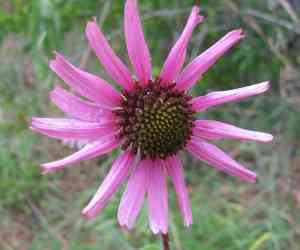
Tennessee purple coneflower (Echinacea tennesseensis)
Also known as: Tennessee coneflower
Echinacea tennesseensis, commonly referred to as the Tennessee purple coneflower, is a flowering plant native to the cedar glades of central Tennessee, USA. Although it was once considered endangered, conservation efforts have mitigated many threats. However, it remains a rare species.
In This Article
Attributes of Tennessee purple coneflower
Lifespan
Perennial
Plant Type
Herb
Plant Height
61 cm to 91 cm
Spread
30 cm to 45 cm
Leaf Color
Green
Flower Size
2.5 cm to 8 cm
Flower Color
Pink Purple
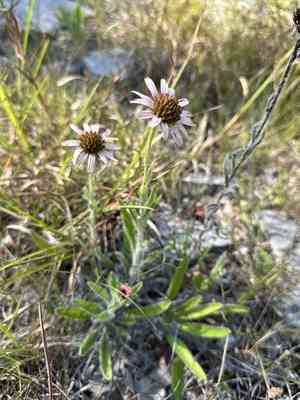
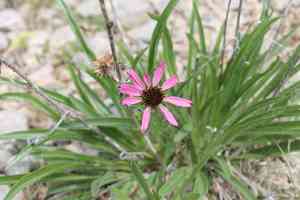
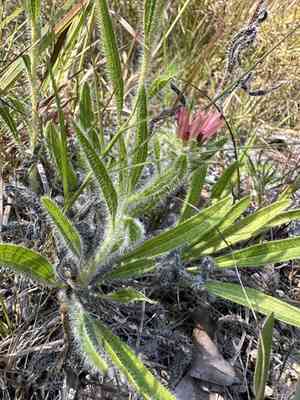
Images of Tennessee purple coneflower
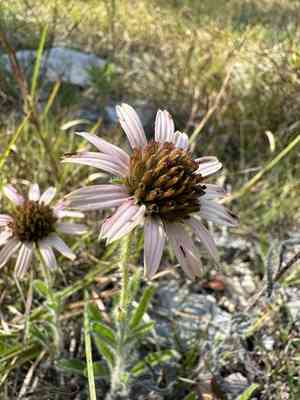
Quickly Identify Tennessee purple coneflower
1
Spiky orange disk flowers surrounded by bright purple ray florets create a distinct daisy-like appearance.
2
Basal rosette of lanceolate, dark green leaves with rough texture and sparse stem leaves for easy identification.
3
Erect stems up to 2 feet (60 cm) tall topped with vivid purple flowers emitting a subtle fragrance.
4
Dry, elongated achenes encased in persistent calyx with rough texture, transitioning from brown to tan.
5
Yellow-green fuzzy stems, slender with sparse branching, averaging 0.2-0.4 inches (5-10 mm) in thickness.
Scientific Classification of Tennessee purple coneflower
Phylum
Vascular plants
Class
Dicotyledons
Order
Asterales
Family
Daisy
Genus
Coneflowers
Species
Tennessee purple coneflower
Planting and Growing of Tennessee purple coneflower
Care Difficulty
Easy
Watering Schedule
Every 4 days
Sunlight Requirements
Full sun
Sunshine Duration
6-10 hours
Ideal Temperature
65-75℉
Soil Type
Potting Mix, Peat Mix
Soil pH
6.5-7.5
Fertilizer Type
Balanced
Pruning Season
Spring, Summer
Pruning Area
Branches, Leaves
Pruning Frequency
2 times a year
Repotting Season
Spring
Pot Type
Plastic, Ceramic
 How to Water Tennessee purple coneflower?
Echinacea tennesseensis thrives on a moderate watering schedule. Water deeply until the soil is moist, ensuring that excess water drains out to prevent waterlogging. This plant benefits from thorough watering, allowing it to access moisture down to its roots.
What are the symptoms of an underwatered Tennessee purple coneflower?
›
What should I do if my Tennessee purple coneflower is not getting enough water?
›
What are the symptoms of an overwatered Tennessee purple coneflower?
›
How to save an overwatered Tennessee purple coneflower?
›
 What Are the Sunlight Requirements for Tennessee purple coneflower?
Echinacea tennesseensis flourishes under full sun. Ideal light promotes rapid growth, sturdy stems, and abundant, vibrant blooms, maximizing the plant's decorative value.
More About Sunlight Requirements Techniques→
What is the ideal lighting condition for Echinacea tennesseensis?
›
How can I ensure Echinacea tennesseensis receives ideal lighting?
›
What are the benefits of optimal lighting for Echinacea tennesseensis?
›
 What Is the Ideal Temperature Range for Tennessee purple coneflower?
The ideal temperature range for Echinacea tennesseensis cultivation is between 65°F and 75°F. This range provides optimal conditions for growth, ensuring the plant can photosynthesize effectively and maintain metabolic functions necessary for healthy development.
 What Soil is Best for Tennessee purple coneflower?
Echinacea tennesseensis thrives in well-draining soil, which prevents root rot by allowing excess water to escape quickly. This condition is essential to maintain the plant's health and vigor, as it ensures the roots remain oxygenated and free from decay. To support growth, Echinacea tennesseensis needs moderately fertile soil containing essential nutrients for development. This type of soil encourages robust flowering, providing the plant with the necessary resources for thriving throughout the growing season. Echinacea tennesseensis prefers soil with a slightly acidic to neutral pH range of 6.5 to 7.5. This pH range optimizes nutrient availability, allowing the plant to absorb crucial minerals effectively for sustained growth and resilience.
 How to Fertilize Tennessee purple coneflower?
For Echinacea tennesseensis, the ideal fertilizer amount depends on the plant's size and the soil's fertility. Generally, a balanced 10-10-10 liquid fertilizer can be applied at a dilution rate of one tablespoon per gallon of water. This ensures the plant receives ample nutrients without the risk of root burn. For slow-release fertilizers, a half-cup per plant every four months is sufficient to support sustained growth.
 How to Prune Tennessee purple coneflower?
Remove faded blooms throughout the blooming season. Deadheading prevents seed formation, which redirects the plant's energy towards developing stronger stems and roots, aiding in prolonged flowering periods. Once the flowering season is over, trim the plant back by about one-third to maintain its shape and encourage bushier growth the following year. This also helps keep the garden tidy and reduces the risk of diseases.
More About Pruning Techniques→
 How to Propagate Tennessee purple coneflower plant?
1
Ensure well-drained soil that is rich in organic matter. A mixture of peat and sand can often provide the necessary drainage while retaining adequate moisture.
2
Select non-flowering stems and make a clean cut just below a node. Trim the leaves from the lower half to reduce moisture loss.
3
Carefully dig around the plant to expose roots. Divide the root clump into sections with at least two or three buds per section to ensure successful growth.
 How to Repot Tennessee purple coneflower plant?
1
Look for signs like roots protruding from drainage holes or a noticeable slowdown in growth. Also, if the soil dries out quickly after watering, it might be time to repot. Such indications suggest the plant needs more space to thrive and avoid root-bound stagnation.
2
Choose a pot that is one size larger than the current one. Ensure it has drainage holes to prevent root rot caused by excess moisture. A slightly bigger pot provides enough space for root development without encouraging overwatering issues.
3
Opt for well-drained, sandy soil to mimic Echinacea tennesseensis’s natural conditions. This type of soil ensures good drainage and aeration, preventing waterlogged conditions that can harm the roots of this drought-tolerant plant.
Learn More About Tennessee purple coneflower Diseases
Anthracnose
Bacterial Leaf Spot
Bacterial Soft Rot
Bacterial Wilt
Crown Gall
Cyst Nematode
Damping-off
Downy Mildew
Drought Stress
Fusarium Wilt
Gray Mold
Leaf Spot
Mosaic
Nutrient Deficiency
Nutrient Toxicity
Powdery Mildew
Root Rot
Root-knot Nematode
Rusts
Sooty Mold
Spider Mites
Temperature Stress
Thrips Damage
White Mold



