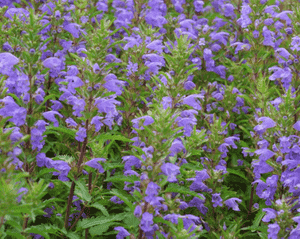
Moldavian dragon-head (Dracocephalum moldavica)
Also known as: Moldavian balm, Moldavian dragonhead
The plant you're referring to is Mountain Mint (Pycnanthemum spp.). This herbaceous perennial thrives in elevated, rocky regions. It is notably aromatic, attracts pollinators with its abundant nectar, and has mint-flavored leaves and stems that are commonly used for making tea and seasoning.
In This Article
Attributes of Moldavian dragon-head
Lifespan
Annual, Perennial
Plant Type
Herb
Plant Height
6 cm to 40 cm
Spread
30 cm
Leaf Color
Green
Flower Size
1-2 cm
Flower Color
White Blue Pink Purple Lavender
Images of Moldavian dragon-head
Quickly Identify Moldavian dragon-head
1
Identifying Dracocephalum moldavica involves noting its square stems, lemon-scented leaves, and the bright blue to purple flowers arranged in whorls. The leaves are typically opposite, ovate, and serrated.
Scientific Classification of Moldavian dragon-head
Phylum
Vascular plants
Class
Dicotyledons
Order
Lamiales
Family
Mint
Genus
Dracocephalum
Species
Moldavian dragon-head
Planting and Growing of Moldavian dragon-head
Care Difficulty
Easy
Watering Schedule
Every 2 days
Sunlight Requirements
Full sun
Sunshine Duration
6-10 hours
Ideal Temperature
64-75℉
Soil Type
Potting Mix, Peat Mix
Soil pH
6-7.5
Fertilizer Type
Balanced
Pruning Season
Spring, Summer
Pruning Area
Branches, Leaves
Pruning Frequency
2 times a year
Repotting Season
Spring
Pot Type
Plastic, Ceramic
 How to Water Moldavian dragon-head?
Dracocephalum moldavica prefers a moderate watering regimen. It’s essential to ensure the soil is kept moist but not waterlogged. Typically, about 500 ml of water per session is sufficient. The goal is to hydrate the soil until it's evenly moist to a depth of several inches, allowing the roots to access the water effectively.
What are the symptoms of an underwatered Moldavian dragon-head?
›
What should I do if my Moldavian dragon-head is not getting enough water?
›
What are the symptoms of an overwatered Moldavian dragon-head?
›
How to save an overwatered Moldavian dragon-head?
›
 What Are the Sunlight Requirements for Moldavian dragon-head?
Full sun to partial sun conditions are optimal for Dracocephalum moldavica. Adequate sunlight ensures active photosynthesis, vibrant blooms, and a robust structure, supporting overall plant health and aesthetic appeal.
More About Sunlight Requirements Techniques→
Optimal Sun Exposure
›
Maximizing Light in Limited Sun
›
Sun Acclimation Technique
›
 What Is the Ideal Temperature Range for Moldavian dragon-head?
Dracocephalum moldavica thrives best in an ideal temperature range of 64 to 75 degrees Fahrenheit. This temperature range is conducive to its metabolism, allowing efficient nutrient uptake and optimal photosynthesis rates, thereby promoting healthy growth and development.
 What Soil is Best for Moldavian dragon-head?
Dracocephalum moldavica thrives in well-drained soil which prevents waterlogging and root rot. Ensuring good drainage enables the roots to access oxygen, promoting healthy growth and preventing diseases. A soil pH of 6.0 to 7.5 is ideal for Dracocephalum moldavica. Maintaining appropriate pH levels allows optimized nutrient absorption, enhancing the plant's vitality and blooming capacity. This plant benefits from a nutrient-rich substrate, which provides essential minerals and nutrients necessary for robust growth and vibrant foliage, supporting its overall health and flowering potential.
 How to Fertilize Moldavian dragon-head?
Dracocephalum moldavica, commonly known as the Moldavian dragonhead, requires moderate amounts of fertilizer. During the growing season, apply a balanced liquid fertilizer at half the recommended strength every two weeks to promote strong growth without burning the roots.
 How to Prune Moldavian dragon-head?
Begin by inspecting your Dracocephalum moldavica for any dead or damaged stems. Use a clean pair of garden shears to remove these stems first. Focus on achieving an open-centered shape by trimming any crowded branches to increase air circulation, which helps prevent mold and mildew. To encourage bushier growth in Dracocephalum moldavica, make cuts above the nodes as this stimulates the dormant buds to sprout more leaves and branches. This technique is especially useful in spring when the plant is putting on new growth.
More About Pruning Techniques→
 How to Propagate Moldavian dragon-head plant?
1
Fill the seed tray with potting soil, ensuring it is evenly spread and slightly compacted. The level should allow enough space for watering without overflowing.
2
Dracocephalum moldavica seeds should be sown thinly over the surface of the soil. Cover them with a fine layer of soil, just enough to keep them in place. Lightly press the soil to ensure good contact.
3
After planting, water the seeds gently to avoid displacing them. Use a mist sprayer for even distribution. Cover the tray with a plastic dome to maintain humidity.
 How to Repot Moldavian dragon-head plant?
1
Repot Dracocephalum moldavica when you notice roots starting to emerge from the drainage holes or the growth seems stunted. These are signs the plant has outgrown its current pot and needs more space for a healthier development. Typically, this will occur in spring or early summer when the plant is actively growing.
2
Select a pot that is only slightly larger than the current one, providing about 2-3 inches of extra space. This prevents excess moisture retention and potential root rot. Look for pots with multiple drainage holes to ensure adequate water flow and prevent water logging, maintaining an optimal growing environment for your plant.
3
Opt for a well-draining potting mix to encourage healthy root growth. This type of soil will allow excess water to escape freely, preventing the roots from sitting in moisture and reducing the risk of root diseases. Including materials like perlite or sand can improve drainage further while providing essential aeration to the root system.
Learn More About Moldavian dragon-head Diseases
Anthracnose
Bacterial Leaf Spot
Bacterial Soft Rot
Bacterial Wilt
Damping-off
Downy Mildew
Drought Stress
Fusarium Wilt
Gray Mold
Leaf Spot
Mosaic
Nutrient Deficiency
Nutrient Toxicity
Powdery Mildew
Root Rot
Root-knot Nematode
Rusts
Sooty Mold
Spider Mites
Temperature Stress
Thrips Damage
White Mold



