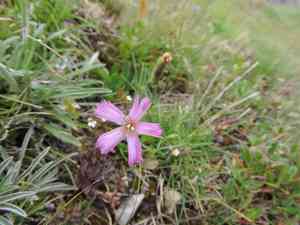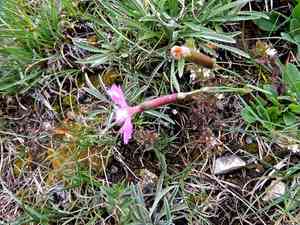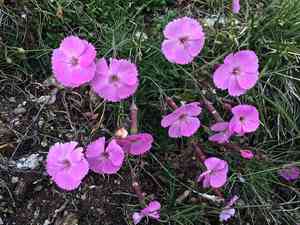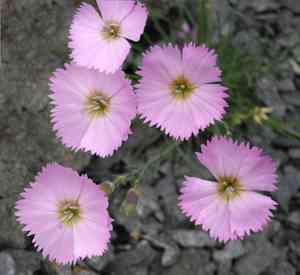
Wood pink(Dianthus sylvestris)

Wood pink (Dianthus sylvestris)

Also known as: Wild Pink, Wild Carnation

The stone carnation, specifically Echeveria, is a perennial succulent known for its distinctive rosette formation. Here are its key features:

1. **Growth Form**: Echeverias are low-growing plants, typically achieving heights of 10 to 30 centimeters.
2. **Leaf Structure**: The leaves are thick, fleshy, and spoon-shaped, usually dark green to blue-gray, sometimes with red or pink highlights.
3. **Stems**: These plants have either simple or slightly branched stems that are generally bare.
4. **Flowers**: They produce striking bell-shaped flowers that can range from red to reddish-violet, appearing on tall stalks.
5. **Foliage**: The leaves can grow between 5 to 10 centimeters in length, forming a dense, attractive mat.
6. **Habitat**: Ideal for rock gardens, indoor pots, and succulent arrangements due to their ability to store water and survive drought conditions.

These characteristics make Echeveria a popular choice for both ornamental and practical gardening purposes.

Attributes of Wood pink

Lifespan
Perennial
Plant Type
Herb
Plant Height
10 cm to 15 cm
Spread
25 cm
Leaf Color
Green Gray Silver
Flower Size
1.5 cm to 2.5 cm
Flower Color
Yellow Pink Purple Orange

ForwardPlant - Identify plants with a snap

Identify and diagnose plants, get toxicity alerts, and explore safety guides for all types of fungi.

Try for Free

Images of Wood pink

Wood pink(Dianthus sylvestris)

Quickly Identify Wood pink

1
Dianthus sylvestris can be identified by its narrow, gray-green leaves and its small, fragrant pink flowers with fringed edges. The flowers typically bloom from late spring to summer and are often seen in clusters.

Scientific Classification of Wood pink

Phylum
Vascular plants
Class
Dicotyledons
Order
Caryophyllales
Family
Pink
Genus
Dianthus
Species
Wood pink

Planting and Growing of Wood pink

Care Difficulty
Easy
Watering Schedule
Every 2 days
Sunlight Requirements
Full sun
Sunshine Duration
6-10 hours
Ideal Temperature
60-75℉
Soil Type
Potting Mix, Peat Mix
Soil pH
6-8
Fertilizer Type
Balanced
Pruning Season
Spring, Summer
Pruning Area
Branches, Leaves
Pruning Frequency
2 times a year
Repotting Season
Spring
Pot Type
Plastic, Ceramic

water icon How to Water Wood pink?

When watering Dianthus sylvestris, aim to provide around 150 milliliters per session. The roots should receive enough moisture without pooling water, which ensures that they have adequate access while preventing root rot. It’s crucial to allow the top layer of soil to dry out between sessions to mimic its natural preference for drier conditions.
What are the symptoms of an underwatered Wood pink?
What should I do if my Wood pink is not getting enough water?
What are the symptoms of an overwatered Wood pink?
How to save an overwatered Wood pink?

sunlight icon What Are the Sunlight Requirements for Wood pink?

Sunlight Requirements: Full sun, Partial sun
Duration of light: 4-6 hours daily
Dianthus sylvestris thrives best in full to partial sun, ideally 4-6 hours. Adequate light promotes healthy blooms and vigorous growth, ensuring robust flowering and rich foliage.
What is the best lighting condition for Dianthus sylvestris?
How can I ensure Dianthus sylvestris gets ideal lighting?
What benefits does Dianthus sylvestris receive from ideal lighting?
More About Sunlight Requirements Techniques

temperature icon What Is the Ideal Temperature Range for Wood pink?

Ideal Temperature: 60 ~ 75℉
The ideal temperature range for Dianthus sylvestris is between 60°F and 75°F. This ensures optimal growth, as it provides a comfortable environment that closely resembles their natural conditions. Maintaining these temperatures promotes healthy foliage and vibrant blooms.

soil icon What Soil is Best for Wood pink?

Soil type: Sandy soil, Loam, Calcareous soil
Soil PH: 6 ~ 8
Dianthus sylvestris thrives in well-draining soil that prevents waterlogging, ensuring the roots remain healthy as stagnant water can lead to root rot, which severely impacts plant growth. This plant prefers soil with moderate fertility. Excessive nutrients, especially nitrogen, can promote lush foliage at the expense of flowering, reducing its ornamental appeal. A soil pH close to neutral or slightly alkaline helps Dianthus sylvestris absorb nutrients effectively, promoting vibrant blooms and healthy growth by optimizing nutrient uptake.

fertilize icon How to Fertilize Wood pink?

Fertilizer type: Balanced
Dianthus sylvestris requires a balanced application of fertilizers. Use a diluted liquid fertilizer solution at a quarter strength, roughly 10 ml per liter of water. This allows the plant to absorb nutrients without overwhelming its delicate root system.

prune icon How to Prune Wood pink?

Pruning Time: Spring, Summer
Begin by identifying any old or faded blooms on your Dianthus sylvestris. These are usually the first parts to remove and cutting them off encourages the plant to focus its energy on producing new flowers. Using sharp, clean scissors, trim back any overgrown or leggy stems. Aim to maintain a pleasing, rounded shape. This not only keeps the plant visually appealing but also promotes bushier growth. Inspect the plant for any dead or yellowing leaves, which can be a drain on the plant's resources. Carefully pinch or cut these off at the base, allowing for better air circulation within the plant. More About Pruning Techniques

propagate icon How to Propagate Wood pink plant?

Propagate Time: Spring, Early summer
1
Choose mature seeds from healthy plants for propagation. For cuttings, select non-flowering stem sections around 10 cm long with several leaf nodes for rooting.
2
Use a well-draining potting mix or perlite-sand mixture to plant seeds or insert cuttings. Ensure the medium retains enough moisture without becoming waterlogged to promote root health.
3
Water lightly to keep the medium consistently moist. Avoid overwatering as it can lead to rot in both seeds and cuttings, hindering successful propagation.
More About Propagating Techniques

repot icon How to Repot Wood pink plant?

Repotting frequency: Every 2-3 years
1
Repot Dianthus sylvestris when you notice it becoming root-bound. This often manifests as roots growing out of the drainage holes or the plant beginning to wilt despite regular watering. In some cases, you might see stunted growth, a clear indication it's time for a new pot.
2
Choose a pot that's roughly 2 inches larger in diameter than the current one and has good drainage holes. The increased size will give roots space to expand, while proper drainage prevents waterlogging, keeping the plant's roots healthy and promoting vigorous growth.
3
Opt for a well-draining sandy loam mix, which balances water retention and drainage perfectly. Using this type of soil ensures the roots receive ample moisture without the risk of being waterlogged, significantly reducing the chances of root rot and promoting healthy root growth.

ForwardPlant - Identify plants with a snap

Find the best spots for them to optimize their health, simply using your phone.

Try for Free