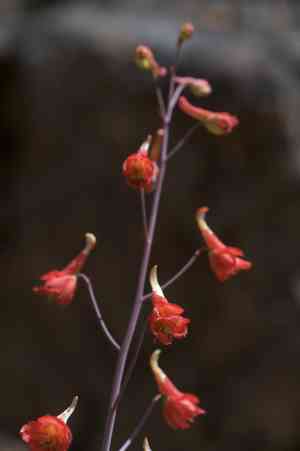
Red larkspur (Delphinium nudicaule)
Also known as: Orange larkspur
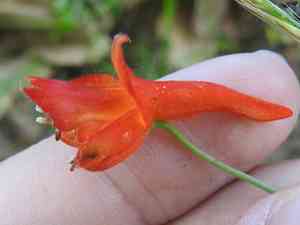
Hummingbirds are the main pollinators of Delphinium nudicaule, drawn to its vivid orange-red flowers. Notably, similar to other plants in the buttercup family, every part of this perennial is poisonous.
In This Article
Attributes of Red larkspur
Lifespan
Perennial, Annual
Plant Type
Herb
Plant Height
30 cm to 1.2 m
Spread
30 cm
Leaf Color
Green
Flower Size
2 cm to 5 cm
Flower Color
Pink Red Orange
Images of Red larkspur
Quickly Identify Red larkspur
1
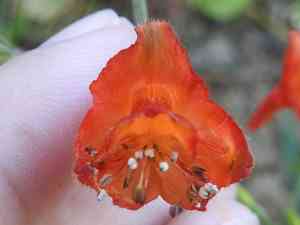
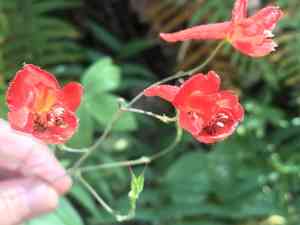
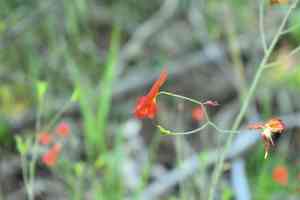
Identification of Delphinium nudicaule can be made by noting its bright red to orange tubular flowers, its fern-like leaves that are divided into narrow segments, and its tall, slender stems.
Scientific Classification of Red larkspur
Phylum
Vascular plants
Class
Dicotyledons
Order
Ranunculales
Family
Buttercup
Genus
Larkspurs
Species
Red larkspur
Planting and Growing of Red larkspur
Care Difficulty
Hard
Watering Schedule
Every 4 days
Sunlight Requirements
Full sun
Sunshine Duration
4-6 hours
Ideal Temperature
55-75℉
Soil Type
Potting Mix, Peat Mix
Soil pH
6.5-7.5
Fertilizer Type
Balanced
Pruning Season
Spring, Summer
Pruning Area
Branches, Leaves
Pruning Frequency
2 times a year
Repotting Season
Spring
Pot Type
Ceramic, Plastic
 How to Water Red larkspur?
For Delphinium nudicaule, the watering amount is best measured by ensuring the soil is consistently moist but not waterlogged. Ideally, provide about 250 ml of water per session, which allows the soil to absorb moisture effectively without oversaturation.
What are the symptoms of an underwatered Red larkspur?
›
What should I do if my Red larkspur is not getting enough water?
›
What are the symptoms of an overwatered Red larkspur?
›
How to save an overwatered Red larkspur?
›
 What Are the Sunlight Requirements for Red larkspur?
Delphinium nudicaule benefits from full sun to partial sun, as optimal light exposure ensures full growth potential, improved flower output, and vibrancy in blooms.
More About Sunlight Requirements Techniques→
What is the optimal light condition?
›
How to achieve ideal light exposure?
›
What happens under ideal lighting?
›
 What Is the Ideal Temperature Range for Red larkspur?
Delphinium nudicaule thrives best in temperatures between 55°F and 75°F. This range ensures optimal photosynthesis and growth, allowing the plant to maintain healthy foliage and produce vibrant flowers.
 What Soil is Best for Red larkspur?
Delphinium nudicaule thrives in well-draining soil that prevents waterlogging, ensuring roots remain oxygenated and healthy. Adequate drainage reduces root rot risks and enhances nutrient uptake. This plant favors soil rich in organic matter, providing essential nutrients that support vigorous growth and vibrant blooms. Compost or aged manure can enhance soil fertility, benefitting the plant's overall health. A pH level between 6.5 and 7.5 ensures optimal nutrient absorption for Delphinium nudicaule. Maintaining this pH range helps prevent nutrient lock-up, promoting lush leaf and flower development.
 How to Fertilize Red larkspur?
Delphinium nudicaule, commonly known as the red larkspur, requires a balanced fertilizer with an N-P-K ratio of 10-10-10. Apply approximately 1/2 teaspoon per gallon of water for liquid fertilizers. When using slow-release granules, a single application of about 1 tablespoon per plant is adequate for the entire growing season.
 How to Prune Red larkspur?
Make sure to use sharp, clean pruning shears to ensure smooth cuts. Dull blades can damage the plant, and dirty tools can introduce diseases. It's crucial to disinfect your tools before you start pruning. Carefully inspect Delphinium nudicaule for any dead or damaged stems. These can invite pests or disease and hinder the plant's growth. Trim back these parts to healthy wood where possible. Remove spent blooms regularly to encourage a second flush of flowers. Deadheading prevents the plant from putting energy into producing seeds and instead directs resources towards new growth and blossoms.
More About Pruning Techniques→
 How to Propagate Red larkspur plant?
1
Begin by soaking the seeds of Delphinium nudicaule in water for 24 hours prior to planting. This process helps in softening the seed coat, promoting faster germination.
2
Select healthy, non-flowering stems from the parent plant. With clean shears, cut 3-4 inch sections just below a node. Ensure each cutting has a pair of leaves.
3
Carefully dig up the parent plant and separate it into smaller sections, each with its own root system. Replant these divisions into well-prepared soil.
 How to Repot Red larkspur plant?
1
Delphinium nudicaule indicates it's time for repotting when its roots start protruding from the drainage holes or the soil becomes compacted. Spring is ideal, providing time for root adjustment before active growth periods.
2
Select a pot that is one size larger with good drainage. Opting for a light-colored pot helps keep the roots cool, crucial for this species. The right pot prevents waterlogging and ensures robust root development.
3
Choose a well-draining potting mix that combines peat, perlite, and coarse sand. This composition ensures proper aeration and drainage, preventing root rot and supporting vibrant growth.
Toxicity
Ingestion
WARNING
The judgment on toxicity and danger is for reference only. We DO NOT GUARANTEE any accuracy of such judgment. Therefore, you SHALL NOT rely on such judgment. It is IMPORTANT TO SEEK PROFESSIONAL ADVICE in advance when necessary.
Learn More About Red larkspur Diseases
Anthracnose
Bacterial Leaf Spot
Bacterial Soft Rot
Bacterial Wilt
Black Spot
Chemical Injury
Crown Gall
Cyst Nematode
Damping-off
Downy Mildew
Drought Stress
Fusarium Wilt
Gray Mold
Leaf Curl
Leaf Spot
Mosaic
Nutrient Deficiency
Nutrient Toxicity
Powdery Mildew
Root Rot
Root-knot Nematode
Rusts
Sooty Mold
Spider Mites
Temperature Stress
Thrips Damage
White Mold



