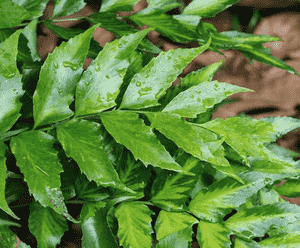
House holly fern (Cyrtomium falcatum)
Also known as: Japanese holly fern, Japanese holly, Fish Tail
The House Holly Fern (Cyrtomium falcatum), also known as the Japanese Holly Fern, is a well-liked indoor decorative plant. Its foliage resembles holly leaves rather than the typical fern fronds, giving it a unique appearance.
In This Article
Attributes of House holly fern
Lifespan
Perennial
Plant Type
Fern
Plant Height
30 cm to 40 cm
Spread
1 m
Leaf Color
Green
Flower Size
N/A (ferns do not flower)
Flower Color
N/A (ferns do not flower)
Images of House holly fern
Quickly Identify House holly fern
1
Pinnately compound fronds with oblong-ovate shape and curved appearance.
2
Distinct lack of lacy-like texture on fronds, suitable for various garden settings.
3
Short, angled rhizomes with dense covering of basal scales.
4
Dark green, coarse, leathery leaves growing up to 2 feet (60 cm) in length.
5
Slender, arching stem measuring up to 2 feet (60 cm) with consistent 0.2 inches (0.5 cm) thickness.
Scientific Classification of House holly fern
Phylum
Vascular plants
Class
Ferns
Order
Polypodiales
Family
Wood fern
Genus
Cyrtomium
Species
House holly fern
Planting and Growing of House holly fern
Care Difficulty
Easy
Watering Schedule
Every 3 days
Sunlight Requirements
Partial sun
Sunshine Duration
8-12 hours
Ideal Temperature
60-75℉
Soil Type
Potting Mix, Peat Mix
Soil pH
6.5-7.5
Fertilizer Type
Balanced
Pruning Season
Spring, Summer
Pruning Area
Branches, Leaves
Pruning Frequency
2 times a year
Repotting Season
Spring
Pot Type
Plastic, Ceramic
 How to Water House holly fern?
Cyrtomium falcatum prefers a moderate watering routine. It's important to ensure the soil is evenly moist but not waterlogged. Aim for around 250ml of water each time, enough to moisten the top inch of soil without creating pools at the bottom of the pot.
More About Watering Techniques→
What are the symptoms of an underwatered House holly fern?
›
What should I do if my House holly fern is not getting enough water?
›
What are the symptoms of an overwatered House holly fern?
›
How to save an overwatered House holly fern?
›
 What Are the Sunlight Requirements for House holly fern?
Cyrtomium falcatum thrives in partial sun and full shade conditions. Ideal lighting promotes vigorous growth and maintains the lush green appearance essential for a healthy plant.
More About Sunlight Requirements Techniques→
What is the ideal lighting condition for Cyrtomium falcatum?
›
How can you ensure ideal lighting for Cyrtomium falcatum?
›
What are the benefits of ideal lighting for Cyrtomium falcatum?
›
 What Is the Ideal Temperature Range for House holly fern?
Cyrtomium falcatum thrives best in environments where the temperature is consistently maintained between 60°F and 75°F. This range provides the perfect balance of warmth and moisture, allowing the plant to achieve optimal growth. Ensuring a stable temperature within this range helps in proper development of fronds and prevents stress-related issues.
 What Soil is Best for House holly fern?
Cyrtomium falcatum thrives best in well-draining soil, which prevents waterlogging and root rot. Ensuring good drainage can help maintain the plant's overall health and promote lush, healthy foliage. Having soil with moderate fertility ensures that the plant receives enough nutrients without the risk of nutrient burn, which can happen in overly rich soils. This balance supports steady growth and vibrant plant appearance. The soil should retain sufficient moisture to provide the plant with the necessary hydration while avoiding excessive dryness. This balance helps maintain optimal growth conditions and prevents stress from drought.
More About Soil→
 How to Fertilize House holly fern?
Cyrtomium falcatum benefits from a balanced fertilization approach. Use a liquid fertilizer diluted to half strength to avoid over-fertilizing. Apply about 1/2 teaspoon of liquid fertilizer mixed in a gallon of water per application for optimal growth.
 How to Prune House holly fern?
Begin by gathering the necessary tools such as clean, sharp pruning shears. It's important to have a disinfectant handy to prevent the spread of any disease between cuts. Inspect the plant thoroughly to identify yellowed or damaged fronds. These should be cut at the base to encourage healthy new growth. Healthy fronds can also be trimmed back to maintain the plant's shape. During the growing seasons like spring and summer, focus on removing overgrown fronds to allow more light and air penetration to the center of the bush. This boosts overall growth and maintains aesthetic form.
More About Pruning Techniques→
 How to Propagate House holly fern plant?
1
Begin by watering the Cyrtomium falcatum thoroughly a day before division to ensure the plant is well-hydrated. This makes the roots more pliable and less prone to breakage during the division process.
2
Carefully remove the plant from its pot and gently shake off excess soil. Use a sharp knife to separate the root ball into smaller sections, making sure each section has a portion of the root system and some fronds attached.
3
Place each division into a pot filled with fresh potting mix, ensuring the roots are spread out evenly. Water thoroughly to settle the soil around the roots and place the pots in a shaded area to reduce stress during establishment.
 How to Repot House holly fern plant?
1
Cyrtomium falcatum requires repotting when its roots begin to outgrow the current pot or when growth appears stunted. Generally, it should be done every 2-3 years or when you notice the plant is no longer thriving, especially in spring, which allows for recovery during the active growing period.
2
Select a pot that is only slightly larger than the current one to avoid overwatering issues. Ensure it has drainage holes to prevent waterlogging. A pot too large can retain too much moisture, risking root rot, so the right size promotes healthy root growth and plant stability.
3
Opt for well-draining soil, such as a mix designed for ferns or incorporating equal parts potting soil, peat, and perlite. Such soil provides excellent aeration and moisture retention needed by the Cyrtomium falcatum, ensuring proper water flow and root health.



