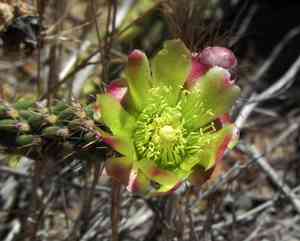
California cholla(Cylindropuntia californica)

California cholla (Cylindropuntia californica)

Also known as: Calilfornia cholla

The California cholla, a resilient cactus native to the deserts of California, exhibits several adaptations that enable it to thrive in arid conditions. Its thick, cylindrical stems are designed to store water, making it capable of enduring long periods of drought. Covered in dense spines, these stems not only provide defense against herbivores but also offer shade, which helps reduce water loss by minimizing direct sunlight exposure. Additionally, the spines reflect sunlight, further protecting the plant from intense heat.

The cactus employs CAM (Crassulacean Acid Metabolism) photosynthesis, opening its stomata at night to reduce water loss while still taking in the necessary carbon dioxide. Its shallow but widespread root system allows it to quickly absorb any available moisture from light rains. Furthermore, the segmented growth of the cholla facilitates easy propagation, ensuring its survival and spread in harsh desert environments. Vivid flowers add to its adaptability, attracting pollinators and aiding in reproduction.

Attributes of California cholla

Lifespan
Perennial
Plant Type
Succulent, Shrub
Plant Height
Up to 1.5 meters (5 feet)
Spread
Approximately 1 meter (3.3 feet)
Leaf Color
N/A
Flower Size
3 to 4 centimeters (1.2 to 1.6 inches)
Flower Color
Bright yellow to greenish

ForwardPlant - Identify plants with a snap

Identify and diagnose plants, get toxicity alerts, and explore safety guides for all types of fungi.

Try for Free

Images of California cholla

California cholla(Cylindropuntia californica)

Quickly Identify California cholla

1
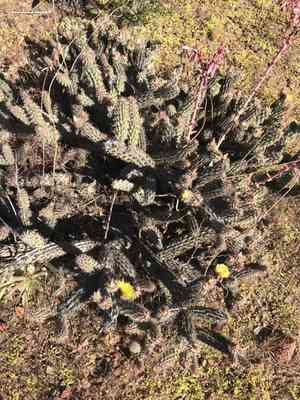
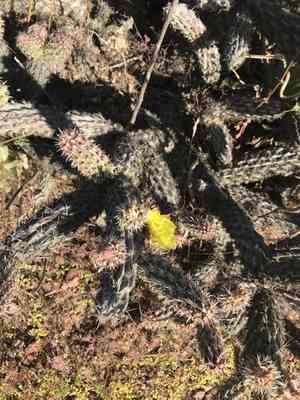
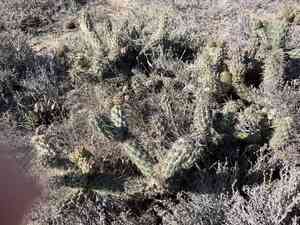
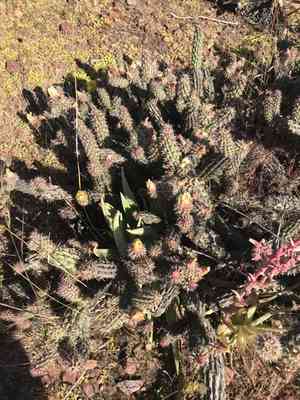
Cylindropuntia californica can be identified by its cylindrical, green to yellow-green stems that are covered with numerous spines. It typically has jointed segments with conspicuous tubercles and bright yellow to greenish flowers.

Scientific Classification of California cholla

Phylum
Vascular plants
Class
Dicotyledons
Order
Caryophyllales
Family
Cactuses
Genus
Chollas
Species
California cholla

Planting and Growing of California cholla

Care Difficulty
Easy
Watering Schedule
Every 2 days
Sunlight Requirements
Full sun
Sunshine Duration
6-12 hours
Ideal Temperature
60-80℉
Soil Type
Potting Mix, Peat Mix
Soil pH
6.5-7.5
Fertilizer Type
Balanced
Pruning Season
Spring, Summer
Pruning Area
Branches, Leaves
Pruning Frequency
2 times a year
Repotting Season
Spring
Pot Type
Plastic, Ceramic

water icon How to Water California cholla?

For Cylindropuntia californica, the watering should be deep but infrequent. This means pouring enough water so that it reaches the roots without pooling at the surface. Generally, about 250 milliliters is sufficient, but it's crucial to ensure that the soil is completely dry between waterings to prevent root rot.
What are the symptoms of an underwatered California cholla?
What should I do if my California cholla is not getting enough water?
What are the symptoms of an overwatered California cholla?
How to save an overwatered California cholla?

sunlight icon What Are the Sunlight Requirements for California cholla?

Sunlight Requirements: Full sun, Partial sun
Duration of light: 6 to 8 hours daily
Cylindropuntia californica benefits from full to partial sunlight. Ideal light conditions support its natural arid habitat needs, promoting vigorous growth, spine development, and flowering.
Where should I place Cylindropuntia californica for ideal sunlight?
How does Cylindropuntia californica benefit from ideal sunlight?
What are some strategies to achieve ideal light conditions indoors?

temperature icon What Is the Ideal Temperature Range for California cholla?

Ideal Temperature: 60 ~ 80℉
Cylindropuntia californica thrives best within a temperature range of 60 to 80°F. This range provides the most favorable conditions for photosynthesis and growth. Temperatures within this band ensure that the plant's metabolic processes are functioning optimally, and nutrient uptake is efficient.

soil icon What Soil is Best for California cholla?

Soil type: Sandy soil, Sandy loam, Loam
Soil PH: 6.5 ~ 7.5
Cylindropuntia californica thrives in well-draining soil to prevent root rot. This characteristic is crucial as it mimics the plant's native arid habitats, allowing excess moisture to escape easily and ensuring the roots remain healthy. The plant does not require rich, organic soil. Instead, it prefers soil with minimal organic matter, reflecting the nutrient-low environment of its natural habitat, which aids in avoiding over-fertilization and promoting optimal growth. Aerated soil is vital for Cylindropuntia californica, as it allows essential air to reach the roots, promoting healthy respiration and preventing compaction that could stunt growth.

fertilize icon How to Fertilize California cholla?

Fertilizer type: Balanced
When fertilizing your Cylindropuntia californica, it is crucial to apply a balanced 10-10-10 liquid fertilizer. Use approximately one tablespoon per gallon of water for optimal growth. Be sure to dilute according to the manufacturer's instructions to avoid nutrient burn. During the growing season, monitor the plant's response to ensure it's receiving the right amount of nourishment.

prune icon How to Prune California cholla?

Pruning Time: Spring, Summer, Autumn
Start by carefully inspecting your plant to locate any dead, damaged, or diseased branches. These should be removed first to prevent the spread of issues and to encourage healthy growth. When removing sections of the plant, make cuts at the joints where two segments meet. This helps to maintain the natural shape of the Cylindropuntia californica and ensures cleaner regrowth. While it's important to maintain a good shape, avoid pruning too excessively. Cylindropuntia californica thrives in its natural, slightly wild form. Focus on removing unruly growth while preserving the cactus's overall structure. More About Pruning Techniques

propagate icon How to Propagate California cholla plant?

Propagate Time: Spring, Early summer
1
Choose mature and healthy segments from the parent plant. The segments should be free of disease and pests to ensure they can develop into a robust plant.
2
After cutting, allow the cut end to dry and form a callus. This callus is vital to prevent rot when the cutting is placed in soil.
3
Insert the callused cut end into well-draining cactus soil mix. Ensure the cuttings are upright and stable in the soil to encourage root growth downwards.
More About Propagating Techniques

repot icon How to Repot California cholla plant?

Repotting frequency: Every 2-3 years
1
Observe the roots emerging from the pot's drainage holes as a signal. Growth slowing could also indicate it's time. An annual check in spring ensures readiness, with visible root crowding or compacted soil prompting action.
2
Opt for a pot slightly larger than the current one, with ample drainage holes. A clay pot is ideal, offering better aeration and preventing root rot by allowing excess moisture to evaporate efficiently.
3
A specialized cactus mix is essential, ensuring rapid drainage. This prevents water accumulation, reducing root rot risks. Incorporating sand or perlite enhances aeration, creating an optimal growing environment for the Californian cholla.

ForwardPlant - Identify plants with a snap

Find the best spots for them to optimize their health, simply using your phone.

Try for Free