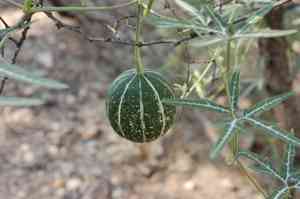
Fingerleaf gourd (Cucurbita digitata)
Also known as: Finger-leaved gourd
The **fingerleaf gourd** is a vine characterized by its fuzzy, palmate leaves. It bears dark-green squash that are notably bitter in flavor. Additionally, the pulp of this fruit can be toxic to certain individuals.
In This Article
Attributes of Fingerleaf gourd
Lifespan
Perennial
Plant Type
Herb, Vine
Plant Height
15-30 cm (as a ground vine, not including vertical growth)
Spread
Spreads up to 3 meters
Leaf Color
Dark green
Flower Size
2-4 cm
Flower Color
Yellow
Images of Fingerleaf gourd
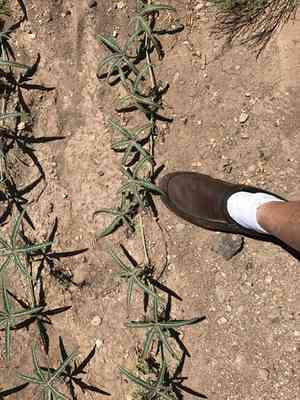
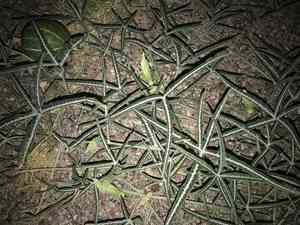
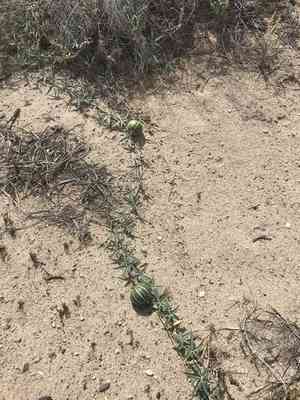
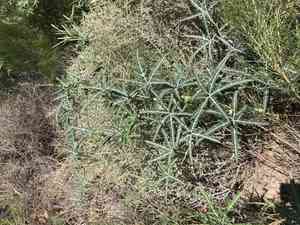
Quickly Identify Fingerleaf gourd
1
Look for deeply lobed leaves with finger-like projections, yellow flowers, and small greenish fruits. It\'s a vine that can spread along the ground or climb nearby structures.
Scientific Classification of Fingerleaf gourd
Phylum
Vascular plants
Class
Dicotyledons
Order
Cucurbitales
Family
Gourd
Genus
Squashes
Species
Fingerleaf gourd
Planting and Growing of Fingerleaf gourd
Care Difficulty
Easy
Watering Schedule
Every 2 days
Sunlight Requirements
Full sun
Sunshine Duration
4-8 hours
Ideal Temperature
70-85℉
Soil Type
Potting Mix, Peat Mix
Soil pH
6.5-7.5
Fertilizer Type
Balanced
Pruning Season
Spring, Summer
Pruning Area
Branches, Leaves
Pruning Frequency
2 times a year
Repotting Season
Spring
Pot Type
Plastic, Ceramic
 How to Water Fingerleaf gourd?
Cucurbita digitata, being a drought-tolerant species, requires careful watering to avoid overwatering. The watering amount should be around 200 ml each time, ensuring the soil is moist but not waterlogged. This allows for optimal root absorption without the risk of root rot.
What are the symptoms of an underwatered Fingerleaf gourd?
›
What should I do if my Fingerleaf gourd is not getting enough water?
›
What are the symptoms of an overwatered Fingerleaf gourd?
›
How to save an overwatered Fingerleaf gourd?
›
 What Are the Sunlight Requirements for Fingerleaf gourd?
Cucurbita digitata thrives best with full sun exposure. Ideal light enables vigorous growth, optimal flowering, and increased resistance to pests and diseases, ensuring healthy development.
How much direct light is required?
›
What if my garden receives partial sun?
›
Can indoor cultivation work for Cucurbita digitata?
›
 What Is the Ideal Temperature Range for Fingerleaf gourd?
The ideal temperature range for Cucurbita digitata growth is between 70°F and 85°F. This temperature allows optimal enzymatic and metabolic activities necessary for growth and development. During this range, the plant's photosynthesis rate is maximized, ensuring robust flowering and fruit development.
 What Soil is Best for Fingerleaf gourd?
Cucurbita digitata thrives best in well-drained soil, preventing waterlogging that can lead to root rot. Such drainage allows the roots to access necessary nutrients and air, fostering healthier and more resilient plants. The plant requires soil with moderate fertility. Overly rich soil can lead to excessive foliage with minimal fruiting, whereas moderately fertile soil ensures a balance between healthy foliage growth and optimal fruit production. A loose soil texture is ideal for Cucurbita digitata, facilitating easy root penetration and expansion. This enhances the plant's ability to anchor itself, access deeper soil nutrients, and maintain stability.
 How to Fertilize Fingerleaf gourd?
For Cucurbita digitata, it's essential to use a balanced fertilizer to promote healthy growth. Apply approximately 1/2 cup of liquid fertilizer diluted according to the product instructions every month, ensuring it has an even mix of nitrogen, phosphorus, and potassium.
 How to Prune Fingerleaf gourd?
Begin by examining the plant for any old, yellowing, or damaged leaves. These should be your first target for removal as they no longer contribute to the plant's growth and can harbor pests or diseases. Cucurbita digitata can become quite sprawling with abundant growth. Trim back any overly long or unruly vines to keep the plant size manageable. Focus on cutting back to a node, which is the point from where leaves and vines emerge. Select the healthiest vines to form the core structure of the plant. Trim less robust vines to reduce clutter and direct more energy to the stronger parts of the plant. This helps in producing more flowers and fruits. Suckers are small shoots that emerge between the main stem and branches. They should be removed as they divert energy away from the main growing areas and can lead to a crowded plant structure.
More About Pruning Techniques→
 How to Propagate Fingerleaf gourd plant?
1
Fill the seed trays with a high-quality seed-starting mix. Moisten the mix slightly before planting the seeds to ensure that it is evenly damp but not waterlogged.
2
Place the seeds of Cucurbita digitata evenly over the surface of the mix. Cover them with a thin layer of soil, approximately the same depth as the seed itself, and gently firm the soil to ensure good contact.
3
Place the seed trays in a location where they receive bright, indirect light. If natural light is inadequate, use grow lights to provide the necessary light for effective germination and seedling growth.
 How to Repot Fingerleaf gourd plant?
1
Cucurbita digitata shows signs of needing repotting when its roots start to circle the pot, visibly peeking from the drainage holes, or when the soil dries out too quickly after watering. These signals indicate the plant has outgrown its current home and needs more room to thrive.
2
Opt for a pot that is one size larger than the current one, with ample drainage holes to prevent waterlogging. A terracotta pot is often ideal as it is porous, allowing for better air circulation around the roots, thus reducing the risk of root rot.
3
Choose a well-draining sandy soil mix rich in organic matter. This type of soil ensures excellent drainage yet retains some moisture, providing essential nutrients and preventing water accumulation, which can lead to root rot.
Toxicity
Ingestion
WARNING
The judgment on toxicity and danger is for reference only. We DO NOT GUARANTEE any accuracy of such judgment. Therefore, you SHALL NOT rely on such judgment. It is IMPORTANT TO SEEK PROFESSIONAL ADVICE in advance when necessary.



