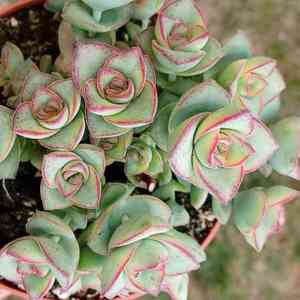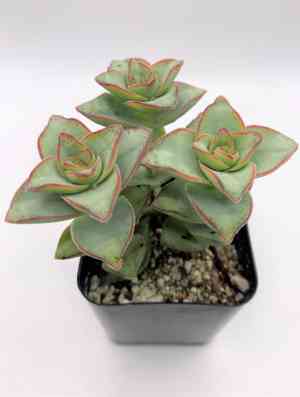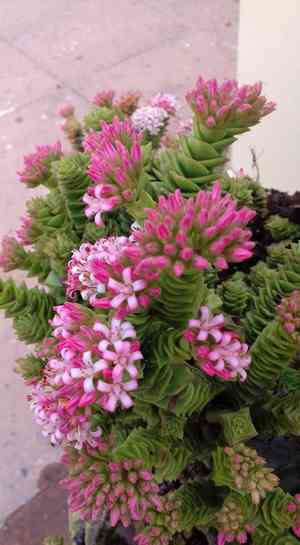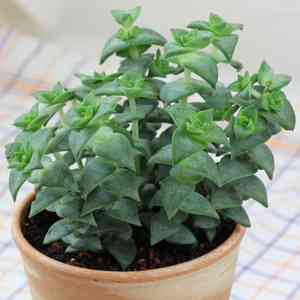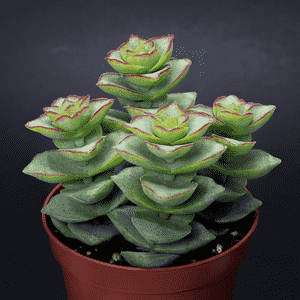
String of buttons(Crassula perforata)

String of buttons (Crassula perforata)

Also known as: Pagoda plant

String of Buttons, scientifically known as Crassula perforata, is a succulent that originates from South Africa. This plant is also referred to by names such as Baby's Necklace, Necklace Vine, Stacked Crassula, and Pagoda Plant.

Attributes of String of buttons

Lifespan
Perennial
Plant Type
Succulent, Herb
Plant Height
30 cm to 60 cm
Spread
60 cm to 90 cm
Leaf Color
Green Gray Silver
Flower Size
2.5 cm
Flower Color
Yellow Green Cream

ForwardPlant - Identify plants with a snap

Identify and diagnose plants, get toxicity alerts, and explore safety guides for all types of fungi.

Try for Free

Images of String of buttons

String of buttons(Crassula perforata)

Quickly Identify String of buttons

1
Tiered pagoda-like growth up to 18 inches (45 cm) tall.
2
Short, broad, ovate leaves clustered at tips with reddish margins.
3
Vertical secondary branches and inconspicuous pale yellow spring blossoms.
4
Thrives in well-drained soils, prefers full to partial sunlight.
5
Hardy to temperatures as low as 20-25°F (-6 to -4°C).

Scientific Classification of String of buttons

Phylum
Vascular plants
Class
Dicotyledons
Order
Saxifrages, stonecrops and allies
Family
Stonecrop
Genus
Crassula
Species
String of buttons

Planting and Growing of String of buttons

Care Difficulty
Easy
Watering Schedule
Every 2 days
Sunlight Requirements
Full sun
Sunshine Duration
4-8 hours
Ideal Temperature
60-75℉
Soil Type
Potting Mix, Peat Mix
Soil pH
6.5-7.5
Fertilizer Type
Balanced
Pruning Season
Spring, Summer
Pruning Area
Branches, Leaves
Pruning Frequency
2 times a year
Repotting Season
Spring
Pot Type
Plastic, Ceramic

water icon How to Water String of buttons?

The Crassula perforata requires consistent but moderate watering. Water the plant until the soil is evenly moist but not soggy. Avoid letting the plant sit in water; ensure proper drainage. Typically, around 100 ml should suffice per session.
What are the symptoms of an underwatered String of buttons? ›
What should I do if my String of buttons is not getting enough water? ›
What are the symptoms of an overwatered String of buttons? ›
How to save an overwatered String of buttons? ›
More About Watering Techniques→

sunlight icon What Are the Sunlight Requirements for String of buttons?

Sunlight Requirements: Full sun, Partial sun
Duration of light: 4 to 6 hours
Crassula perforata thrives in full or partial sunlight, preferring bright, indirect light. Receiving ideal light encourages vibrant leaf color and optimal growth, resulting in a healthy and decorative plant.
What type of sunlight is best? ›
How can you ensure it receives the ideal sunlight? ›
What are the benefits of ideal lighting? ›
More About Sunlight Requirements Techniques→

temperature icon What Is the Ideal Temperature Range for String of buttons?

Ideal Temperature: 60 ~ 75℉
Crassula perforata thrives best at temperatures between 60°F and 75°F. This range closely mimics its native environment, promoting optimal metabolic and growth processes. Providing consistent warmth within this range encourages lush foliage and flowering while minimizing the risk of temperature-induced stress.

soil icon What Soil is Best for String of buttons?

Soil type: Sandy soil, Loam, Sandy loam
Soil PH: 6.5 ~ 7.5
Crassula perforata thrives in well-draining soils. This requirement is crucial to prevent root rot, which can occur if the roots sit in water for too long. Well-draining soil allows excess water to quickly escape, keeping the roots healthy and aerated. This plant prefers a substrate that is not overly rich in nutrients. Excess nutrients can lead to weak, leggy growth as the plant stretches in search of more light. Using a nutrient-light substrate helps maintain its compact and robust form. The soil mixture should incorporate a grainy texture with materials like perlite or coarse sand. This helps increase aeration and ensures the plant's roots have plenty of space. The grainy texture also mimics the natural habitat of the plant, promoting overall health. More About Soil→

fertilize icon How to Fertilize String of buttons?

Fertilizer type: Balanced
For Crassula perforata, use a balanced all-purpose liquid fertilizer diluted to half strength. Typically, a solution mixed at half the recommended concentration on the packaging will suffice for this succulent's needs.

prune icon How to Prune String of buttons?

Pruning Time: Spring, Summer, Autumn
Start by inspecting the Crassula perforata for any dead, diseased, or damaged leaves. Carefully remove them using your clean pruners to prevent the spread of any potential infections and improve the plant's appearance. Trim overgrown stems to maintain a compact shape, giving attention to creating a symmetrical appearance. This not only enhances the visual aspect of your plant but can also improve air circulation around it.

propagate icon How to Propagate String of buttons plant?

Propagate Time: Spring,Early summer,Late summer
1
Choose a healthy stem from the Crassula perforata plant that is free of pests and disease. It should be at least 3-4 inches long with several leaves. A clean cut just below a leaf node will give the best chances for successful propagation.
2
Allow the cutting to dry for a few days in a warm, dry place. This lets the cut ends callus over, which helps to prevent rot when placed in soil. A callused cutting is more likely to root successfully.
3
Once the cutting is callused, place it in a well-draining soil mix. You can either lay it flat or insert it into the soil, ensuring good contact with the soil mixture. Water lightly and allow the soil to dry out completely between waterings.
More About Propagating Techniques→

repot icon How to Repot String of buttons plant?

Repotting frequency: Every 2 to 3 years
1
Crassula perforata, or the String of Buttons, should be repotted when you notice its roots outgrowing the pot or water not draining as efficiently. Early spring or summer is the best time to do this, as the plant is actively growing and can recover faster from the slight trauma of repotting.
2
Select a pot that is one to two inches larger in diameter to accommodate new growth. Ensure the pot has sufficient drainage holes, as Crassula needs well-aerated soil to prevent root rot. A terracotta pot is ideal as it allows excess moisture to evaporate more easily, ensuring the roots remain healthy.
3
Use a well-draining cactus mix for Crassula perforata. This type of soil prevents water from pooling around the roots, reducing the risk of waterlogging and root rot, and mimics the plant’s natural arid environment.
More About Repotting Techniques→

ForwardPlant - Identify plants with a snap

Find the best spots for them to optimize their health, simply using your phone.

Try for Free

Toxicity of String of buttons

Is String of buttons toxic to cat?

The String of Buttons plant carries a minor toxicity risk for cats. Ingesting excessive amounts of any portion of this plant may lead to poisoning in cats. Following consumption, affected felines might show signs of physical unease that could indicate distress or health issues. If you have any reason to believe your cat has ingested this plant and is experiencing poisoning, it is crucial to quickly seek medical attention from a veterinary clinic to safeguard their health.

Is String of buttons toxic to dog?

The String of Buttons plant is recognized to possess a low level of toxicity for dogs. Canines may experience poisoning from String of Buttons if they ingest the plant in substantial amounts. Every part of the String of Buttons is considered toxic, which implies that consuming any section of the plant could potentially result in poisoning. Symptoms of such poisoning can include gastrointestinal disturbances like vomiting or diarrhea, and, in certain situations, more serious reactions may arise dependent on the quantity ingested and the individual dog's sensitivity. It is essential for dog owners to keep a watchful eye on their pets and restrict access to String of Buttons, particularly if their dogs have a tendency to chew on plants. Should there be a suspicion that a dog has ingested String of Buttons and experienced poisoning, seeking immediate care at a veterinary clinic is crucial.

Identify toxic plants for your safety

Learn which plants are harmful to you and your pets, and make informed choices for a safer home!

Try for Free
WARNING
The judgment on toxicity and danger is for reference only. We DO NOT GUARANTEE any accuracy of such judgment. Therefore, you SHALL NOT rely on such judgment. It is IMPORTANT TO SEEK PROFESSIONAL ADVICE in advance when necessary.
More About Toxic Techniques→