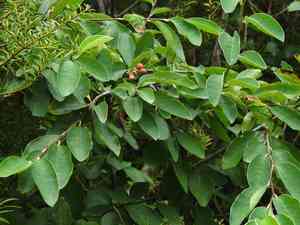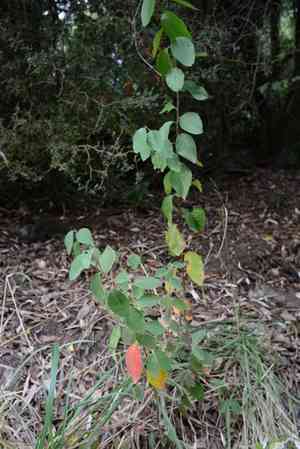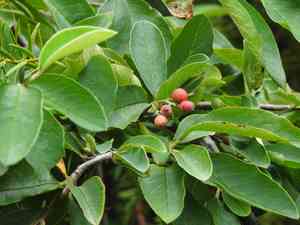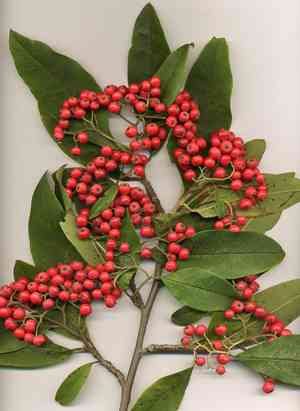
Himalayan tree cotoneaster(Cotoneaster frigidus)

Himalayan tree cotoneaster (Cotoneaster frigidus)

Also known as: Mountain cotoneaster

The Himalayan tree cotoneaster (Cotoneaster frigidus) is a versatile and hardy plant with several distinctive features and practical uses.

### Characteristics:
1. **Growth Habit**: This plant is a semi-evergreen to deciduous shrub, typically reaching heights of 10-15 feet.
2. **Foliage**: The leaves are glossy and dark green, turning to a reddish hue in the fall.
3. **Flowers**: It produces small, white or slightly pinkish flowers in late spring to early summer.
4. **Berries**: Bright red berries appear after the flowering period and persist through winter.

### Uses:
1. **Ornamental**: Widely used in garden landscapes for its attractive appearance and seasonal color changes.
2. **Hedges and Borders**: Commonly planted to form dense hedges or border screens due to its thick foliage.
3. **Wildlife Attraction**: The flowers attract pollinators, while the berries provide food for birds, although they are toxic to many mammals.
4. **Erosion Control**: Effective in stabilizing soil, particularly on slopes and embankments.
5. **Pollution Tolerance**: This shrub can thrive in polluted urban environments.
6. **Frost Resistance**: It is frost-hardy, making it suitable for cooler climates.

In summary, the Himalayan tree cotoneaster is a highly adaptable shrub, valued both for its beauty and ecological benefits.

Attributes of Himalayan tree cotoneaster

Lifespan
Perennial
Plant Type
Tree, Shrub
Plant Height
6 m
Spread
4.5 m
Leaf Color
Dark green (summer), Reddish-bronze (autumn)
Flower Size
0.5 centimeters
Flower Color
White

ForwardPlant - Identify plants with a snap

Identify and diagnose plants, get toxicity alerts, and explore safety guides for all types of fungi.

Try for Free

Images of Himalayan tree cotoneaster
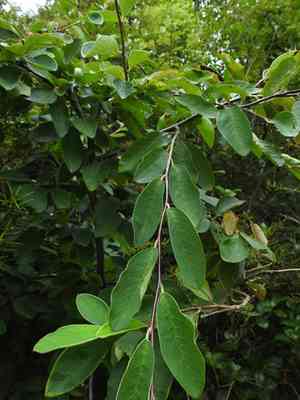
Himalayan tree cotoneaster(Cotoneaster frigidus)

Quickly Identify Himalayan tree cotoneaster

1
Look for elliptical, dark green leaves that turn reddish-bronze in autumn. During late spring to early summer, bunches of small white flowers appear, followed by red berries in the fall.

Scientific Classification of Himalayan tree cotoneaster

Phylum
Vascular plants
Class
Dicotyledons
Order
Rosales
Family
Rose
Genus
Cotoneaster
Species
Himalayan tree cotoneaster

Planting and Growing of Himalayan tree cotoneaster

Care Difficulty
Easy
Watering Schedule
Every 3 days
Sunlight Requirements
Full sun
Sunshine Duration
4-6 hours
Ideal Temperature
60-75℉
Soil Type
Potting Mix, Peat Mix
Soil pH
6.5-7.5
Fertilizer Type
Balanced
Pruning Season
Spring, Summer
Pruning Area
Branches, Leaves
Pruning Frequency
2 times a year
Repotting Season
Spring
Pot Type
Plastic, Ceramic

water icon How to Water Himalayan tree cotoneaster?

Cotoneaster frigidus prefers a well-balanced watering regime. Ensure that the soil feels moist but not waterlogged. Pour approximately 800 ml of water each time, ideally when the top few centimeters of soil have dried out. This plant thrives with the right moisture but excess water can lead to root rot.
What are the symptoms of an underwatered Himalayan tree cotoneaster?
What should I do if my Himalayan tree cotoneaster is not getting enough water?
What are the symptoms of an overwatered Himalayan tree cotoneaster?
How to save an overwatered Himalayan tree cotoneaster?

sunlight icon What Are the Sunlight Requirements for Himalayan tree cotoneaster?

Sunlight Requirements: Full sun, Partial sun
Duration of light: 4 to 6 hours daily
Ideally, this plant benefits from full sun to partial sun conditions, ensuring 4-6 hours of light. Proper lighting aids in vibrant foliage and strong growth.
What is the best sunlight condition for Cotoneaster frigidus?
Are there solutions if my garden is partially shaded?
Benefits of ideal lighting conditions?
More About Sunlight Requirements Techniques

temperature icon What Is the Ideal Temperature Range for Himalayan tree cotoneaster?

Ideal Temperature: 60 ~ 75℉
Cotoneaster frigidus thrives best in climates where the temperature stays consistently between 60 and 75 degrees Fahrenheit. These temperatures ensure optimal growth and help maintain the plant's vibrant foliage and berry production. Maintaining a stable temperature within this range will promote vigorous growth and flowering.

soil icon What Soil is Best for Himalayan tree cotoneaster?

Soil type: Loam, Sandy loam, Clay soil
Soil PH: 6.5 ~ 7.5
Cotoneaster frigidus thrives in well-drained soil, allowing for healthy root development and reducing waterlogging risks. This condition helps in the prevention of root diseases that often afflict waterlogged roots. The plant prefers soil with ample nutrients to support its lush foliage and ample fruit production. Fertile soil provides essential minerals and organic matter that boost growth and vibrant plant health. A soil that retains moderate moisture benefits Cotoneaster frigidus by ensuring consistent hydration, crucial for sustained growth especially in drier seasons without risking root rot.

fertilize icon How to Fertilize Himalayan tree cotoneaster?

Fertilizer type: Balanced
For Cotoneaster frigidus, moderate fertilizing is essential due to its low to moderate nutrient demand. During the growing season, applying about half the recommended dose on the fertilizer package is adequate. This ensures the plant receives nutrients without overloading the soil, fostering healthy root development and lush foliage.

prune icon How to Prune Himalayan tree cotoneaster?

Pruning Time: Spring, Summer
Begin by removing any dead, damaged, or diseased branches to promote air circulation and prevent the spread of disease throughout the plant. Make each cut just above a healthy bud or intersection to encourage new growth. Trim back overreaching branches to maintain a compact structure. Focus on areas where growth is too dense to allow more light and air to reach the inner branches, enhancing overall health. More About Pruning Techniques

propagate icon How to Propagate Himalayan tree cotoneaster plant?

Propagate Time: Spring,Early summer
1
Soak Cotoneaster frigidus seeds in water for 24 hours to help soften the seed coat. This enhances germination by allowing the seeds to absorb moisture more easily.
2
Select semi-hardwood cuttings from healthy plants during the growth season. Each cutting should be around 10-15 cm long and have at least two leaf nodes.
3
For layering, select a low-growing branch and bend it to the ground. Slightly wound the branch where it touches the soil and cover it with soil, securing it with a small stake.
More About Propagating Techniques

repot icon How to Repot Himalayan tree cotoneaster plant?

Repotting frequency: Every 2-3 years
1
Cotoneaster frigidus shows signs of needing repotting when root-bound, growth becomes restricted, or water drains slowly. Choose to repot in spring or autumn for minimal disturbance during its active growing periods.
2
Selecting a pot that's 2-3 inches larger in diameter than the current one allows roots to expand comfortably. Opt for a pot with drainage holes to prevent waterlogging, promoting healthy root growth and preventing rot.
3
Use a well-draining sandy loam soil to ensure proper moisture and air circulation. This soil type prevents root rot by allowing excess water to escape while retaining sufficient moisture for the plant.

ForwardPlant - Identify plants with a snap

Find the best spots for them to optimize their health, simply using your phone.

Try for Free

Toxicity

ingestion

Identify toxic plants for your safety

Learn which plants are harmful to you and your pets, and make informed choices for a safer home!

Try for Free
WARNING
The judgment on toxicity and danger is for reference only. We DO NOT GUARANTEE any accuracy of such judgment. Therefore, you SHALL NOT rely on such judgment. It is IMPORTANT TO SEEK PROFESSIONAL ADVICE in advance when necessary.