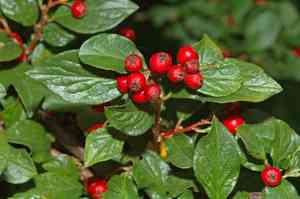
Acuminate cotoneaster (Cotoneaster acuminatus)
Also known as: None listed
The black alder (Alnus glutinosa) is a deciduous shrub renowned for its resilience to atmospheric pollution. It attracts wildlife and is primarily pollinated by midges and flies. Additionally, its wood is valued locally for crafts and practical uses such as walking sticks and small structures.
In This Article
Attributes of Acuminate cotoneaster
Lifespan
Perennial
Plant Type
Shrub
Plant Height
2 m to 4 m
Spread
1.5-3 meters
Leaf Color
Green
Flower Size
6 mm to 8 mm
Flower Color
White Yellow
Images of Acuminate cotoneaster
Quickly Identify Acuminate cotoneaster
1
Cotoneaster acuminatus can be identified by its acuminate leaves, which are lance-shaped with pointed tips. The plant produces small white or pinkish flowers in clusters during late spring to early summer, followed by red or orange-red berries that persist into winter.
Scientific Classification of Acuminate cotoneaster
Phylum
Vascular plants
Class
Dicotyledons
Order
Rosales
Family
Rose
Genus
Cotoneaster
Species
Acuminate cotoneaster
Planting and Growing of Acuminate cotoneaster
Care Difficulty
Moderate
Watering Schedule
Every 2 days
Sunlight Requirements
Full sun
Sunshine Duration
6-10 hours
Ideal Temperature
60-75℉
Soil Type
Potting Mix, Peat Mix
Soil pH
6.5-7.5
Fertilizer Type
Balanced
Pruning Season
Spring, Summer
Pruning Area
Branches, Leaves
Pruning Frequency
Once a year
Repotting Season
Spring
Pot Type
Plastic, Ceramic
 How to Water Acuminate cotoneaster?
For Cotoneaster acuminatus, the watering should be thorough, but ensure the soil is not waterlogged. A good rule of thumb is to water until you see a trickle from the drainage holes and then stop. Ensure the soil dries out slightly between watering sessions.
What are the symptoms of an underwatered Acuminate cotoneaster?
›
What should I do if my Acuminate cotoneaster is not getting enough water?
›
What are the symptoms of an overwatered Acuminate cotoneaster?
›
How to save an overwatered Acuminate cotoneaster?
›
 What Are the Sunlight Requirements for Acuminate cotoneaster?
Cotoneaster acuminatus prefers full sun to partial sun, ideally receiving 6-8 hours of daily sunlight. This ensures robust foliage, abundant blooms, and overall plant vitality.
More About Sunlight Requirements Techniques→
What type of sunlight does it prefer?
›
How can I achieve these conditions?
›
What are the benefits of ideal lighting?
›
 What Is the Ideal Temperature Range for Acuminate cotoneaster?
For optimal growth and health, Cotoneaster acuminatus thrives best in temperatures ranging from 60°F to 75°F. This range supports active metabolic processes, leading to robust growth and flowering. Keeping the plant within these temperatures ensures that it receives enough warmth for photosynthesis without suffering from heat stress. This consistency in mild temperatures caters to its natural habits and maximizes its ornamental value.
 What Soil is Best for Acuminate cotoneaster?
Cotoneaster acuminatus thrives in well-drained soil. This soil type prevents waterlogging, which can lead to root rot. Ensuring good drainage is essential for healthy root development and maintaining the plant's robustness. This plant benefits from a nutrient-rich soil, which provides the essential minerals and nutrients needed for optimal growth. A fertile soil mix can support vibrant foliage and abundant flowering. Cotoneaster acuminatus prefers soil that remains moderately moist. Consistent moisture levels help in keeping the plant hydrated without inundating the roots, crucial for maintaining plant vigor.
 How to Fertilize Acuminate cotoneaster?
For Cotoneaster acuminatus, use a balanced liquid fertilizer at half strength every two weeks. During the growing season, a slow-release granular fertilizer can be applied. Ensure not to exceed the recommended quantities on the fertilizer packaging, typically 1 tablespoon per square foot for granular types.
 How to Prune Acuminate cotoneaster?
Begin by removing any dead, damaged, or diseased branches to ensure the plant's health. Next, focus on thinning the plant by cutting back intersecting branches to allow more light and air to penetrate. Pay attention to the overall shape of the shrub, trimming it into the desired form while encouraging a balanced canopy. To stimulate blooming, trim branches right above a bud that faces outward. This helps direct growth outward rather than inward, promoting better flower display come flowering season. Be gentle and avoid over-pruning, as excessive cutting can reduce the number of flowers.
More About Pruning Techniques→
 How to Propagate Acuminate cotoneaster plant?
1
Choose healthy, non-flowering shoots from the current year’s growth. The length should be around 6 to 12 inches long to ensure adequate nutrients for root development.
2
Remove the lower leaves from the cuttings, leaving just a few at the tip. This helps to reduce moisture loss and encourages rooting by minimizing transpiration.
3
Dip the prepared cut end into rooting hormone and plant it into a pot filled with well-draining soil. Water thoroughly to settle the soil around the cutting.
 How to Repot Acuminate cotoneaster plant?
1
Observe your Cotoneaster acuminatus. If it is root-bound with roots emerging from the drainage holes, it's time to consider repotting. Other signs include slow growth, less vibrant foliage, or water sitting on the surface too long. Spring and autumn are ideal for providing a smooth transition to a new pot, minimizing stress.
2
Select a pot that is only slightly larger than the current one, about 2 inches wider in diameter. This allows for gradual growth and prevents excessive water retention, which can cause root rot. Ensure the pot has sufficient drainage holes to facilitate proper water flow.
3
Opt for a well-draining loamy mix with a balance of sand, silt, and clay. This composition ensures adequate moisture retention while preventing compaction, promoting healthy root development. The loamy mix supports Cotoneaster acuminatus’s need for both drainage and nutrient retention.
Toxicity
Ingestion
WARNING
The judgment on toxicity and danger is for reference only. We DO NOT GUARANTEE any accuracy of such judgment. Therefore, you SHALL NOT rely on such judgment. It is IMPORTANT TO SEEK PROFESSIONAL ADVICE in advance when necessary.



