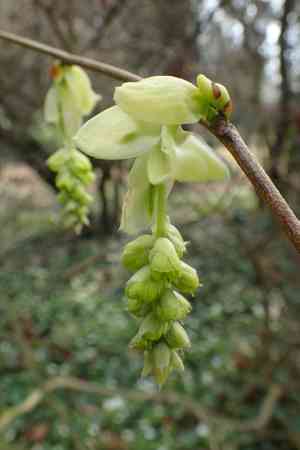
Winter hazel (Corylopsis sinensis)
Also known as: Chinese winter hazel
The Chinese winter hazel (Corylopsis sinensis), a shrub native to China, can reach heights up to 4 meters (about 13 feet). It's commonly used in ornamental gardening. This plant thrives in acidic soils and can withstand temperatures as low as -15°C.
In This Article
Attributes of Winter hazel
Lifespan
Perennial
Plant Type
Shrub
Plant Height
4 m
Spread
3 m to 4.5 m
Leaf Color
Green Yellow Red Orange Purple
Flower Size
1.2 cm to 1.5 cm
Flower Color
Yellow
Images of Winter hazel
Quickly Identify Winter hazel
1
Upright yet spreading rounded habit, 10-15 feet tall (3-4.5 meters).
2
Prominent late winter to early spring yellow flowers in drooping clusters.
3
Oval dark green leaves, up to 4 inches long (10 cm).
4
Distinctive reddish-brown stems, 0.2-0.4 inches diameter (0.5-1 cm).
5
Alternate branch pattern with slight glossy, flexible stems maturing to rigidity.
Scientific Classification of Winter hazel
Phylum
Vascular plants
Class
Dicotyledons
Order
Saxifragales
Family
Witch-hazel
Genus
Winter hazel
Species
Winter hazel
Planting and Growing of Winter hazel
Care Difficulty
Easy
Watering Schedule
Every 2 days
Sunlight Requirements
Partial sun
Sunshine Duration
4-6 hours
Ideal Temperature
60-75℉
Soil Type
Potting Mix, Peat Mix
Soil pH
6.5-7.5
Fertilizer Type
Balanced
Pruning Season
Spring, Summer
Pruning Area
Branches, Leaves
Pruning Frequency
2 times a year
Repotting Season
Spring
Pot Type
Plastic, Ceramic
 How to Water Winter hazel?
Corylopsis sinensis prefers consistently moist soil without being waterlogged. A well-drained soil is ideal to prevent root rot, so ensure around 500 ml per watering session. This amount ensures the soil remains adequately moist without over-soaking the roots.
What are the symptoms of an underwatered Winter hazel?
›
What should I do if my Winter hazel is not getting enough water?
›
What are the symptoms of an overwatered Winter hazel?
›
How to save an overwatered Winter hazel?
›
 What Are the Sunlight Requirements for Winter hazel?
Corylopsis sinensis performs optimally in partial sun settings, making sure it's not overexposed. Ideal light enhances photosynthesis and bloom production, supporting robust growth and resilience.
More About Sunlight Requirements Techniques→
What kind of sunlight is best for Corylopsis sinensis?
›
How to achieve this ideal lighting condition?
›
What benefits does ideal lighting provide?
›
 What Is the Ideal Temperature Range for Winter hazel?
Corylopsis sinensis thrives in a temperature range of 60°F to 75°F. This range provides optimal conditions for growth, promoting healthy foliage and vibrant blooming. When grown within this temperature range, the plant experiences balanced metabolic activities, which are crucial for nutrient uptake and the overall health of the plant.
 What Soil is Best for Winter hazel?
Corylopsis sinensis thrives in well-draining soil that prevents root rot by allowing excess water to escape. Ensuring proper drainage helps maintain plant health and encourages robust growth. Incorporating rich organic matter into the soil improves its structure and fertility, providing essential nutrients for the vigorous growth of Corylopsis sinensis. Preferring a slightly acidic pH, Corylopsis sinensis benefits from soil that optimizes nutrient availability, resulting in healthier foliage and increased flowering potential.
 How to Fertilize Winter hazel?
For Corylopsis sinensis, when applying liquid fertilizer, dilute to half the recommended strength as this shrub prefers mild feeding. For granular fertilizers, use around 100 grams spread evenly across its root zone. It's crucial to avoid excess to prevent root burn.
 How to Prune Winter hazel?
Begin by inspecting the Corylopsis sinensis for any dead or damaged branches. Use clean, sharp pruning shears to cut these branches back to the base or to the nearest healthy bud. This step helps prevent disease and promotes healthier growth. Trim back overgrown branches to maintain the desired shape of the plant. Aim for a natural, rounded form. This can be achieved by cutting back to a lateral branch or bud, ensuring a balanced shape that enhances its ornamental appeal. To encourage a bushier appearance, cut back some of the longer branches, ensuring that cuts are made just above a bud. This stimulates new growth, resulting in a fuller plant.
More About Pruning Techniques→
 How to Propagate Winter hazel plant?
1
Collect seeds from mature Corylopsis sinensis pods in early spring. Ensure seeds are completely dry before removing them from the pods. Store the seeds in a cool, dry place until you are ready to plant them. Dry storage prevents mold and ensures the seeds remain viable.
2
Select healthy, non-flowering shoots in spring for propagation. Cut 6-8 inches long segments with a pair of clean pruners. Remove the lower leaves to expose nodes. This increases the chances of root development when the cutting is potted.
3
For layering, choose a low branch that can be bent to the ground. Make a small cut in the stem to promote root growth. Stake the branch into the soil and cover the cut area with soil. Water regularly until roots develop, indicating successful propagation.
 How to Repot Winter hazel plant?
1
Look for signs like roots growing out of drainage holes or the plant becoming root-bound. New growth in spring is the ideal time, as the plant can heal quickly and take advantage of the new space for roots.
2
Select a pot that is 1-2 inches larger in diameter than the current one. Ensure it has proper drainage to prevent waterlogging. Going up a size incrementally helps avoid too much excess soil, which can retain moisture and lead to root rot.
3
Opt for a well-draining, acidic soil mix. This helps replicate the plant's natural habitat, promoting healthy root growth and preventing water retention issues, which are crucial for the plant’s long-term vitality.



