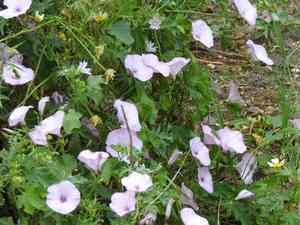
Mallow bindweed (Convolvulus althaeoides)
Also known as: Pink bellflower
Mallow bindweed (Convolvulus althaeoides) belongs to the morning glory family. Originally, it comes from the Mediterranean area. It has also been introduced to regions such as Japan and the western parts of North America. This plant thrives in sunny, rocky environments, with its creeping roots and twining stems. Its funnel-shaped flowers are known to attract honeybees.
In This Article
Attributes of Mallow bindweed
Lifespan
Perennial
Plant Type
Herb, Vine
Plant Height
5 cm
Spread
45 cm to 60 cm
Leaf Color
Green
Flower Size
3 cm to 4 cm
Flower Color
Pink Purple
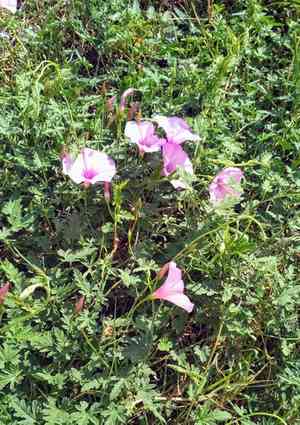
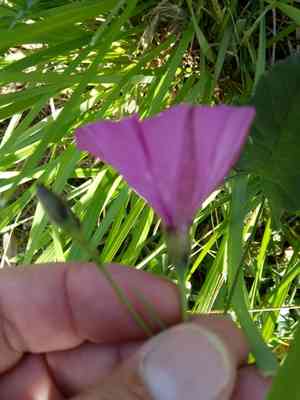
Images of Mallow bindweed


Quickly Identify Mallow bindweed
1
Look for heart-shaped leaves and large funnel-shaped pink or purplish flowers. The plant often climbs or sprawls over other vegetation.
Scientific Classification of Mallow bindweed
Phylum
Vascular plants
Class
Dicotyledons
Order
Solanales
Family
Morning-glory
Genus
Bindweed
Species
Mallow bindweed
Planting and Growing of Mallow bindweed
Care Difficulty
Easy
Watering Schedule
Every 3 days
Sunlight Requirements
Full sun
Sunshine Duration
6-10 hours
Ideal Temperature
65-75℉
Soil Type
Potting Mix, Peat Mix
Soil pH
6.5-7.5
Fertilizer Type
Balanced
Pruning Season
Spring, Summer
Pruning Area
Branches, Leaves
Pruning Frequency
2 times a year
Repotting Season
Spring
Pot Type
Plastic, Ceramic
 How to Water Mallow bindweed?
Convolvulus althaeoides prefers moderate watering; about 300 milliliters each time is ideal. Water until moisture is visible at the drainage hole, ensuring soil is evenly moist but not saturated. This mimics its natural environment and prevents root rot.
What are the symptoms of an underwatered Mallow bindweed?
›
What should I do if my Mallow bindweed is not getting enough water?
›
What are the symptoms of an overwatered Mallow bindweed?
›
How to save an overwatered Mallow bindweed?
›
 What Are the Sunlight Requirements for Mallow bindweed?
Full sun. Optimal light exposure ensures vigorous growth and abundant flowering for Convolvulus althaeoides, maximizing its ornamental potential.
More About Sunlight Requirements Techniques→
What is the ideal amount of sunlight for Convolvulus althaeoides?
›
How can you achieve ideal lighting for Convolvulus althaeoides?
›
What are the benefits of ideal sunlight for Convolvulus althaeoides?
›
 What Is the Ideal Temperature Range for Mallow bindweed?
The ideal temperature range for Convolvulus althaeoides is between 65°F to 75°F. This range ensures optimal growth, as it mimics the mild temperatures of its native Mediterranean climate. In this range, the plant processes such as photosynthesis, respiration, and transpiration work harmoniously. Keeping the temperature within this ideal range allows the plant to maintain vigor and produce vibrant blooms.
 What Soil is Best for Mallow bindweed?
Convolvulus althaeoides thrives in nutrient-rich soil, which supports robust growth and vibrant blooms. Ensuring the soil is well-fed with organic matter can greatly enhance its flowering capabilities. This plant requires well-draining soil to prevent waterlogged conditions, which can lead to root rot. Sandy or loamy soils offer excellent drainage, allowing the roots to breathe and maintain health. A light soil texture is ideal as it allows the roots to spread easily, helping the plant establish efficiently. This ensures the plant has a strong base to support its climbing and sprawling nature.
 How to Fertilize Mallow bindweed?
Convolvulus althaeoides doesn't require heavy fertilization. Use a balanced liquid fertilizer diluted to half strength, approximately 10 ml per plant every two weeks during the growing season. For slow-release granular fertilizers, apply about 30 grams per plant once in spring, summer, and fall to ensure steady nutrient availability.
 How to Prune Mallow bindweed?
Begin by examining the plant for areas where stems are overcrowded or where growth is excessive. Look for any damaged, diseased, or dead branches as initial pruning points. Cut just above a leaf node to encourage new growth and avoid cutting the main stems unless necessary. Use sharp, clean pruning shears to make precise cuts. Always sanitize your tools before and after pruning to prevent the spread of disease. Employ a three-point cutting technique for thicker branches to prevent tearing, which involves making a small notch on the underside, followed by a cut slightly further out.
More About Pruning Techniques→
 How to Propagate Mallow bindweed plant?
1
Sow seeds in a well-draining potting mix, keeping the soil moist but not waterlogged. Ensure seeds are covered lightly with soil and maintain a warm environment to enhance germination rates.
2
Choose healthy stems and cut just below a node. Remove the lower leaves and dip the cut end into rooting hormone before planting in a suitable growing medium.
3
Place the cuttings in a part-shaded area with high humidity, covering them with plastic if necessary to retain moisture. Ensure consistent warmth and monitor for root development after a few weeks.
 How to Repot Mallow bindweed plant?
1
Repot Convolvulus althaeoides when you observe it outgrowing its current pot or showing signs of root-bound, such as reduced growth and frequent wilting. Another telltale sign is when you see roots growing out of the drainage holes.
2
Opt for a pot that is one size larger than the current. A pot with good drainage is essential to prevent waterlogging. A terracotta pot can be a good choice as it allows better air circulation and helps excess moisture evaporate, thus preventing root rot.
3
Select a well-draining sandy soil mix to replicate Convolvulus althaeoides' natural environment. Such soil ensures that excess water doesn't retain, thus preventing root rot and promoting healthy root growth which is ideal for the plant's development.
Learn More About Mallow bindweed Diseases
Anthracnose
Bacterial Leaf Spot
Bacterial Wilt
Crown Gall
Cyst Nematode
Damping-off
Downy Mildew
Drought Stress
Fusarium Wilt
Gray Mold
Leaf Curl
Leaf Spot
Mosaic
Nutrient Deficiency
Nutrient Toxicity
Powdery Mildew
Root Rot
Root-knot Nematode
Rusts
Sooty Mold
Spider Mites
Temperature Stress
Thrips Damage
White Mold



