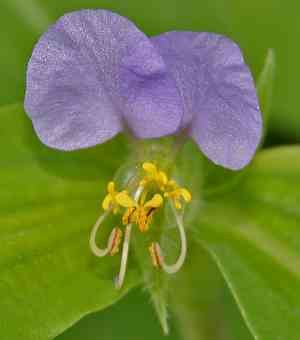
Birdbill dayflower (Commelina dianthifolia)
Also known as: Birdbill dayflower, Birdbill
Birdbill dayflower (Commelina dianthifolia) is an attractive plant known for its vibrant blue blooms. It exhibits slight frost tolerance and is well-suited for placement at the front of beds and borders, as well as in containers or rock gardens. The Ramah Navajo Native Americans traditionally used this plant as an aphrodisiac for their livestock.
In This Article
Attributes of Birdbill dayflower
Lifespan
Perennial, Annual, Biennial
Plant Type
Herb
Plant Height
30 cm
Spread
30 cm
Leaf Color
Green
Flower Size
1-2 cm
Flower Color
Blue
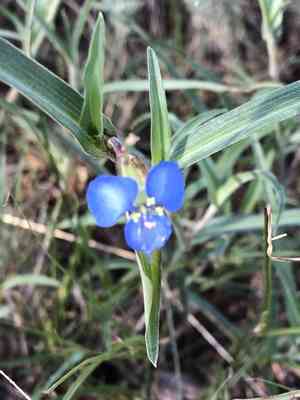
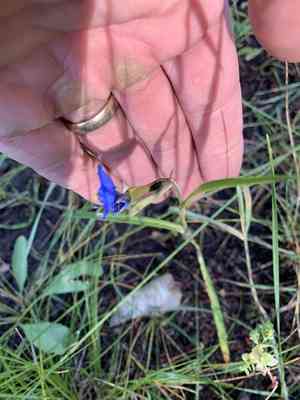
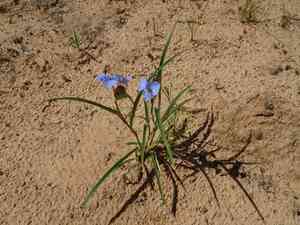
Images of Birdbill dayflower
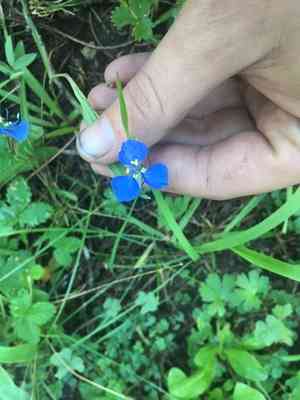
Quickly Identify Birdbill dayflower
1
Look for bright blue flowers with three petals, two of which are prominent and one smaller and often hidden. The leaves are long, narrow, and grass-like. The plant tends to bloom in the morning and fade by the afternoon.
Scientific Classification of Birdbill dayflower
Phylum
Vascular plants
Class
Monocotyledons
Order
Commelinales
Family
Spiderwort
Genus
Dayflowers
Species
Birdbill dayflower
Planting and Growing of Birdbill dayflower
Care Difficulty
Easy
Watering Schedule
Every 4 days
Sunlight Requirements
Full sun
Sunshine Duration
4-8 hours
Ideal Temperature
65-75℉
Soil Type
Potting Mix, Peat Mix
Soil pH
6.5-7.5
Fertilizer Type
Balanced
Pruning Season
Spring, Summer
Pruning Area
Branches, Leaves
Pruning Frequency
2 times a year
Repotting Season
Spring
Pot Type
Plastic, Ceramic
 How to Water Birdbill dayflower?
Commelina dianthifolia requires moderate watering, ensuring the soil remains consistently moist but never soggy. Approximately 250 ml of water should be sufficient each time, aiming to thoroughly saturate the root zone without causing water to stand at the surface.
What are the symptoms of an underwatered Birdbill dayflower?
›
What should I do if my Birdbill dayflower is not getting enough water?
›
What are the symptoms of an overwatered Birdbill dayflower?
›
How to save an overwatered Birdbill dayflower?
›
 What Are the Sunlight Requirements for Birdbill dayflower?
Commelina dianthifolia thrives best under full or partial sun. Ensuring 6 to 8 hours daily enhances its flowering capabilities, leading to healthier, more vibrant blooms and foliage.
More About Sunlight Requirements Techniques→
How can I ensure Commelina dianthifolia gets ideal light?
›
What strategies can help achieve ideal lighting for Commelina dianthifolia?
›
What are the benefits of providing ideal light for Commelina dianthifolia?
›
 What Is the Ideal Temperature Range for Birdbill dayflower?
Commelina dianthifolia thrives best in a temperature range of 65 to 75°F. These temperatures mimic the conditions of its native habitats and help promote healthy growth, blossoming, and general vitality. Maintaining this temperature range ensures optimal physiological processes and reduces stress on the plant.
 What Soil is Best for Birdbill dayflower?
Commelina dianthifolia thrives in well-draining soil, which prevents water accumulation around the roots. This reduces the risk of root rot and promotes healthy plant growth by ensuring roots get enough oxygen. The plant benefits from soil that retains moderate moisture without becoming waterlogged. This helps maintain consistent hydration, crucial for its growth during dry spells. A nutrient-rich loam is ideal, providing essential minerals that support robust foliage growth and vibrant blooms, thereby enhancing the plant's ornamental appeal.
 How to Fertilize Birdbill dayflower?
For Commelina dianthifolia, it is recommended to use a balanced liquid fertilizer diluted to half strength. Apply about 1/2 tablespoon per gallon of water during the growing season to ensure healthy growth without over-fertilizing.
 How to Prune Birdbill dayflower?
Start by examining the plant for any dead or wilting stems, which should be your first targets. Using clean, sharp shears, carefully cut these away to the base. Next, address any stems that appear overcrowded, trimming them back to allow more light and air to reach the plant's center. This process not only helps maintain the plant's shape but also stimulates robust new growth. Always ensure that cuts are clean and made at an angle to prevent water from pooling on the cut surface.
More About Pruning Techniques→
 How to Propagate Birdbill dayflower plant?
1
Choose a well-draining soil mix that contains equal parts of peat moss and perlite. This mixture provides the necessary aeration and moisture retention for seed germination and root development.
2
Sow the seeds evenly on the surface of the prepared soil, lightly covering them with a thin layer of the mix. Ensure adequate spacing to prevent overcrowding and promote robust seedling growth.
3
Maintain consistent moisture in the soil, using a misting spray to avoid displacing the seeds. Overwatering or waterlogging should be avoided to prevent damping-off diseases.
 How to Repot Birdbill dayflower plant?
1
Commelina dianthifolia should be repotted when you notice roots emerging from the drainage holes or if the plant's growth has notably slowed. This usually indicates that the plant has outgrown its current pot and needs more space to thrive.
2
Select a pot that is one size larger than the current one, with ample drainage holes. This prevents waterlogging, ensuring your plant's roots don't suffocate and encourages healthy growth by providing more space.
3
Opt for a well-draining potting mix, ideally one enriched with organic matter. This type of soil aids in retaining essential moisture while preventing the roots from sitting in water, reducing the risk of root rot.
Learn More About Birdbill dayflower Diseases
Anthracnose
Bacterial Leaf Spot
Bacterial Soft Rot
Bacterial Wilt
Damping-off
Downy Mildew
Drought Stress
Fusarium Wilt
Gray Mold
Leaf Spot
Mosaic
Nutrient Deficiency
Nutrient Toxicity
Powdery Mildew
Root Rot
Root-knot Nematode
Rusts
Sooty Mold
Spider Mites
Temperature Stress
Thrips Damage
White Mold



