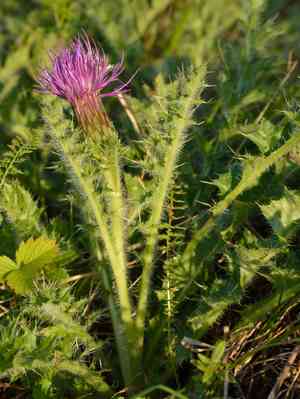
Dwarf thistle (Cirsium acaule)
Also known as: Dwarf Thistle, Stemless Thistle
Dwarf thistle is a low-growing perennial commonly found in calcareous grasslands. It has adapted well to its environment with a ground-level rosette of spiny leaves, which help reduce water loss and protect against herbivores. Thriving in well-drained soils, this thistle features purplish, globular flower heads nestled directly within the rosette, aiding in moisture conservation and further deterring grazing.
In This Article
Attributes of Dwarf thistle
Lifespan
Perennial
Plant Type
Herb
Plant Height
10 cm (4 inches)
Spread
30 cm (12 inches)
Leaf Color
Green with white spines
Flower Size
3-4 cm (1.2-1.6 inches)
Flower Color
Purple
Images of Dwarf thistle
Quickly Identify Dwarf thistle
1
Identify Cirsium acaule by its lack of a stem, making the leaves and flowers appear close to the ground. Look for spiny, lobed leaves forming a rosette and purple flower heads that are slightly raised above the rosette on short stalks.
Scientific Classification of Dwarf thistle
Phylum
Vascular plants
Class
Dicotyledons
Order
Asterales
Family
Daisy
Genus
Thistles
Species
Dwarf thistle
Planting and Growing of Dwarf thistle
Care Difficulty
Easy
Watering Schedule
Every 2 days
Sunlight Requirements
Full sun
Sunshine Duration
6-10 hours
Ideal Temperature
60-75℉
Soil Type
Potting Mix, Peat Mix
Soil pH
6.5-7.5
Fertilizer Type
Balanced
Pruning Season
Spring, Summer
Pruning Area
Branches, Leaves
Pruning Frequency
2 times a year
Repotting Season
Spring
Pot Type
Ceramic, Plastic
 How to Water Dwarf thistle?
Cirsium acaule prefers dry conditions, so watering should be moderate. Approximately 250 ml per watering session should suffice, ensuring the soil is only slightly moist and not drenched. The goal is to mimic its natural dry, grassland habitat.
What are the symptoms of an underwatered Dwarf thistle?
›
What should I do if my Dwarf thistle is not getting enough water?
›
What are the symptoms of an overwatered Dwarf thistle?
›
How to save an overwatered Dwarf thistle?
›
 What Are the Sunlight Requirements for Dwarf thistle?
Cirsium acaule thrives best in full sun, receiving 6-8 hours of light. This optimal sunlight range ensures proper photosynthesis, resulting in healthy growth and more pronounced flowering.
What is the ideal lighting for Cirsium acaule?
›
How to achieve ideal lighting for Cirsium acaule?
›
Benefits of ideal lighting for Cirsium acaule?
›
 What Is the Ideal Temperature Range for Dwarf thistle?
The ideal temperature range for Cirsium acaule is between 60°F and 75°F. This range provides optimal growing conditions that resemble the plant's natural habitat. At these temperatures, the physiological processes, including photosynthesis and nutrient uptake, are at their best, encouraging healthy growth and development.
 What Soil is Best for Dwarf thistle?
Cirsium acaule thrives in well-drained soil which helps prevent waterlogging, reducing the risk of root rot and allowing roots to absorb nutrients effectively. This plant prefers moderately fertile soils that provide essential nutrients without causing excessive vegetative growth, ensuring a balanced and healthy plant. Cirsium acaule grows best in neutral to slightly alkaline soils, promoting optimal nutrient uptake and growth while enhancing its overall vigor and resilience.
 How to Fertilize Dwarf thistle?
For Cirsium acaule, it is crucial not to over-fertilize. Use a balanced liquid fertilizer diluted to half-strength about 2 teaspoons per quart of water. This ensures nutrients are available without overwhelming the plant.
 How to Prune Dwarf thistle?
Start by examining the plant for any dead or damaged leaves. Removing these will help the plant focus its energy on healthy growth and improve air circulation within the plant. For a clean cut, always use sharp pruning shears. This not only makes the task easier but also reduces stress to the plant and helps prevent tearing or bruising of the tissue. While pruning, it's also an opportunity to shape the plant to your liking. However, avoid excessive pruning at any one time as this can stress the plant. All pruned material, especially if diseased, should be disposed of properly. Do not compost these, as this might spread the disease. Instead, burning or sending to green waste is advisable.
More About Pruning Techniques→
 How to Propagate Dwarf thistle plant?
1
Start by preparing the seed tray or pots with a well-draining seed compost. Sow the seeds thinly over the surface and cover lightly with compost. Water gently to settle the compost and place in a warm, bright location. Maintain consistent moisture until germination occurs.
2
When dividing, choose a mature plant that has outgrown its space. Use a garden fork to carefully lift the plant from the soil. Divide the root mass into smaller sections, ensuring each section has healthy shoots and roots. Replant each section at the same depth it was growing previously.
3
After division and replanting, water the new divisions thoroughly and apply mulch around the base to retain moisture. Ensure that each section has enough space to grow. Monitor for signs of transplant shock and provide additional support if necessary.
 How to Repot Dwarf thistle plant?
1
Cirsium acaule shows signs that it needs repotting when its roots begin to outgrow the current container. If you notice roots coming out of the drainage holes or the plant seems root-bound, it's time to consider repotting. It's ideal to catch these signals early in the spring or summer to ensure a gentle transition.
2
Select a pot that's slightly larger than the current one, preferably ceramic or clay for its breathability. This encourages healthy root growth and prevents excess water retention, which is crucial because Cirsium acaule prefers well-draining conditions. A pot with ample drainage holes is necessary to avoid root rot.
3
Opt for a soil mix that is light and well-draining, such as a combination of garden soil, perlite, and sand. This blend helps in maintaining minimal moisture retention, mimicking the natural dry habitats Cirsium acaule thrives in.
Learn More About Dwarf thistle Diseases
Anthracnose
Bacterial Leaf Spot
Bacterial Wilt
Chemical Injury
Crown Gall
Cyst Nematode
Damping-off
Downy Mildew
Drought Stress
Fusarium Wilt
Gray Mold
Leaf Spot
Mosaic
Nutrient Deficiency
Nutrient Toxicity
Powdery Mildew
Root Rot
Root-knot Nematode
Rusts
Sooty Mold
Spider Mites
Temperature Stress
Thrips Damage
White Mold



