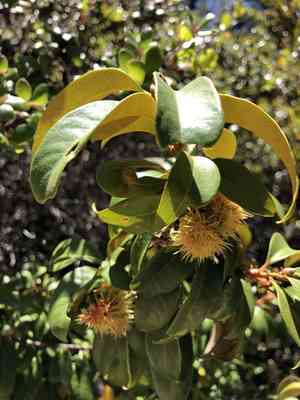
Golden chinquapin (Chrysolepis chrysophylla)
Also known as: Western chinquapin
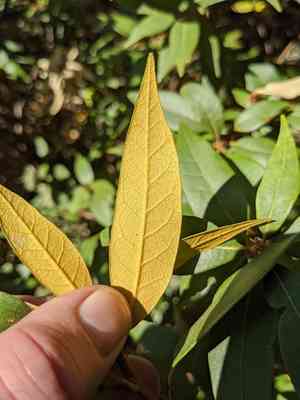
The reverse side of the leaves of the golden chinquapin (Chrysolepis chrysophylla) showcases a unique layer of golden scales or hairs, giving them a distinctive, reflective quality.
In This Article
Attributes of Golden chinquapin
Lifespan
Perennial
Plant Type
Tree
Plant Height
8 m to 18 m
Spread
4.5 m to 18 m
Leaf Color
Dark green upper surface, golden-yellow underside
Flower Size
6 mm
Flower Color
Yellow Green
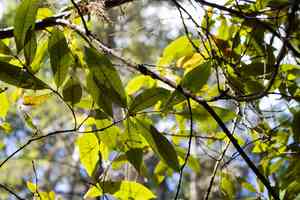
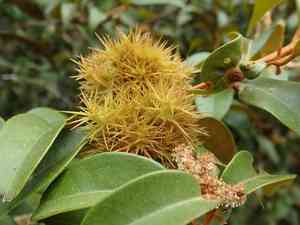
Images of Golden chinquapin
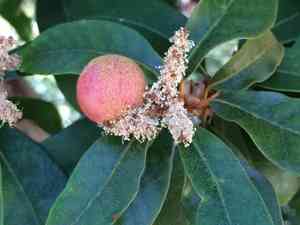
Quickly Identify Golden chinquapin
1
Look for evergreen leaves with a distinctive golden-yellow underside and spiny, burr-like fruits. The leaves are leathery and lance-shaped, and the bark is brown and ridged.
Scientific Classification of Golden chinquapin
Phylum
Vascular plants
Class
Dicotyledons
Order
Fagales
Family
Beech
Genus
Chinquapins
Species
Golden chinquapin
Planting and Growing of Golden chinquapin
Care Difficulty
Moderate
Watering Schedule
Every day
Sunlight Requirements
Full sun
Sunshine Duration
4-6 hours
Ideal Temperature
50-70℉
Soil Type
Potting Mix, Peat Mix
Soil pH
5.5-7
Fertilizer Type
Balanced
Pruning Season
Spring, Summer
Pruning Area
Branches, Leaves
Pruning Frequency
2 times a year
Repotting Season
Spring
Pot Type
Ceramic, Plastic
 How to Water Golden chinquapin?
Chrysolepis chrysophylla prefers its soil to be moist, but not waterlogged. Water each time with around 500 ml, ensuring the soil is evenly moist. The principle is to water thoroughly so that the entire root system is hydrated, but without leaving standing water at the base.
What are the symptoms of an underwatered Golden chinquapin?
›
What should I do if my Golden chinquapin is not getting enough water?
›
What are the symptoms of an overwatered Golden chinquapin?
›
How to save an overwatered Golden chinquapin?
›
 What Are the Sunlight Requirements for Golden chinquapin?
Chrysolepis chrysophylla benefits from partial to full sunlight, ideally achieving balance. Adequate light promotes healthy growth, functional photosynthesis, and increases the plant's resilience against stressors.
More About Sunlight Requirements Techniques→
What is the most suitable lighting condition for Chrysolepis chrysophylla?
›
How can I ensure my plant receives optimal sunlight?
›
What benefits does the plant gain from the right light conditions?
›
 What Is the Ideal Temperature Range for Golden chinquapin?
The ideal temperature range for cultivating Chrysolepis chrysophylla is between 50°F and 70°F. This range ensures that the plant receives adequate warmth while avoiding excessive heat, which can cause stress.
 What Soil is Best for Golden chinquapin?
Chrysolepis chrysophylla thrives in well-draining soil that prevents root rot by allowing excess water to flow away. Ensuring good drainage will promote strong root development and overall plant health. The tree benefits from soil rich in organic matter, which provides essential nutrients and improves soil structure. This enrichment fosters growth and increases the plant's resilience to environmental stresses. This species is tolerant of slightly acidic soils which enhance nutrient availability and support optimal growth conditions. Maintaining the right pH balance helps in the absorption of key minerals.
 How to Fertilize Golden chinquapin?
Chrysolepis chrysophylla generally requires moderate amounts of fertilizer. It's crucial to follow the package instructions for liquid fertilizers, typically diluting to half-strength. Solid or slow-release fertilizers are applied sparingly, around 2 to 3 tablespoons for young plants and up to a cup for mature plants, ensuring nutrients are available gradually throughout the growing season.
 How to Prune Golden chinquapin?
Use clean, sharp pruning shears or loppers to ensure precise cuts. Dull tools can cause ragged cuts that may lead to disease or pest infestations. Always sanitize tools before and after use to prevent disease transmission. Prune Chrysolepis chrysophylla during the early spring or summer when its growth cycle is active. Avoid pruning in the late fall or winter, as cuts take longer to heal and can make the plant susceptible to frost damage. After pruning, water the plant adequately to encourage recovery. Mulching at the base will help maintain soil moisture and provide nutrients. Be observant for signs of stress, such as wilting or discoloration, and adjust care accordingly.
More About Pruning Techniques→
 How to Propagate Golden chinquapin plant?
1
Collect mature seeds from the plant in the autumn months when the seed capsules have dried and are ready to split. Store them in a cool, dry place until you are ready to plant them in the spring.
2
Prepare a well-draining soil mix rich in organic matter. The soil should be moist but not waterlogged when sowing seeds to encourage better germination rates.
3
Select a low-hanging branch and lightly wound it. Secure it to the ground with a peg and cover it with soil to encourage root formation along the wounded area.
 How to Repot Golden chinquapin plant?
1
You should consider repotting Chrysolepis chrysophylla when you notice signs like roots growing out of the drainage holes, soil that dries out too quickly, or slow growth. Spring or early summer is the ideal time because the plant will have the whole growing season to recover and establish itself in the new pot.
2
Select a pot that allows for about two to three inches of growth space—this encourages healthy root expansion without overwhelming the plant. Pots should have ample drainage holes to prevent waterlogging, which could lead to root rot.
3
Opt for a well-draining acidic soil mix, as it mimics the plant's natural habitat. Superior drainage is crucial to prevent root rot, while acidity helps in matching the natural living conditions of Chrysolepis chrysophylla.



