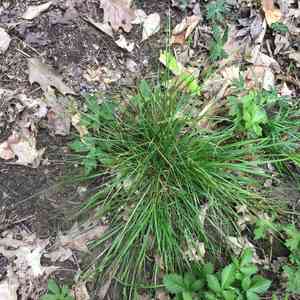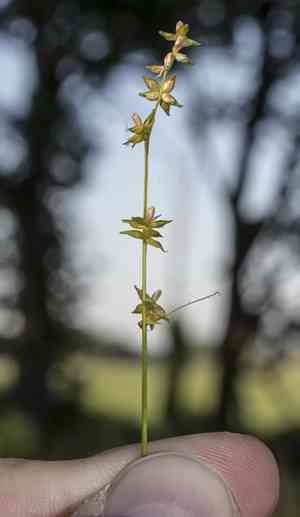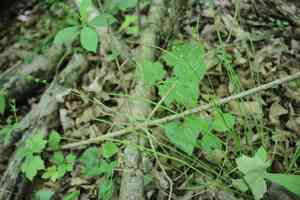
Rosy sedge(Carex rosea)

Rosy sedge (Carex rosea)

Also known as: Rosy Sedge, Curly-styled Wood Sedge

Rosy sedge (Carex rosea) forms small, dense clumps and is semi-evergreen. It features narrow, arching leaves with a fine texture, making it a popular choice for gardeners. In late spring to early summer, it produces small, greenish flowers, with seed heads that may exhibit a subtle rosy tint. This plant is prized for its delicate foliage and effectiveness as a hardy groundcover.

### Growing Conditions:
- **Light**: Prefers partial shade to full shade.
- **Soil**: Adapts to a variety of soils but thrives in moist, well-drained conditions.
- **Moisture**: Enjoys consistently moist environments, commonly found near streams and ponds, but can tolerate brief dry spells.
- **Hardiness**: Suitable for USDA zones 4-8.

Ideal for woodland gardens and shaded areas, Rosy sedge is a low-maintenance plant that adds fine texture and a natural look to garden spaces.

Attributes of Rosy sedge

Lifespan
Perennial
Plant Type
Grass
Plant Height
20 cm to 91 cm
Spread
30 cm
Leaf Color
Green
Flower Size
2.5 cm
Flower Color
Yellow Green Purple

ForwardPlant - Identify plants with a snap

Identify and diagnose plants, get toxicity alerts, and explore safety guides for all types of fungi.

Try for Free

Images of Rosy sedge

Rosy sedge(Carex rosea)

Quickly Identify Rosy sedge

1
Carex rosea can be identified by its fine-textured leaves and distinctive star-like flower clusters which are often rosy or pinkish in hue. The plant also features very narrow culms that form tufts.

Scientific Classification of Rosy sedge

Phylum
Vascular plants
Class
Monocotyledons
Order
Poales
Family
Sedge
Genus
True sedges
Species
Rosy sedge

Planting and Growing of Rosy sedge

Care Difficulty
Easy
Watering Schedule
Every 3 days
Sunlight Requirements
Partial sun
Sunshine Duration
6-10 hours
Ideal Temperature
60-75℉
Soil Type
Potting Mix, Peat Mix
Soil pH
6.5-7.5
Fertilizer Type
Balanced
Pruning Season
Spring, Summer
Pruning Area
Branches, Leaves
Pruning Frequency
2 times a year
Repotting Season
Spring
Pot Type
Plastic, Ceramic

water icon How to Water Rosy sedge?

For Carex rosea, watering should aim to keep the soil consistently moist, not waterlogged. A thorough watering of approximately 250ml should suffice each time, ensuring that the water reaches the root system properly without leaving standing water around the plant. It's key to allow the top layer of the soil to remain moist, simulating its natural habitat conditions.
What are the symptoms of an underwatered Rosy sedge?
What should I do if my Rosy sedge is not getting enough water?
What are the symptoms of an overwatered Rosy sedge?
How to save an overwatered Rosy sedge?

sunlight icon What Are the Sunlight Requirements for Rosy sedge?

Sunlight Requirements: Partial sun, Full shade
Duration of light: 2-4 hours daily
Carex rosea ideally prefers partial sun to full shade. This range supports optimal growth by providing sufficient light without the stress of full sun, maintaining leaf integrity and color.
What is the ideal lighting condition for Carex rosea?
How can I achieve ideal lighting conditions?
What benefits does Carex rosea gain under ideal lighting?

temperature icon What Is the Ideal Temperature Range for Rosy sedge?

Ideal Temperature: 60 ~ 75℉
Carex rosea thrives best in temperatures ranging from 60°F to 75°F. In this range, the plant can maintain its metabolic processes efficiently. The moderate warmth supports healthy root growth and leaf development, fostering optimal health and vitality.

soil icon What Soil is Best for Rosy sedge?

Soil type: Loam, Sandy loam, Clay soil
Soil PH: 6.5 ~ 7.5
Carex rosea thrives in well-drained soils, preventing root rot and promoting healthy root growth. This condition allows for the optimal uptake of water and nutrients, essential for the plant's lush green foliage. The plant benefits from soil that retains moderate moisture without becoming waterlogged. This balance ensures the sedge stays hydrated while discouraging fungal diseases often induced by excessive moisture. A nutrient-rich substrate supports Carex rosea's vigorous growth. Organic matter in the soil enhances its fertility, providing a continuous supply of essential nutrients for robust plant health.

fertilize icon How to Fertilize Rosy sedge?

Fertilizer type: Balanced
When fertilizing Carex rosea, use a balanced fertilizer with a ratio such as 10-10-10. For liquid fertilizer, apply at half the recommended strength to prevent over-fertilization. For slow-release granular fertilizers, use approximately 2 pounds per 100 square feet.

prune icon How to Prune Rosy sedge?

Pruning Time: Spring, Summer, Autumn, Winter
Begin by removing any dead or damaged leaves. Follow the leaf down to its base and cut it as close to the soil surface as possible. This helps direct energy towards new, healthy growth and improves the plant's overall appearance. Identify overly dense sections of Carex rosea and carefully thin them out. Remove selected leaf clumps to ensure light reaches the inner parts of the plant. This step encourages even growth and better air circulation within the foliage. Carex rosea benefits from shaping to maintain its attractive, arching structure. Trim back any out-of-place or excessively long leaves to restore balance and symmetry to the plant. This also helps prevent crowding with nearby plants. More About Pruning Techniques

propagate icon How to Propagate Rosy sedge plant?

Propagate Time: Spring, Early spring
1
Collect seeds from mature Carex rosea plants in late summer. Look for brown and dry seed heads, detach them carefully to avoid any seed loss, and store the seeds in a dry, cool place until you're ready to plant.
2
In early spring, sow the Carex rosea seeds in seed trays filled with a quality potting mix. Scatter seeds evenly, cover lightly with soil, and ensure consistent moisture without oversaturation. This helps in conducive germination conditions.
3
In early spring, select a healthy established Carex rosea plant and carefully dig it up using a garden trowel. Separate the roots into smaller clumps, ensuring each section has a viable root system. Plant these divisions in well-prepared garden beds or pots.
More About Propagating Techniques

repot icon How to Repot Rosy sedge plant?

Repotting frequency: Every 2-3 years
1
Carex rosea should be repotted when you notice roots coming out of the drainage holes or when growth appears stunted due to a lack of space. These signs indicate that the plant requires more room and fresh soil to thrive, typically every two to three years.
2
Select a pot that is one size larger than the current one and has adequate drainage holes. Ensuring proper drainage prevents water from stagnating at the roots, reducing the risk of rot and promoting healthier root development.
3
Opt for a well-draining potting mix rich in organic matter. This type of soil allows excess water to escape easily while retaining necessary moisture, thereby providing the roots with both hydration and air circulation for optimal growth.

ForwardPlant - Identify plants with a snap

Find the best spots for them to optimize their health, simply using your phone.

Try for Free