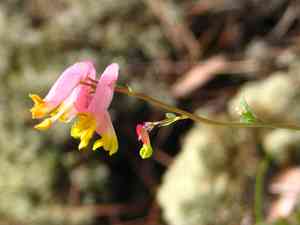
Rock harlequin(Capnoides sempervirens)

Rock harlequin (Capnoides sempervirens)

Also known as: Pink Corydalis, Rock Harlequin

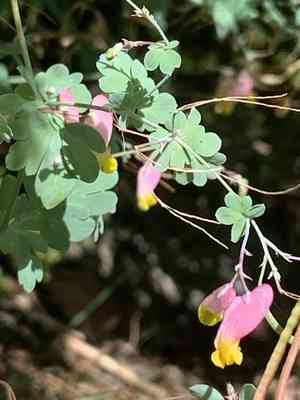
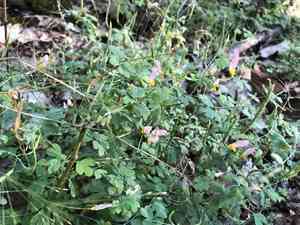
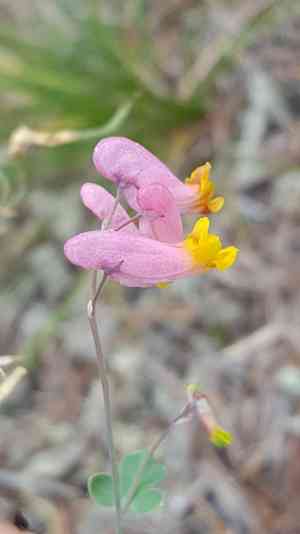
Rock harlequin (Corydalis sempervirens) is distinguished by its clusters of tubular pink flowers with yellow tips, which bloom in its second year. This biennial plant typically grows in rocky or sandy soils across North America.

### Key Characteristics:
- **Flowers**: Clusters of tubular, pink flowers with yellow tips.
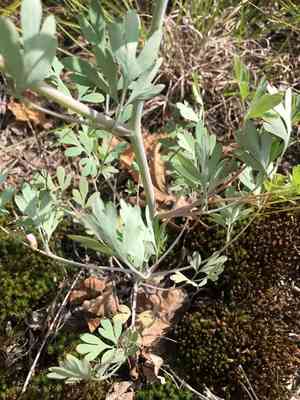
- **Leaves**: Finely divided, resembling ferns.
- **Height**: Generally reaches 1 to 3 feet tall.
- **Life Cycle**: Biennial, flowering in the second year.

### Propagation:
- **Seeds**: Primary method of propagation, dispersed by gravity, wind, or water.
- **Preferred Soil**: Well-drained, rocky, or sandy soils, often in disturbed areas.

### Common Habitats:
- **Geographical Range**: Widely found in the northeastern United States and eastern Canada.
- **Typical Environments**: Rocky outcrops, open woods, and disturbed areas like recently burned forests.

Rock harlequin thrives in nutrient-poor soils and is often seen in areas that have been recently disturbed, such as clearings and post-fire landscapes.

Attributes of Rock harlequin

Lifespan
Biennial, Perennial, Annual
Plant Type
Herb
Plant Height
30 cm to 1.02 m
Spread
50 cm
Leaf Color
Green Blue Gray
Flower Size
2.5 cm
Flower Color
White Yellow Pink Purple Cream Lavender Orange Gold

ForwardPlant - Identify plants with a snap

Identify and diagnose plants, get toxicity alerts, and explore safety guides for all types of fungi.

Try for Free

Images of Rock harlequin

Rock harlequin(Capnoides sempervirens)

Quickly Identify Rock harlequin

1
Bi-colored tubular flowers with yellow tips, 0.5 inches (1.3 cm) long.
2
Basal rosette growth pattern in first year, branching stems in subsequent seasons.
3
Elongated, erect seed pods, 1-2 inches (2.5-5 cm) long, blending with foliage.
4
Finely divided leaves, pale bluish-green, clustered in groups of 3 to 5.
5
Slender stem, 1-2 feet (30-60 cm) tall, sparse to moderate branching, green to reddish.

Scientific Classification of Rock harlequin

Phylum
Vascular plants
Class
Dicotyledons
Order
Ranunculales
Family
Poppy
Genus
Rock harlequin
Species
Rock harlequin

Planting and Growing of Rock harlequin

Care Difficulty
Easy
Watering Schedule
Every 2 days
Sunlight Requirements
Full sun
Sunshine Duration
6-10 hours
Ideal Temperature
60-75℉
Soil Type
Potting Mix, Peat Mix
Soil pH
6.5-7.5
Fertilizer Type
Balanced
Pruning Season
Spring, Summer
Pruning Area
Branches, Leaves
Pruning Frequency
2 times a year
Repotting Season
Spring
Pot Type
Plastic, Ceramic

water icon How to Water Rock harlequin?

For Capnoides sempervirens, it is essential to ensure the soil remains consistently moist but not waterlogged. Water approximately 250 milliliters, ensuring the top inch of soil feels damp. Be cautious to avoid over-saturating the roots, which could lead to root rot.
What are the symptoms of an underwatered Rock harlequin?
What should I do if my Rock harlequin is not getting enough water?
What are the symptoms of an overwatered Rock harlequin?
How to save an overwatered Rock harlequin?

sunlight icon What Are the Sunlight Requirements for Rock harlequin?

Sunlight Requirements: Full sun, Partial sun
Duration of light: 6 to 8 hours daily
Capnoides sempervirens thrives in full sun or partial sun settings. Proper light positioning allows the plant to photosynthesize efficiently, resulting in lush foliage and abundant blooms.
What is the best position for planting Capnoides sempervirens?
How can you ensure Capnoides sempervirens receives enough sunlight?
What benefits does Capnoides sempervirens enjoy from ideal lighting?
More About Sunlight Requirements Techniques

temperature icon What Is the Ideal Temperature Range for Rock harlequin?

Ideal Temperature: 60 ~ 75℉
The ideal temperature range for Capnoides sempervirens is between 60°F and 75°F. At these temperatures, the plant can thrive, producing healthy growth and vibrant flowers. Ensuring that temperatures remain within this range helps to prevent stress and encourages the plant to develop robust root systems.

soil icon What Soil is Best for Rock harlequin?

Soil type: Sandy soil
Soil PH: 6.5 ~ 7.5
Capnoides sempervirens thrives in well-drained soil which prevents root rot and promotes healthy growth. Ensuring the soil drains easily helps maintain optimal moisture levels, essential for sustaining its vibrant foliage and prolific flowering. This plant prefers soil with moderate nutrient levels. Over-fertilization can lead to lush foliage at the expense of flowers, so balance is key. Organic matter can enhance soil fertility naturally, supporting plant health without overwhelming it. A slight acidity in soil, within the pH range of 6.5 to 7.5, is ideal for Capnoides sempervirens. This range helps in nutrient availability and uptake, enhancing growth and bloom vigor, while minimizing nutrient lock-out scenarios.

fertilize icon How to Fertilize Rock harlequin?

Fertilizer type: Balanced
Capnoides sempervirens prefers a balanced approach when it comes to fertilizer amounts. For liquid fertilizers, use a concentration of 1/4 strength compared to what is recommended for general garden plants. For slow-release fertilizers, a sprinkling of granules evenly over the soil, roughly 1 tablespoon per square foot, will suffice.

prune icon How to Prune Rock harlequin?

Pruning Time: Spring, Summer, Autumn
Start by removing any dead or damaged stems with clean, sharp scissors. Focus on trimming back long, unruly stems to create a more bushy appearance. Aim to cut just above a node to encourage new growth. Keep an even shape by cutting stems to maintain symmetry. To maintain the natural beauty of Capnoides sempervirens, trim back stems regularly to encourage dense foliage. Pay attention to the overall shape and remove any branches that interfere with the desired aesthetic. This continuous shaping also stimulates more vibrant blooms. More About Pruning Techniques

propagate icon How to Propagate Rock harlequin plant?

Propagate Time: Spring, Early spring
1
Fill the seed tray with a well-draining potting mix. Ensure that the mix is slightly moist before sowing the seeds to provide an ideal environment for germination.
2
Scatter the seeds evenly over the surface of the potting mix. Lightly cover them with a thin layer of soil, no more than a quarter-inch, to ensure light penetration.
3
Water the seeds gently using a fine mist spray to avoid disturbing them. Keep the soil consistently moist but not waterlogged to encourage germination.
More About Propagating Techniques

repot icon How to Repot Rock harlequin plant?

Repotting frequency: Every 2-3 years
1
Capnoides sempervirens usually requires repotting when roots start growing out of the drainage holes, which indicates it is root-bound. Additionally, observe if the plant shows stunted growth or if the soil becomes compacted, both symptoms of needing more space.
2
Select a pot that's just one size larger than the current one to avoid water retention issues. Ensure it has sufficient drainage holes to prevent root rot. A slightly heavier pot can balance the plant since it tends to grow taller.
3
Use a well-draining potting mix, ideally with a combination of peat, perlite, and sand. This blend ensures adequate aeration and prevents waterlogging, which is crucial to maintaining the plant's health and promoting vigorous growth.

ForwardPlant - Identify plants with a snap

Find the best spots for them to optimize their health, simply using your phone.

Try for Free