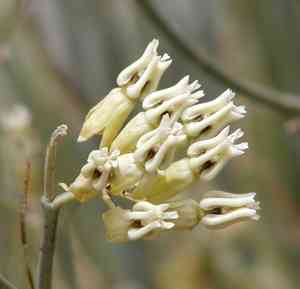
Rush milkweed (Asclepias subulata)
Also known as: Rush Milkweed, Desert Milkweed
Rush milkweed (Asclepias subulata) is a perennial herb known for its upright, leafless stems. It typically grows leaves only after rainfall. The clusters of cream to yellow flowers on this plant are particularly attractive to Monarch and Striated Queen butterflies, as well as other nectar-loving insects.
In This Article
Attributes of Rush milkweed
Lifespan
Perennial
Plant Type
Herb
Plant Height
91 cm to 1.2 m
Spread
60 cm to 90 cm
Leaf Color
Green
Flower Size
2.5 cm
Flower Color
White Yellow
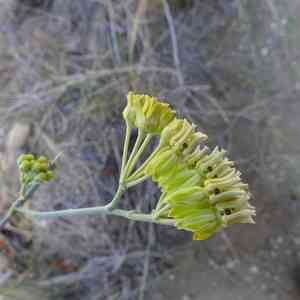
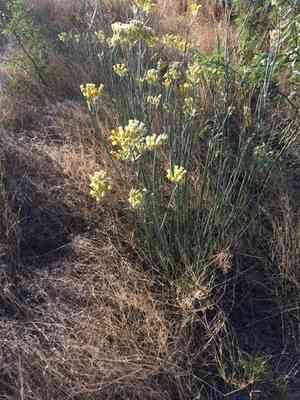
Images of Rush milkweed


Quickly Identify Rush milkweed
1
To identify Asclepias subulata, look for its upright, slender, and almost leafless stems that can grow up to 1.5 meters tall. The plant has small, creamy-white flowers that are typically arranged in clusters. The long, pointed seed pods are another key feature.
Scientific Classification of Rush milkweed
Phylum
Vascular plants
Class
Dicotyledons
Order
Gentianales
Family
Dogbane
Genus
Milkweeds
Species
Rush milkweed
Planting and Growing of Rush milkweed
Care Difficulty
Easy
Watering Schedule
Every 2 days
Sunlight Requirements
Full sun
Sunshine Duration
4-8 hours
Ideal Temperature
70-85℉
Soil Type
Potting Mix, Peat Mix
Soil pH
6.5-7.5
Fertilizer Type
Balanced
Pruning Season
Spring, Summer
Pruning Area
Branches, Leaves
Pruning Frequency
2 times a year
Repotting Season
Spring
Pot Type
Plastic, Ceramic
 How to Water Rush milkweed?
Asclepias subulata, commonly known as desert milkweed, requires moderate watering. You should aim to provide around 250 ml of water per session. The key is to ensure the soil is moistened but not soaked, mimicking its natural drought-tolerant habitat.
What are the symptoms of an underwatered Rush milkweed?
›
What should I do if my Rush milkweed is not getting enough water?
›
What are the symptoms of an overwatered Rush milkweed?
›
How to save an overwatered Rush milkweed?
›
 What Are the Sunlight Requirements for Rush milkweed?
Full sun exposure for Asclepias subulata ensures robust growth and prolific blooms. This plant is adapted to bright conditions, and any deviation might hinder its natural beauty and ecological role.
More About Sunlight Requirements Techniques→
How much sunlight does Asclepias subulata need?
›
What is the best method to provide full sun?
›
What are the benefits of ideal light conditions for Asclepias subulata?
›
 What Is the Ideal Temperature Range for Rush milkweed?
The ideal temperature range for Asclepias subulata, commonly known as rush milkweed, is between 70°F and 85°F. Within this range, the plant can thrive and exhibit optimal growth and flowering. These temperatures closely mimic its natural habitat conditions, allowing photosynthesis and metabolic processes to operate efficiently.
 What Soil is Best for Rush milkweed?
Asclepias subulata thrives in well-drained soils which prevent waterlogging. This type of soil ensures the roots receive adequate oxygen and avoid rot, promoting healthy plant growth and flowering. The plant prefers nutrient-lean soils. Excess nutrients can lead to foliage overgrowth at the expense of blooms. Mimicking its native environments of deserts helps maintain its natural growth cycle and robust appearance. Utilizing gravely soil with sparse organic matter mirrors the plant's desert habitat, supporting its drought tolerance. It prevents excessive nutrient buildup which can be detrimental for Asclepias subulata.
 How to Fertilize Rush milkweed?
Asclepias subulata requires careful fertilization to thrive. Using a balanced liquid fertilizer, apply at half the recommended strength. When using slow-release granular fertilizers, apply lightly around the base, approximately 25 grams per plant. Avoid direct contact with the stems.
 How to Prune Rush milkweed?
Begin by evaluating the overall shape and structure of the Asclepias subulata. Look for any dead or damaged stems or leaves and remove them with sharp pruning tools. This not only cleans up the appearance but also helps redirect the plant's energy towards new growth. For shaping, target the tallest and most overgrown parts of the plant. Cut back some of these taller stems by about one-third. Be sure to make clean cuts just above a node or leaf pair to encourage bushier new growth.
More About Pruning Techniques→
 How to Propagate Rush milkweed plant?
1
Start by filling the seedling trays with potting mix. Sow the Asclepias subulata seeds on the surface and cover lightly with soil. Ensure the seeds are evenly spaced to allow room for growth.
2
Water the soil gently after sowing. It is crucial to keep the soil consistently moist but not waterlogged. Use a spray bottle to mist the soil surface gently, preventing seeds from being disturbed.
3
Place trays in a location where they receive ample sunlight. If natural light is insufficient, consider using grow lights. Adequate light exposure is vital to stimulate growth and prevent leggy seedlings.
 How to Repot Rush milkweed plant?
1
Asclepias subulata, also known as desert milkweed, generally needs repotting when the roots have outgrown their current container. A clear sign is seeing roots emerging from the drainage holes or a noticeable slowdown in growth despite adequate care. Spring and summer are ideal seasons as the growth is most active.
2
Selecting the right pot is crucial for Asclepias subulata. The best option is a slightly larger pot with ample drainage holes. These allow excess water to escape, preventing root rot, which is a common issue with overwatering. Using a porous material like terracotta can help regulate moisture more effectively.
3
The soil selection is key to keeping Asclepias subulata healthy. A well-draining succulent mix is ideal as it prevents waterlogging. Incorporating sand or perlite enhances drainage, ensuring that the roots get enough air and reducing the risk of root diseases.
Toxicity
Ingestion
WARNING
The judgment on toxicity and danger is for reference only. We DO NOT GUARANTEE any accuracy of such judgment. Therefore, you SHALL NOT rely on such judgment. It is IMPORTANT TO SEEK PROFESSIONAL ADVICE in advance when necessary.



