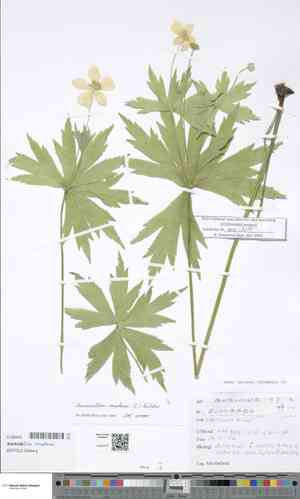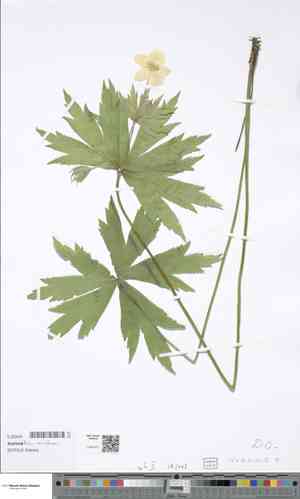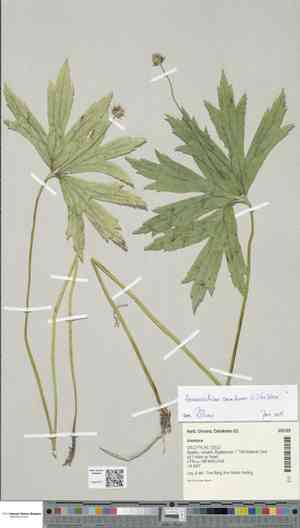
Canadian anemone(Anemonidium canadense)

Canadian anemone (Anemonidium canadense)

Also known as: Canada anemone, Round-leaf thimbleweed

The Canadian anemone (Anemonidium canadense) is a wildflower native to Canada and the northern United States. Known for its appealing blooms, this plant often thrives and spreads rapidly in meadows, thickets, and along the edges of waterways. It's important to note that all parts of the Canadian anemone are poisonous if consumed.

Attributes of Canadian anemone

Lifespan
Perennial
Plant Type
Herb
Plant Height
30 cm to 61 cm
Spread
30 cm
Leaf Color
Green
Flower Size
2.5 cm to 5 cm
Flower Color
White

ForwardPlant - Identify plants with a snap

Identify and diagnose plants, get toxicity alerts, and explore safety guides for all types of fungi.

Try for Free

Images of Canadian anemone

Canadian anemone(Anemonidium canadense)

Quickly Identify Canadian anemone

1
The Canada anemone can be identified by its white, showy flowers with five to seven petal-like sepals and numerous yellow stamens. The leaves are deeply lobed, with a rounded shape, and the plant forms dense colonies through its rhizomes.

Scientific Classification of Canadian anemone

Phylum
Vascular plants
Class
Dicotyledons
Order
Ranunculales
Family
Buttercup
Genus
Anemonidium
Species
Canadian anemone

Planting and Growing of Canadian anemone

Care Difficulty
Easy
Watering Schedule
Every 3 days
Sunlight Requirements
Partial sun
Sunshine Duration
4-8 hours
Ideal Temperature
60-75℉
Soil Type
Potting Mix, Peat Mix
Soil pH
6.5-7.5
Fertilizer Type
Balanced
Pruning Season
Spring, Summer
Pruning Area
Branches, Leaves
Pruning Frequency
2 times a year
Repotting Season
Spring
Pot Type
Plastic, Ceramic

water icon How to Water Canadian anemone?

Anemonidium canadense requires moderate watering, ideally about 250ml per session. Make sure the soil is moist but not soggy, allowing the top inch to dry out between waterings. Adopting a 'soak and dry' method encourages healthy root growth by preventing root rot while ensuring adequate moisture.
What are the symptoms of an underwatered Canadian anemone?
What should I do if my Canadian anemone is not getting enough water?
What are the symptoms of an overwatered Canadian anemone?
How to save an overwatered Canadian anemone?

sunlight icon What Are the Sunlight Requirements for Canadian anemone?

Sunlight Requirements: Partial sun
Duration of light: 4 - 6 hours
Partial sun with 4-6 hours of dappled sunlight allows Anemonidium canadense to flourish. This balance encourages vigorous growth, vibrant flower production, and a strong, healthy plant structure.
What is the ideal light for Anemonidium canadense?
How can I achieve ideal lighting for my plant?
What benefits does ideal lighting provide?
More About Sunlight Requirements Techniques

temperature icon What Is the Ideal Temperature Range for Canadian anemone?

Ideal Temperature: 60 ~ 75℉
The ideal temperature range for Anemonidium canadense is between 60°F and 75°F. This range provides optimal conditions for growth and photosynthesis, allowing the plant to thrive. In these temperatures, the plant can efficiently utilize nutrients and water, supporting healthy foliage and flower production.

soil icon What Soil is Best for Canadian anemone?

Soil type: Loam, Sandy loam
Soil PH: 6.5 ~ 7.5
Anemonidium canadense thrives in well-drained soils which prevent waterlogging that can lead to root rot. Opting for well-draining soil ensures that roots get the necessary oxygen, fostering vigorous growth and abundant flowering. This plant flourishes in soils rich in organic matter, providing essential nutrients to support healthy foliage and blooms. Organic materials like compost enhance soil fertility, offering a sustainable nutrient supply. Sandy loam soils, with their balanced moisture retention, cater to the plant’s moderate water needs. This ensures the plant remains hydrated during dry periods while avoiding excessive moisture that can cause harm.

fertilize icon How to Fertilize Canadian anemone?

Fertilizer type: Balanced
For Anemonidium canadense, use a balanced liquid fertilizer diluted to half-strength. Apply approximately 1 tablespoon per gallon of water when using liquid solutions. For slow-release fertilizers, apply about 1 to 2 teaspoons per plant. Be cautious to avoid applying too much, as these plants are sensitive to excessive nutrients.

prune icon How to Prune Canadian anemone?

Pruning Time: Spring, Autumn
Start by removing any dead, damaged, or diseased stems. This encourages the plant to focus its energy on healthy growth. Use sharp, clean pruning shears to make cuts close to the base of the stems. Avoid cutting more than one-third of the plant at once to prevent shock. Once the unhealthy stems are removed, look to shape the plant. Trim back any excessively long or leggy stems to maintain a neat, compact form. This helps the plant to grow in a more dense and bushy manner, encouraging more flowers. More About Pruning Techniques

propagate icon How to Propagate Canadian anemone plant?

Propagate Time: Spring, Early spring
1
Prepare the soil by ensuring it is well-drained and rich in organic matter. Amend the soil with compost if necessary to provide the best conditions for seed germination and root development.
2
Sow the seeds in seed trays with a light covering of soil. Keep the soil consistently moist but not waterlogged. Provide indirect sunlight to encourage germination within 2-4 weeks.
3
For division propagation, carefully dig up the plant in early spring. Use a sharp knife to divide the rhizomes, ensuring each piece has a healthy shoot and root system. Replant the divisions immediately.
More About Propagating Techniques

repot icon How to Repot Canadian anemone plant?

Repotting frequency: Every 2-3 years
1
Anemonidium canadense needs repotting when the roots begin to grow out of the drainage holes, or when growth seems to have slowed significantly compared to its usual vigorous pace. Spring and early summer are ideal times for repotting as the plant is entering its growth phase, allowing it to quickly recover and adapt to a new pot.
2
Select a pot that is one size larger than the current one, with adequate drainage holes to prevent waterlogging. The new pot should allow for some extra space for root expansion but not be too oversized as this can lead to excess soil moisture retention, which is not ideal for Anemonidium canadense.
3
Opt for a rich, well-draining soil mix that retains some moisture without becoming soggy. A mix containing loam, peat, and perlite works well, ensuring the roots have adequate access to nutrients and air, promoting healthy growth and preventing root rot.

ForwardPlant - Identify plants with a snap

Find the best spots for them to optimize their health, simply using your phone.

Try for Free

Toxicity of Canadian anemone

Is Canadian anemone toxic to humans?

The Canadian anemone is considered a plant with moderate toxicity, whether it is touched or consumed. Every part of this plant, encompassing the stem, leaves, seeds, and flowers, is harmful. It harbors toxins known to irritate the skin, making it inedible and capable of inducing gastrointestinal issues. Notably, the plant contains protoanemonin, a toxic compound that can result in symptoms such as vomiting and diarrhea if ingested. Additionally, the toxins may provoke the formation of blisters and sores within the mouth. Direct interaction with the plant can lead to skin irritations, particularly affecting those with allergy predispositions. Typical reactions include redness, itchy patches, and swelling.

Is Canadian anemone toxic to cat?

The Canadian anemone presents a low-level risk to cats if consumed in considerable amounts. Every part of this plant contains toxins, and ingestion may result in physical discomfort and illness. Should a cat exhibit any of these symptoms, prompt veterinary care is essential. It is important to keep cats away from the Canadian anemone to prevent any possible health issues.

Is Canadian anemone toxic to dog?

The Canadian anemone presents a moderate toxicity threat to dogs. Canines are at risk of poisoning primarily when they consume considerable quantities of the plant. All sections of the Canadian anemone are deemed toxic and can lead to harmful effects in dogs. Pet owners must remain alert for signs of poisoning, which might manifest as gastrointestinal distress, excessive salivation, vomiting, or diarrhea. Should a dog ingest the Canadian anemone, it is crucial to obtain prompt veterinary assistance to secure the best potential outcome for the animal.

Identify toxic plants for your safety

Learn which plants are harmful to you and your pets, and make informed choices for a safer home!

Try for Free
WARNING
The judgment on toxicity and danger is for reference only. We DO NOT GUARANTEE any accuracy of such judgment. Therefore, you SHALL NOT rely on such judgment. It is IMPORTANT TO SEEK PROFESSIONAL ADVICE in advance when necessary.
More About Toxic Techniques