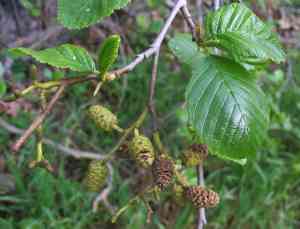
White Alder (Alnus rhombifolia)
Also known as: White alder, Sierra alder
The White Alder (*Alnus rhombifolia*) is a deciduous tree reaching heights of 15-25 meters. Its bark starts off smooth and gray, becoming scaly over time. The tree features small, yellowish-brown male catkins, which are pendulous, and smaller, oval-shaped female catkins that appear in summer and fall. Seed dispersal occurs in winter, utilizing the wind to carry its lightweight, winged seeds. The tree thrives in full sunlight and is attractive to butterflies and birds.
In This Article
Attributes of White Alder
Lifespan
Perennial
Plant Type
Tree
Plant Height
15 m to 23 m
Spread
9 m to 12 m
Leaf Color
Green
Flower Size
Not applicable, flowers are catkins
Flower Color
Yellow Green Brown
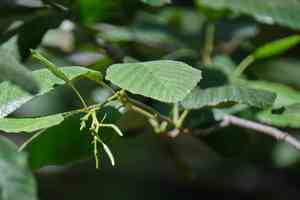
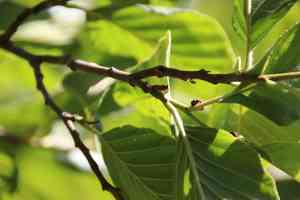
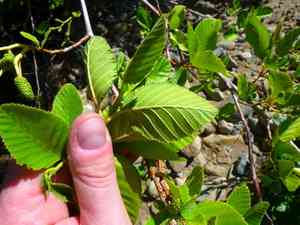
Images of White Alder
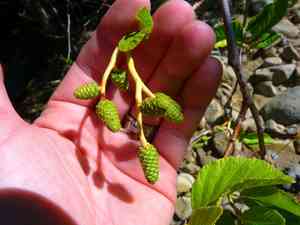
Quickly Identify White Alder
1
Identifying Alnus rhombifolia involves looking for its rhombic to broadly ovate leaves which are usually 4-10 cm long and have finely serrate margins. The bark is grayish and smooth when young but becomes fissured with age.
Scientific Classification of White Alder
Phylum
Vascular plants
Class
Dicotyledons
Order
Fagales
Family
Birch
Genus
Alders
Species
White Alder
Planting and Growing of White Alder
Care Difficulty
Easy
Watering Schedule
Every 4 days
Sunlight Requirements
Full sun
Sunshine Duration
4-6 hours
Ideal Temperature
59-75℉
Soil Type
Potting Mix, Peat Mix
Soil pH
6.5-7.5
Fertilizer Type
Balanced
Pruning Season
Spring, Summer
Pruning Area
Branches, Leaves
Pruning Frequency
2 times a year
Repotting Season
Spring
Pot Type
Plastic, Ceramic
 How to Water White Alder?
Alnus rhombifolia thrives in moderately moist but well-drained soil. When watering, ensure the soil is consistently moist but not waterlogged, allowing excess water to drain away. Typically, 500 ml of water is sufficient to maintain the right level of moisture, depending on the season and climate. Adjust as necessary based on rainfall and temperature variations.
What are the symptoms of an underwatered White Alder?
›
What should I do if my White Alder is not getting enough water?
›
What are the symptoms of an overwatered White Alder?
›
How to save an overwatered White Alder?
›
 What Are the Sunlight Requirements for White Alder?
Alnus rhombifolia thrives best in full to partial sun, ideally receiving 6-8 hours of sunlight daily. Adequate light ensures effective photosynthesis, promoting strong growth and resistance to diseases.
More About Sunlight Requirements Techniques→
What is the best time to expose Alnus rhombifolia to sunlight?
›
How can you ensure Alnus rhombifolia gets optimal sunlight?
›
What happens to Alnus rhombifolia with optimal sunlight exposure?
›
 What Is the Ideal Temperature Range for White Alder?
For optimal growth, Alnus rhombifolia thrives in a temperature range between 59°F to 75°F. This range provides a warm enough environment to facilitate active growth while avoiding the potential heat stress that might occur at higher temperatures. This tree species benefits from a temperate climate that mimics its natural habitats, ensuring proper nutrient absorption and robust development.
 What Soil is Best for White Alder?
Alnus rhombifolia thrives in well-draining soil, which prevents water from stagnating. This condition is critical to avoid root rot and ensure the roots receive adequate oxygen, promoting strong growth and stability. Rich in essential nutrients, ideal soil supports the growth of Alnus rhombifolia by providing all necessary minerals for robust foliage and healthy development. This results in a more vibrant and resilient plant. While Alnus rhombifolia prefers moist conditions, over-saturated soil can be detrimental. Balancing this helps maintain healthy growth without inviting fungal diseases or pests that thrive in overly wet environments.
 How to Fertilize White Alder?
For Alnus rhombifolia, a balanced fertilizer should be used. During the growing season, apply around 1 pound (approximately 450 grams) of a 10-10-10 NPK fertilizer per inch of trunk diameter annually. Ensure even distribution around the root zone to promote optimal nutrient uptake.
 How to Prune White Alder?
Choose sharp, clean pruning shears for smaller branches, and a saw for larger limbs. Clean tools minimize the risk of transferring disease to healthy parts of the tree, aiding in a successful pruning process. Start by removing any dead or damaged branches, cutting at the branch collar to encourage fast wound closure. Thin out weak or crowded branches to improve airflow and light penetration throughout the canopy. Always make clean cuts to prevent bark tearing. After pruning, apply a thin layer of mulch around the base to help retain moisture and suppress weeds. Regularly check for any signs of stress or disease that may develop post-pruning, taking action swiftly if noticed.
More About Pruning Techniques→
 How to Propagate White Alder plant?
1
Begin by preparing a seed tray with a mix of peat and sand. Sow the seeds on the surface and lightly cover them with sand. Maintain the humidity by covering the tray with a plastic dome and place it in a warm area.
2
Select healthy sections of a parent plant, choosing semi-ripe wood. Using pruning shears, cut a 10–15 cm section just below a node. Remove any leaves from the lower half to prevent rotting.
3
Dip the cut end of the shoot into a rooting hormone to stimulate growth. Insert the cutting into a well-draining potting mix. Ensure it's firm in place and keep the cutting moist until roots develop.
 How to Repot White Alder plant?
1
Alnus rhombifolia should be repotted when you notice roots circling the container or protruding through drainage holes. Another signal is slowed growth, indicating that the roots have run out of space. Early spring or autumn is the optimal time for repotting when the plant is either waking up from dormancy or preparing to enter it.
2
Choose a pot that is a couple of inches larger in diameter than the current one, with ample drainage holes. This will provide room for root expansion and ensure efficient water drainage. A suitable pot will prevent waterlogging and root rot, promoting healthy growth.
3
Opt for a loamy, well-draining soil mix to support Alnus rhombifolia. Such soil provides both the necessary nutrients and aeration, allowing roots to breathe. It prevents water retention, reducing the risk of root rot and enabling the tree to thrive.



